 HYGO News
 Portman Confronts Biden OMB Nominee On Deleted Tweets: "Why Did You Delete Them"
Portman Confronts Biden OMB Nominee on Deleted Tweets: “Why Did You Delete Them”
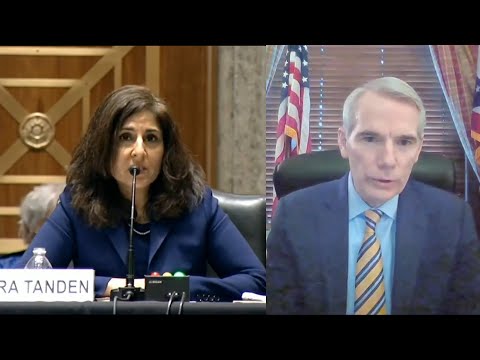
On February 9, 2021, Senator Rob Portman (R-OH), a former OMB director, confronted Neera Tanden, President Biden’s nominee to lead the Office of Management and Budget, during her confirmation hearing before the Senate Homeland Security and Governmental Affairs Committee. Portman focused on Tanden’s history of inflammatory tweets targeting Republican senators, her deletion of more than a thousand tweets after the 2020 election in apparent anticipation of her nomination, and her ability to work across the aisle in a role that traditionally requires bipartisan cooperation.
“I believe that the tone, the content, and the aggressive partisanship of some of your public statements have added to the troubling trend of more incivility and division in our public life,” Portman said. “And in your case, I’m concerned that your personal attacks about specific senators will make it more difficult for you to work with them.”
The Deleted Tweets
The hearing’s most confrontational moment came when Portman questioned Tanden about media reports that she had deleted more than a thousand tweets from her account in November 2020, shortly after the election and in advance of her anticipated nomination.
“Are these media reports that you deleted more than a thousand tweets in November in advance of your nomination accurate?” Portman asked. “And if so, why did you delete them?”
Tanden responded: “I appreciate people’s concerns about my tweets, and I’ve regretted them, and I deleted tweets because I regretted my tone, and I’ve deleted tweets over many months.”
Portman pressed further on whether the deletions were specifically timed to clean up her record before a nomination. “Did you delete them because you believe you might be nominated for this job or another job?” he asked.
“I deleted tweets over many months because I regretted the tone of my tweets,” Tanden repeated.
Portman noted that despite the mass deletion, “there’s still a lot of partisan tweets on your account. I found through my staff, there are still nine pages of tweets about Senator Ted Cruz, for example.” He asked how Tanden had chosen which tweets to delete and which to keep.
“I just thought of some of my language and deleted my tweets,” Tanden said. “But I would also just say again that to the extent people are hurt by my language, I deeply apologize.”
The Attacks on Senators
Portman catalogued some of Tanden’s most notable public attacks on members of the Senate who would be voting on her confirmation. He noted that she had written that Susan Collins was “the worst,” that Tom Cotton was “a fraud,” that “vampires have more heart than Ted Cruz,” and that she had called Mitch McConnell “Moscow Mitch” and “Voldemort.”
“I wonder specifically, how do you plan to mend fences and build relationships with members of Congress who you have attacked through your public statements?” Portman asked.
Tanden acknowledged the concern: “I deeply regret and apologize for my language and some of my past language. I recognize that this role is a bipartisan role, and I know I have to earn the trust of senators across the board.”
The OMB Director’s Role
Portman drew on his own experience as OMB director under President George W. Bush to explain why the position required bipartisan credibility. He noted that the OMB director interacts with members of Congress on both the budget and oversight responsibilities more frequently than most other cabinet officials.
“Typically the OMB Director is not a partisan, in particular because you have to have these kinds of relationships,” Portman said. He raised concerns that Tanden’s confrontational social media history would undermine her ability to perform the job effectively.
Portman also addressed the broader context of the Biden administration’s approach to COVID relief. He noted that Congress had passed five bipartisan COVID relief packages in the previous year and expressed disappointment that the new administration appeared to be pursuing reconciliation rather than bipartisan negotiations. He said he was part of a group that had helped assemble the previous $900 billion package and had made proposals for bipartisan cooperation.
Outcome
Tanden’s nomination ultimately failed. She withdrew from consideration on March 2, 2021, after it became clear she did not have sufficient votes for confirmation. In addition to unified Republican opposition fueled by concerns about her partisan tweets, Democratic Senator Joe Manchin announced he would vote against her, citing her “toxic” and “detrimental” social media behavior. Without Manchin’s vote, Tanden could not secure the 50-vote majority needed for confirmation in the evenly divided Senate.
Key Takeaways
- Senator Portman confronted Neera Tanden over her deletion of more than a thousand tweets after the 2020 election, pressing her on whether the deletions were timed to clean up her record ahead of a Biden nomination.
- Portman catalogued Tanden’s attacks on specific senators including Collins, Cotton, Cruz, and McConnell, questioning her ability to work across the aisle in the traditionally bipartisan OMB director role.
- Tanden repeatedly apologized and said she regretted her tone, but could not explain her criteria for which tweets to delete or clearly deny that the timing was related to her anticipated nomination.
- Tanden’s nomination ultimately failed when she withdrew on March 2, 2021, after losing the support of Democratic Senator Joe Manchin over her social media conduct.
Full Transcript
Just to mention a few of the thousands of negative public statements, you wrote that Susan Collins is quote the worst, that Tom Cotton is a fraud, that vampires have more heart than Ted Cruz. You called Leader McConnell, Moscow Mitch, and Voldemort, and on and on. I wonder specifically, how do you plan to mend fences and build relationships with members of Congress who have attacked through your public statements? Senator, I very much appreciate that question. I recognize the concern. I deeply regret and apologize for my language and some of my past language.
There are media reports that during November of 2020 after the election, so late last year, more than a thousand tweets were deleted from your account. Some of these public statements have been tweets. Are these media reports that you deleted more than a thousand tweets in November in advance of your nomination accurate? And if so, why did you delete them? Senator, I appreciate people’s concerns about my tweets, and I’ve regretted them, and I deleted tweets because I regretted my tone, and I’ve deleted tweets over many months. So, but for those concerned about my rhetoric and my language, I’m sorry, and I’m sorry for any hurt that they’ve caused.
So you did delete the tweets. Did you delete them because you believe you might be nominated for this job or another job? I deleted tweets over many months because I regretted the tone of my tweets. Okay, but specifically after the election, you deleted a thousand tweets according to media reports. I take it from what you’re saying today that’s accurate. Is that true? I don’t actually know, but I can completely concede the point.
Okay, and I guess that the question is, you know, is that the right thing to do to go back and try to cover what you had said, given that you might be in a different position, which would be a nomination for a cabinet level job. With the removal of more than a thousand tweets, there’s still a lot of partisan tweets on your account. I found through my staff, there are still nine pages of tweets about Senator Ted Cruz, for example. How did you choose which tweets you wanted to delete and which ones you wanted to keep on your account? Senator, I mean, I just thought of some of my language and deleted my tweets, but I would also just say again that to the extent people are hurt by my language, I deeply apologize.