 HYGO News
 Not Trashing Biden, It's Facts, did any member read the bill? Donalds & Johnson question witnesses
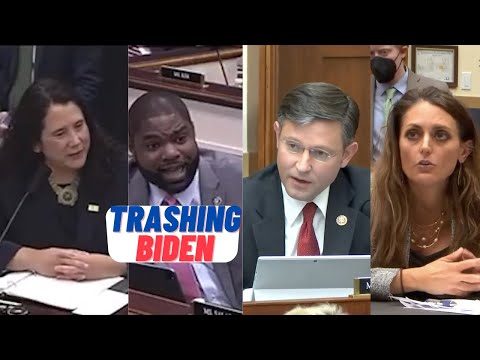
Donalds: “Biden Has Never Worked a Day in Our Economy” — Clashes with Committee Chair, Johnson Reveals No One Read the Bill
On December 2, 2021, two separate exchanges at House committee hearings captured Republican frustration with the Build Back Better Act and its defenders. Representative Byron Donalds (R-FL) clashed with Small Business Committee Chair Nydia Velazquez (D-NY) after telling SBA Administrator Isabella Casillas Guzman that “President Biden doesn’t know much about the economy” and “has never worked a day in his life outside of Washington, D.C.” When Velazquez accused him of violating decorum, Donalds fired back: “I didn’t trash the man. I’m speaking facts.” Meanwhile, Representative Dusty Johnson (R-SD) questioned expert witnesses about hidden provisions in Build Back Better that waived standard rulemaking procedures in at least eight places for drug pricing regulation — and none of the witnesses had read the bill either. Representative Ken Buck then asked whether anyone in Congress had read the 2,000-plus-page bill before voting, concluding: “I don’t think it was possible to read."
"He’s Never Worked a Day in Our Economy”
Donalds directed his questioning to SBA Administrator Guzman, but his real target was the economic philosophy behind Build Back Better. He framed the exchange by noting Guzman’s own background as a former small business owner — and contrasting it with Biden’s career.
“The President of the United States has never worked a day in his life outside of Washington, D.C.,” Donalds said to Guzman. “You’ve done more than he has. Come on now. You are a small business owner.”
He then posed a practical question that Guzman’s own experience should have made easy to answer: “If the federal government was providing outside spending that competed directly with your ability to pay people to come to work, do you think it would make it harder for you as a small business owner, which you were — not an administrator now in the administration — would it make it easier or harder for you to keep people under your employ?”
Guzman declined to engage with the premise: “Again, these investments in Build Back Better will strengthen our workforce.”
Donalds was unsatisfied. He pressed on the child tax credit specifically: “Can we honestly have a conversation and sit here that if you do something like child tax credit, which will give people $300 per child, that that’s going to make it easier for them to go back to work? It’s going to make an economic decision where they’re going to make the choice of, ‘you know what, maybe I don’t need the additional five hours.’”
He expanded the argument to its full scale: “If you cascade that through an economy across the 31 million small businesses in the United States, do you think it’s going to be easier or harder for small businesses to staff their companies in order to be effective for their customers?”
The Clash with the Chair
When Donalds said Biden “doesn’t know much about the economy,” Committee Chair Velazquez intervened, citing the committee’s rules on decorum. The specific rule invoked related to speaking about the president, which traditionally prohibits members from personally disparaging the president during committee proceedings.
Donalds was not deterred. “Madam Chair, I was just referring to the President. The President of the United States is part of that,” he said.
He continued: “Madam Chair, the President of the United States has never worked in our economy. Those are facts. That’s not about the quorum. That’s the truth of the matter. He has never worked a day in our economy. He’s always worked in Washington, D.C.”
He addressed the decorum charge directly: “To point out that fact, and to illustrate the fact that we’re talking about major economic policies that do impact the 31 million small business owners in our country, it’s not about the quorum. I didn’t trash the man. I’m speaking facts.”
The factual basis of Donalds’s claim was difficult to dispute. Biden had been elected to the U.S. Senate at age 29 in 1972 and had served continuously in government — as senator, vice president, and president — for nearly 50 years. Before his Senate career, his work experience was limited to a brief period practicing law. He had never owned a business, managed a payroll, or worked in the private sector in any sustained capacity.
”Did Anyone Read the Bill?”
In a separate hearing, Representative Dusty Johnson raised an issue that went beyond policy disagreement to basic legislative process. He identified at least eight specific pages in the Build Back Better Act — pages 647, 2000, 2015, 2020, 2062, 2081, 2114, and 2124 — where the bill waived Administrative Procedure Act (APA) rulemaking requirements and judicial review for drug pricing regulations.
The APA requires federal agencies to provide public notice of proposed rules, accept public comments, and submit to judicial oversight. Waiving these requirements meant that “unelected bureaucrats” could implement drug pricing regulations without transparency or legal challenge.
Johnson asked expert witnesses whether such an approach was appropriate: “Does any member of the panel believe that significant agency actions like this should be done in the dark with no notice and comment or judicial oversight?”
The responses were revealing. Professor Michaels said: “I can’t comment on that since I don’t have any direct knowledge of what the provisions are in the Build Back Better Bill.”
Another witness, Ms. Wagner, said: “Unfortunately, I also don’t know anything about it.”
Johnson turned the witnesses’ ignorance into his argument: “You know what? None of our colleagues know either. There was no discussion about these provisions when the House was considering the bill. I’d be surprised if any member, any of my colleagues, were even aware it’s in there.”
Representative Ken Buck then delivered the exchange’s closing line: “I was just wondering if my colleague thought that anyone in Congress had read that bill before it passed, because to my knowledge, we got that bill with just a few hours before we voted on it. I’m out of time, but I don’t think it was possible to read.”
The Two Arguments Combined
The two hearings, captured in the same video, reinforced a single theme: the people making the most consequential economic decisions had the least connection to the practical reality of those decisions.
Biden, who had never worked in the private sector, was designing policies that would reshape the incentives for 31 million small businesses. Congress was voting on a 2,000-plus-page bill that contained hidden regulatory waivers in at least eight places, and no member had the time or opportunity to read it before casting their vote. Expert witnesses called to testify about government rulemaking had not read the bill they were discussing. And an SBA administrator who had actually run a small business could not directly answer whether government payments competed with private employers for workers.
Donalds’s “speaking facts” defense and Johnson’s “did anyone read the bill?” question were different articulations of the same concern: a governing class disconnected from the consequences of its actions.
Key Takeaways
- Donalds told the SBA administrator that Biden “has never worked a day in his life outside of Washington, D.C.” and argued the child tax credit would make it harder for 31 million small businesses to staff their companies — then clashed with Chair Velazquez over decorum, insisting “I didn’t trash the man, I’m speaking facts.”
- Johnson identified at least eight places in the Build Back Better Act (pages 647 through 2124) that waived APA rulemaking and judicial review for drug pricing regulation, and none of the expert witnesses called to testify had read the bill’s provisions — nor had any member of Congress, according to Johnson.
- Buck asked whether anyone in Congress had read the 2,000-plus-page bill before voting on it, noting members received it “with just a few hours” before the vote, and concluded “I don’t think it was possible to read” — while Guzman could only respond to Donalds’s staffing question by repeating that Build Back Better “will strengthen our workforce.”