 HYGO News
 New job report mixed, Paychecks Go Up, Granholm Laughs Oil Plan, Spending Bill, Biden Press Brief
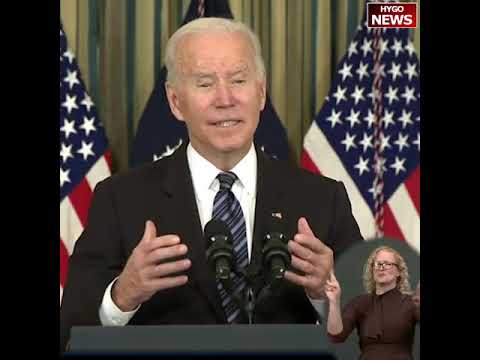
Biden Touts “Mixed” Jobs Report, Granholm Laughs at Oil Plan Question, Labor Secretary Says Mandate Is “Not a Mandate”
On November 5, 2021, President Biden held a press briefing to celebrate the October jobs report showing 531,000 new jobs, but the event was overshadowed by a series of moments that undercut the administration’s messaging. Energy Secretary Jennifer Granholm laughed when asked about Biden’s plan to increase domestic oil production as gas prices surged. Biden claimed “working Americans are seeing their paychecks go up” even as real wages adjusted for inflation were declining. A Wall Street Journal writer described the jobs report as “mixed and puzzling.” And Labor Secretary Marty Walsh made the eyebrow-raising claim that the vaccine mandate was “not a mandate.” Biden then walked away from the podium without taking questions, telling reporters he would return “when they pass” — referring to his stalled spending bills.
Biden’s Jobs Report Celebration
Biden led with the headline number: 531,000 jobs created in October, “well above expectations.” He added that job growth for August and September had been revised upward by “nearly 250,000 more jobs than previously thought,” bringing total job creation during the first nine months of his administration to approximately 5.6 million — “a record for any new president.”
He cited a string of statistics designed to paint a picture of rapid recovery: unemployment had fallen to 4.6 percent, down from higher levels earlier in the year. Weekly unemployment claims had fallen for five consecutive weeks and were “now at the lowest level since the pandemic started.” Biden noted that before the American Rescue Plan was passed, forecasters had predicted the economy would not reach 4.6 percent unemployment “until the end of 2023.”
“I would humbly suggest this is significant improvement from when I took office and a sign that we’re on the right track,” Biden said. “This did not happen by accident or just because.”
He went further in his characterization: “This recovery is faster, stronger, and fairer and wider than almost anyone could have predicted. That’s what the numbers say.”
The “Mixed and Puzzling” Assessment
Not everyone shared Biden’s interpretation. A Wall Street Journal writer who appeared in the video compilation offered a more measured assessment of the same data Biden was celebrating.
“When I get from this report, I wouldn’t call it an excellent report or a great report. It’s just mixed and puzzling to me,” the writer said. He noted that the labor force participation rate remained at 61.6 percent, exactly where it had been a year earlier, suggesting that while jobs were being created, many Americans had not returned to the workforce at all.
The disconnect between Biden’s triumphant framing and the more cautious analysis highlighted the administration’s challenge: touting the raw job creation numbers while millions of Americans remained on the sidelines of the labor market, contributing to the worker shortages that were driving up costs across the economy.
Granholm Laughs at Oil Production Question
One of the most viral moments from the day came when Energy Secretary Jennifer Granholm was asked about the administration’s plan to increase oil production in America. Her response was immediate and dismissive.
“That is hilarious. Would that I had the magic wand on this,” Granholm said, laughing. She then explained that oil is “a global market” controlled by “a cartel. That cartel is called OPEC, and they made a decision yesterday that they were not going to increase beyond what they were already planning.”
The exchange encapsulated a frustration that had been building among critics of the administration’s energy policy. While Granholm characterized domestic oil production as beyond the administration’s control, Republicans pointed to a series of executive actions — including the cancellation of the Keystone XL pipeline, the pause on new federal oil and gas leasing, and increased regulatory scrutiny of the energy sector — as deliberate policy choices that had constrained domestic supply.
Granholm’s laughter at the question became a widely shared clip that Republicans used to argue the administration was not taking the pain of high gas prices seriously. At the time of the briefing, the national average price of gasoline was climbing toward levels not seen in years, and energy costs were a significant contributor to the inflation that was eroding the real value of the wage gains Biden was touting.
Biden’s Wage Claim vs. Real Wages
Biden made a specific economic claim that drew scrutiny from fact-checkers and economists: “Not only are more Americans working, working Americans are seeing their paychecks go up. Weekly pay went up in October with an average hourly earnings up almost 5% this year.”
He added that the lowest-paid workers had seen even larger gains: “Some of the lowest paid workers in our country, men and women who work in restaurants, hotels, entertainment, have seen their pay go up 12% this year.”
While the nominal wage figures Biden cited were accurate, they did not account for inflation, which was running at approximately 6.2 percent year-over-year by October 2021. When adjusted for inflation, real wages for many workers were actually declining, meaning that despite higher numbers on their paychecks, workers could buy less with their earnings than they could a year earlier. The gap between nominal wage growth and inflation-adjusted purchasing power was one of the defining economic stories of 2021, and Biden’s decision to cite only the nominal figures was a recurring point of criticism.
Vaccine Mandate Is “Not a Mandate”
Labor Secretary Marty Walsh contributed one of the briefing’s most debated statements when asked about the administration’s vaccine requirement for large employers. The policy, announced in September, required companies with 100 or more employees to ensure their workers were either vaccinated or tested regularly for COVID-19.
Walsh characterized the policy in a way that surprised many observers: “It’s not a mandate, number one. And it’s a vaccine or testing.”
He then argued that where mandates had been implemented at private companies, “a lot of people eventually get the vaccine. They’re not leaving the job market.” Walsh dismissed concerns that the policy would cause significant worker departures: “I don’t think 37% of the populace that’s saying that they’re not going to get vaccinated or tested — they’re going to leave the job market.”
Critics argued that calling a government-imposed vaccination-or-testing requirement “not a mandate” was semantic gymnastics designed to minimize the policy’s impact on workers and businesses already struggling with labor shortages and supply chain disruptions.
Biden Walks Away Without Questions
After delivering his remarks and urging every House member to “vote yes on both these bills right now,” Biden walked away from the podium. Reporters shouted questions about Democrats’ spending plans and whether the House should vote without a Congressional Budget Office score.
“I’ll be back to answer some of your questions when they pass,” Biden said before leaving. “May God bless you all and may God protect our troops.”
The decision to take no questions on a day when the economy, gas prices, vaccine mandates, and the stalled spending agenda were all in the headlines reinforced the perception that the White House preferred controlled messaging environments over the give-and-take of a traditional press conference.
Key Takeaways
- Biden celebrated 531,000 new jobs in October and claimed “working Americans are seeing their paychecks go up,” but the 5% nominal wage increase he cited was outpaced by 6.2% inflation, meaning real purchasing power was declining for many workers.
- Energy Secretary Granholm laughed when asked about plans to increase domestic oil production, saying “that is hilarious” and blaming OPEC, while critics pointed to the administration’s own pipeline cancellations and leasing pauses as contributors to high gas prices.
- Labor Secretary Walsh called the vaccine-or-testing requirement “not a mandate” and predicted it would not cause workers to leave the job market, while Biden walked away from the podium without taking questions on the economy or his stalled spending bills.