 HYGO News
 Melania Trump: 'I've Already Packed' -- Team Has Only Five Hours to Move Bidens Out; Sullivan Claims U.S. 'Stronger'
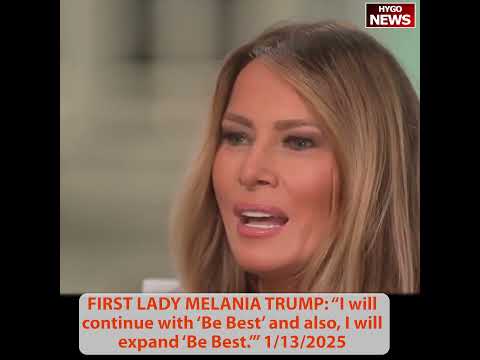
Melania Trump: “I’ve Already Packed” — Team Has Only Five Hours to Move Bidens Out; Sullivan Claims U.S. “Stronger”
As Inauguration Day approached in January 2025, incoming First Lady Melania Trump detailed her meticulous preparations for the return to the White House, revealing she had already packed and selected furniture — a sharp contrast to the first time around in 2017, when she said information was withheld by the outgoing Obama administration. In a separate segment, outgoing National Security Advisor Jake Sullivan argued that the United States was in a “stronger, more secure position” than when the Biden administration took office, and deflected questions about whether Trump’s election victory constituted a rejection of Biden’s foreign policy.
Melania: “I’ve Already Packed”
Melania Trump described how her second transition to the White House was dramatically smoother than her first experience in 2017.
“The first time was challenging. We didn’t have much of the information. The information was upheld for us from the previous administration,” Melania said. “But this time I have everything. I have the plans. I could move in. I already packed. I already selected the furniture that needs to go in. So it’s very different transition this time, second time around.”
When asked whether she would replicate her previous decorating choices or make changes, she said: “A little bit of changes, not much.”
The Five-Hour Move
Melania highlighted the extraordinary logistical challenge of Inauguration Day, when the White House residence must transition from one first family to another in a matter of hours.
“They’re still living there and they will be out on January 20,” Melania said of the Bidens. “So what happens on January 20, the transition team has only five hours to move the Bidens out and to move us in. So everything needs to be planned to the minute.”
When asked about the Bidens’ cooperation during the transition, Melania kept her response measured, simply confirming the Bidens were still in residence and would depart on schedule.
Expanding “Be Best”
Melania also confirmed that she would revive and expand her signature initiative, “Be Best,” which had focused on children’s well-being, online safety, and opioid abuse during Trump’s first term.
“I will continue with Be Best and also I will expand Be Best,” Melania said. “I started in the first administration. I didn’t have much support from anyone.”
She described her early efforts to engage technology and streaming companies on children’s mental health and social media safety: “I invited all of the streaming platforms to the White House. I had the round table and I didn’t have much support from them.”
Melania framed the second term as an opportunity to accomplish what had been difficult the first time: “Imagine what we could do in those years if they will rally behind me and teach the children and protect them about the social media and their mental health.”
Sullivan: U.S. Is “Stronger and More Secure”
In his final public assessment as National Security Advisor, Jake Sullivan offered an optimistic summary of the Biden administration’s foreign policy legacy.
“The United States is in a stronger, more secure position, and our competitors and adversaries are weaker and under pressure,” Sullivan said. “I think that’s the main handoff that we will make to the incoming team.”
A reporter then asked Sullivan a pointed question: how did he view Trump’s reelection in the context of Biden’s foreign policy, and wasn’t it a rejection by voters of the Biden administration’s approach to multilateral institutions?
Sullivan deflected, declining to play “political pundit” and arguing that foreign policy was not the central issue driving the election’s outcome.
“I do not believe that the evidence bears out that foreign policy or questions of multilateralism were the central driving issue in the outcome of the election,” Sullivan said.
He then offered a philosophical observation: “American people are complex beings, human beings — we’re all complex beings. So we can think one thing about inflation and another thing about alliances. And a vote doesn’t mean that it’s a rejection of everything President Biden has done by any stretch of the imagination.”
Two Transitions, Two Perspectives
The contrast between Melania’s first and second White House transitions underscored the practical advantages of having been through the process before. In 2017, the Trumps moved into the White House amid what Melania characterized as limited cooperation from the outgoing Obama administration. By 2025, she had the institutional knowledge, the relationships, and the advance planning to ensure a seamless move on the tightest of timelines.
The pairing of Melania’s interview with Sullivan’s final briefing captured the dynamics of the transition period from two very different angles. Melania projected confidence and readiness, emphasizing how much better prepared she was for the White House the second time around. Sullivan, by contrast, was engaged in the delicate task of defending a foreign policy legacy that voters had just voted to replace, while trying to separate the election result from a wholesale repudiation of Biden’s approach.
Key Takeaways
- Incoming First Lady Melania Trump said she had already packed and selected furniture, contrasting the smooth second transition with the challenges of 2017 when “information was upheld for us from the previous administration.”
- The White House transition team would have only five hours on January 20 to move the Bidens out and the Trumps in, requiring planning “to the minute.”
- Melania confirmed she would continue and expand her “Be Best” initiative, focusing on children’s social media safety and mental health.
- National Security Advisor Jake Sullivan claimed the U.S. was “in a stronger, more secure position” under Biden and rejected the idea that Trump’s election was a wholesale rejection of Biden’s foreign policy.