 HYGO News
 McCarthy: My most favorite spot to take people on a tour it's where Abraham Lincoln served
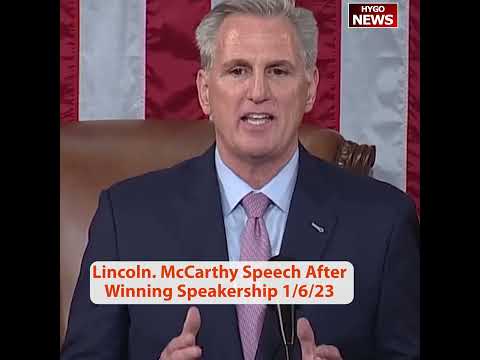
Speaker McCarthy’s Favorite Capitol Spot: Statuary Hall Where Lincoln Sat as “One-Term Congressman”
On 1/7/2023, in his inaugural Speaker speech, Kevin McCarthy described his favorite spot in the Capitol — Statuary Hall, where Abraham Lincoln had served as a one-term congressman. “My most favorite spot in this building is not in this chamber. It’s in the chamber they met before in Statuary Hall. It’s my favorite place to take people on a tour,” McCarthy said. “It’s where Abraham Lincoln served. He’s just a one-term congressman, sat in the back. I like to go to that spot and I like to stand where he stood. I like to do it at night when people aren’t around. I like to look over and look at the clock because that’s the same clock and same view that Abraham Lincoln saw.” McCarthy reflected: “I’ve watched Lincoln serve in the greatest challenge to our Constitution, the Civil War. I watched him take peoples who were rivals and put them together.”
The Statuary Hall Context
Statuary Hall:
Original House chamber — Until 1857.
Now statue collection — Each state’s contributions.
Historical significance — Many famous events.
Tourist attraction — Popular.
Ceremonial use — Sometimes.
The hall hosted:
John Quincy Adams — Died there.
Various speeches — Historical.
Lincoln era — Congress met there.
Ceremonial events — Continuing.
State funerals — On occasion.
”Lincoln Sat in the Back”
McCarthy noted Lincoln’s modest position. “He’s just a one-term congressman, sat in the back,” McCarthy said.
Lincoln’s Congressional career:
1847-1849 — Single term.
Whig Party — Then Republican later.
Young politician — Not yet famous.
Sat in the back — Freshman position.
Mexican War opposition — Controversial then.
The “just a one-term congressman”:
Humble framing — Early Lincoln.
Future greatness — Not yet apparent.
Back-bench role — Typical for junior.
Future potential — Unseen then.
Historical modesty — Before glory.
”At Night When People Aren’t Around”
McCarthy’s personal ritual. “I like to do it at night when people aren’t around,” McCarthy said.
The nighttime visits:
Personal reflection — Alone.
Historical connection — Solitary.
Contemplative moment — For Speaker.
Away from crowds — Private.
Meaningful experience — Personal.
This detail:
Humanized McCarthy — Personally.
Showed historical interest — Genuine possibly.
Created relatable image — For audience.
Political asset — Possibly.
Speaker dimension — Beyond political.
”The Same Clock and Same View”
McCarthy’s connection. “I like to look over and look at the clock because that’s the same clock and same view that Abraham Lincoln saw,” McCarthy said.
The physical continuity:
Same clock — 1847 to present.
Same view — Spatial continuity.
Historical presence — Through objects.
Physical connection — To past.
Tangible history — Valued.
This framing:
Made history present — Physically.
Created personal bond — Through space.
Emphasized continuity — Of institution.
Historical appreciation — Publicly.
Meaningful connection — To past leaders.
Lincoln’s “Greatest Challenge”
McCarthy referenced Lincoln’s presidency. “I’ve watched Lincoln serve in the greatest challenge to our Constitution, the Civil War,” McCarthy said.
Lincoln’s presidency:
1861-1865 — Civil War era.
Greatest crisis — Since founding.
Constitutional test — Ultimate.
Union preservation — Achieved.
Slavery ended — Emancipation.
“Watched Lincoln serve”:
Figurative watching — Through history.
Historical study — Implied.
Inspirational example — For McCarthy.
Leadership lessons — Drawn.
Personal inspiration — Claimed.
”Take Peoples Who Were Rivals and Put Them Together”
McCarthy referenced Lincoln’s cabinet. “I watched him take peoples who were rivals and put them together,” McCarthy said.
Lincoln’s “Team of Rivals”:
Doris Kearns Goodwin book — Popularized.
Cabinet composition — Former primary rivals.
Seward, Chase, Bates — Key figures.
Leadership philosophy — Including opponents.
Historical model — Studied.
McCarthy’s invocation:
Perhaps self-reference — To post-15-ballot.
Unity aspiration — From divisions.
Lincoln parallel — Attempting.
Leadership framework — Inclusive.
Conservative engagement — Even opponents.
The parallel:
McCarthy had 20+ Republican opponents — Initially.
Eventually unified — Through concessions.
Coalition building — Lincoln-like framing.
Aspirational comparison — McCarthy attempting.
Test of fulfillment — Coming.
”Did Not Know If a Nation Could Sustain Itself”
McCarthy referenced Lincoln’s uncertainty. “I watched at a time that he did not know if a nation could sustain itself, but he dreamt of a future,” McCarthy said.
Lincoln’s challenges:
Civil War raging — National crisis.
Union at stake — Existential threat.
Political opposition — Significant.
Military setbacks — Regular.
Uncertainty about future — Real.
“Dreamt of a future”:
Forward vision — Despite crisis.
Hopeful framing — Amid difficulty.
Leadership required — Of imagination.
Historical perspective — On Lincoln.
Inspirational framework — For McCarthy.
The Lincoln Invocation Pattern
McCarthy’s extensive Lincoln references:
Portrait in office — Mentioned.
Statuary Hall visits — Described.
Leadership model — Invoked.
Civil War parallels — Drawn.
Team of Rivals — Referenced.
The Lincoln framing:
Republican tradition — Standard.
Historical legitimacy — Claimed.
Leadership inspiration — Personal.
Bipartisan appeal — Potentially.
Traditional identity — Conservative.
The Conservative Tradition
McCarthy’s inaugural speech reflected:
Traditional conservatism — Historical.
American exceptionalism — Themes.
Founding father reverence — Washington.
Republican identity — Through Lincoln.
Inspirational framework — For governance.
These themes:
Safe political ground — Generally.
Traditional Republican — Appeal.
Base-pleasing — For conservatives.
Institutional respect — For history.
Leadership framing — Inspirational.
The Personal Detail Purpose
McCarthy’s personal Lincoln ritual served:
Humanization — Of Speaker.
Historical appreciation — Shown.
Personal vulnerability — Somewhat.
Relatable moments — Created.
Political branding — Traditional.
The detail:
Unusual for speeches — Personal.
Memorable — For audience.
Media-friendly — For coverage.
Character development — Of speaker.
Positioning — As thoughtful leader.
Key Takeaways
- In his inaugural Speaker speech on January 7, 2023, Kevin McCarthy described his favorite spot in the Capitol: Statuary Hall where Lincoln sat as a “one-term congressman.”
- McCarthy detailed his personal ritual of visiting the spot at night when people weren’t around.
- He emphasized the physical continuity: “the same clock and same view that Abraham Lincoln saw.”
- McCarthy invoked Lincoln’s “greatest challenge to our Constitution, the Civil War” as inspirational model.
- He referenced Lincoln’s “Team of Rivals” approach — perhaps alluding to his own post-15-ballot unity needs.
- The Lincoln invocation fit Republican tradition of claiming inheritance from the 16th President.
- The personal details humanized McCarthy beyond political role.
Transcript Highlights
The following is transcribed from the video audio (unverified — AI-generated from audio).
- My most favorite spot in this building is not in this chamber. It’s in the chamber they met before in Statuary Hall.
- It’s where Abraham Lincoln served. He’s just a one-term congressman, sat in the back.
- I like to go to that spot and I like to stand where he stood.
- I like to do it at night when people aren’t around.
- I like to look over and look at the clock because that’s the same clock and same view that Abraham Lincoln saw.
- I watched him take peoples who were rivals and put them together.
Full transcript: 144 words transcribed via Whisper AI.