 HYGO News
 Leavitt: White House Podcast Row 'Crushes CNN'; UAW's Sean Fain 'Applauded' Auto Tariffs; April 2 'More Conservative Than Expected'
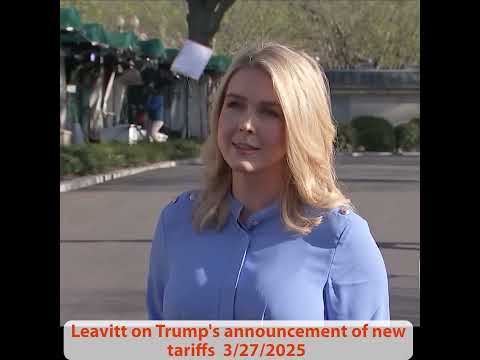
Leavitt: White House Podcast Row “Crushes CNN”; UAW’s Sean Fain “Applauded” Auto Tariffs; April 2 “More Conservative Than Expected”
Press Secretary Karoline Leavitt welcomed podcasters to the White House for “Podcast Row” in March 2025, quipping that “the people in that room have much more viewers than CNN and the legacy media.” She highlighted that the UAW and its president Sean Fain had “applauded the president” for the 25% auto tariff, calling it “a great thing for autoworkers who have been sold out by unfair trade practices.” Leavitt previewed the April 2 reciprocal tariff announcement, noting that Trump believed “some of these numbers will be more conservative than many people are expecting,” and addressed the Signal investigation, confirming the NSA had “taken responsibility” and changes were being implemented.
Podcast Row: “More Viewers Than CNN”
Leavitt opened the briefing by drawing attention to a new feature of the Trump White House’s media strategy.
“Hey everybody, today is Podcast Row here at the White House,” Leavitt said. “And our team has gathered a room full of podcasters with cabinet officials, White House officials who are talking to them about the president and his agenda.”
She delivered the comparison: “And I bet you the people in that room have much more viewers than CNN and the legacy media. Just saying.”
She then jabbed the traditional press corps: “We’re incredibly proud to welcome them to the White House. Right in early. The rest of your colleagues are sleeping in.”
The Podcast Row initiative represented a deliberate media strategy that recognized a fundamental shift in how Americans consumed information. The legacy press — networks, newspapers, and cable news — commanded a shrinking share of public attention. Podcasters, YouTubers, and independent media creators had audiences that often dwarfed traditional outlets. By inviting them to the White House and giving them access to cabinet officials, the administration was bypassing hostile legacy media gatekeepers and speaking directly to the audiences that had helped elect Trump.
The “crushes CNN” comparison was not hyperbole. Joe Rogan’s podcast alone attracted more listeners per episode than CNN’s primetime lineup. Popular political podcasters routinely drew audiences that exceeded the viewership of traditional cable news shows. The media landscape had changed; the White House was adapting.
UAW Endorses Auto Tariffs
Leavitt highlighted what she considered the most significant political development from the auto tariff announcement.
“I would just like to emphasize these auto tariffs yesterday are a big deal for autoworkers in the industry,” Leavitt said. “And you saw the United Auto Workers union — Sean Fain, who wasn’t the greatest fan of the president on the campaign trail — came out this morning and applauded the president for this move, saying it’s a great thing for autoworkers who have been sold out by unfair trade practices.”
The Sean Fain endorsement was politically remarkable. Fain had been one of the most visible labor leaders during the 2024 campaign, publicly supporting Biden and later Harris. His UAW had endorsed the Democratic ticket. For Fain to publicly praise a Trump policy — the 25% auto tariff — represented a validation that transcended partisan politics.
The endorsement also undermined one of the primary criticisms of tariffs: that they would hurt workers. The union that represented the workers most directly affected by auto industry trade policy was saying the tariffs were good for its members. If the UAW supported the policy, the argument that it would harm autoworkers lost its most credible advocate.
Leavitt connected the tariffs to the broader vision: “So the president is determined to rebuild our manufacturing base. We want more jobs, more products made right here in the United States, which means more money in the pockets of the American people at the end of the day.”
April 2: “More Conservative Than Expected”
Leavitt previewed the reciprocal tariff announcement that was days away.
“As you know, on April 2nd, there will be the reciprocal tariff announcement, which is going to focus on countries — particularly that have been ripping off the United States,” she said.
She then offered a detail that would move markets: “The president said yesterday he thinks that some of these numbers will be more conservative than many people are expecting.”
The “more conservative than expected” signal was significant. Markets had been pricing in worst-case tariff scenarios, with some analysts predicting aggressive rates across the board. Trump’s indication that the actual numbers might be lower than feared was designed to provide reassurance without specifics — calming market anxiety while maintaining negotiating leverage.
Leavitt framed the tariffs in worker-centric language: “But we’re going to make sure that American workers are put first, and we’re ending the unfair trade practices that have been hollowing out our middle class for decades.”
The “hollowing out our middle class” phrase captured the argument that had won Trump the presidency twice. Decades of trade agreements that prioritized corporate efficiency over worker welfare had devastated manufacturing communities. The tariffs were not protectionism in the traditional sense; they were a correction to a system that had systematically disadvantaged American workers.
Signal: “Never Denied It Was a Mistake”
Leavitt addressed the ongoing Signal controversy with a measured response that acknowledged the error while limiting its scope.
When a reporter cited a YouGov poll showing 75% of Americans considered the Signal situation a “very serious problem,” Leavitt responded: “We have never denied that this was a mistake. And the National Security Advisor took responsibility for that.”
She described the corrective action: “And we have said we are making changes. We are looking into the matter to ensure it can never happen again.”
When asked about congressional requests for information, Leavitt was precise: “We haven’t seen a request from Congress come through our inboxes yet. And when that does, we’ll have an answer on that.”
The response was calibrated. By saying “we have never denied it was a mistake,” Leavitt preempted the accusation that the administration was covering up or minimizing the incident. By noting the NSA had taken responsibility and changes were being made, she demonstrated accountability. By noting no congressional request had actually arrived, she suggested the political outrage was performative — loud enough for cameras but not substantive enough to generate formal oversight action.
The Broader Media Strategy
The juxtaposition of Podcast Row with the traditional press briefing illustrated the administration’s dual-track media approach. In one room, podcasters with massive audiences were getting direct access to cabinet officials, receiving the administration’s message without the adversarial filtering of legacy media. In the briefing room, Leavitt was managing hostile questions about Signal while redirecting to policy achievements.
The strategy reflected a calculation that the traditional press corps would cover the administration negatively regardless of what happened, while podcasters and new media creators would give the administration a fair hearing. By investing time and access in the new media ecosystem, the White House was building alternative channels that could reach voters who had already stopped watching CNN.
The cherry blossom aside — “Cherry blossoms are here. It’s beautiful” — was a small reminder that amid the political combat, the normal rhythms of Washington continued. The press corps was sparring with the press secretary; the podcasters were interviewing cabinet officials; and the cherry blossoms were blooming along the Tidal Basin.
Key Takeaways
- Leavitt launched White House “Podcast Row,” inviting podcasters and predicting their audience “crushes CNN and the legacy media.”
- UAW President Sean Fain — “who wasn’t the greatest fan of the president” — publicly applauded the 25% auto tariff as “a great thing for autoworkers sold out by unfair trade practices.”
- Leavitt previewed April 2 reciprocal tariffs: “focused on countries ripping off the United States,” but Trump believed numbers would be “more conservative than many people are expecting.”
- On Signal: “We have never denied this was a mistake. The NSA took responsibility. We are making changes to ensure it can never happen again.”
- The administration’s goal: “More jobs, more products made right here in the United States, which means more money in the pockets of the American people.”