 HYGO News
 Laugh, mumble, "Joe, don't get emotional." Biden: Not that I ever get emotional. (Laughter.)
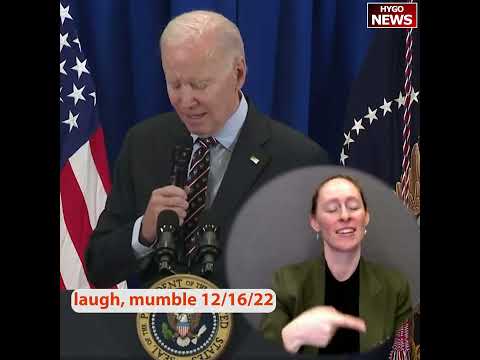
Biden Self-Deprecating Joke: Jill Warned “Don’t Get Emotional” — “Not That I Ever Get Emotional”
In December 2022, at a speech that referenced Indian Air Force matters, President Biden made a self-deprecating joke about his emotional tendencies. “My wife, last morning, today, when she’s still in Washington, where there’s 1200 people showing up at the White House beginning noon. And they’re going to be a little late. And she said, Joe, don’t get emotional,” Biden said. His response to Jill Biden’s reported warning was: “Not that I ever get emotional.” The self-deprecating line was delivered with audience laughter, acknowledging Biden’s well-documented tendency toward public emotional displays. The moment captured Biden’s awareness of his own emotional tendencies and his attempt at humor about them — while also being delivered with the kind of verbal patterns that were generating age-related concerns.
The Context
The speech context was unclear from the transcript but included:
“General Barry” — Someone thanking Biden.
Indian Air Force reference — Possibly about training or operations.
Washington event — With 1200 people showing up.
Jill Biden — Still in Washington while Biden was elsewhere.
Late arrivals — At the event.
The reference to “Indian Air Force” was unusual. It could have been:
Indian military visit — To U.S. facilities.
Joint exercise — Between U.S. and India forces.
Training partnership — Between the two militaries.
Biden reference — To some specific situation.
The context was garbled enough that the specific event wasn’t clear from the transcript alone.
”Joe, Don’t Get Emotional”
Biden’s recounting of Jill’s warning was revealing. “She said, Joe, don’t get emotional,” Biden said.
Jill Biden’s reported warning acknowledged Biden’s tendency toward emotional displays. The warning:
Spousal advice — From someone who knew him best.
Public contexts — Where emotional displays might be inappropriate.
Strategic concern — For public image.
Familiar interaction — Common enough to be relatable.
The warning implied that Biden did get emotional in public settings and that Jill was trying to help him manage this. The familiarity of the warning — the casual “Joe” — suggested it was a recurring conversation.
”Not That I Ever Get Emotional”
Biden’s response was self-deprecating humor. “Not that I ever get emotional,” Biden said.
The irony was obvious. Biden was widely known for:
Public tears — During various emotional moments.
Personal stories — That moved him visibly.
Family references — Particularly his son Beau.
Sympathetic reactions — To others’ losses.
Visible emotion — During speeches.
Biden’s emotional tendencies were political assets in many contexts. His emotional authenticity was part of his connection with voters. He wasn’t trying to appear emotionless — he was just acknowledging the tendency humorously.
The line “not that I ever get emotional” was:
Self-aware — Acknowledging the pattern.
Self-deprecating — Making fun of himself.
Audience-pleasing — Good-natured humor.
Disarming — Preempting criticism.
Authentic — Matching public perception.
The Humor Function
Self-deprecating humor served specific political purposes:
Humanized the President — Showing vulnerability.
Acknowledged perceived weaknesses — Rather than denying them.
Built rapport — Through shared laughter.
Preempted criticism — By making the joke himself.
Showed awareness — Of how he was perceived.
Biden had used self-deprecating humor throughout his career. His willingness to joke about his own tendencies — emotional responses, verbal stumbles, age — was part of his appeal. The humor suggested he wasn’t taking himself too seriously.
The Emotional Politics Context
Biden’s emotional tendencies had complex political implications:
Strength for some audiences — Showing authentic human connection.
Weakness for others — Suggesting lack of emotional control.
Age interpretation — Could be read as both authentic and concerning.
Media coverage — Generated both positive and negative framing.
Opposition attacks — Targeted emotional moments as weak.
Different audiences responded differently to Biden’s emotional tendencies. Supporters saw authenticity and empathy. Critics saw lack of composure or mental instability. The polarized responses meant Biden’s emotional style could be either asset or liability depending on viewer.
The Transcript Verbal Issues
Despite the successful joke, the transcript showed other verbal issues:
“My wife, last morning, today, when she’s still in Washington” — Confused temporal references.
“Beginning noon” — Possibly “beginning at noon” with dropped preposition.
“They’re going to be a little late” — Unclear subject reference.
Garbled structure — Difficult to parse meaning.
These verbal issues existed alongside the successful humor. Biden’s ability to land a self-deprecating joke while also producing confused syntax was characteristic of his late-presidency speaking style. Moments of clear connection alongside moments of verbal difficulty.
The Jill Biden Role
Jill Biden’s role in managing her husband’s public persona was significant:
Spousal guidance — As Biden acknowledged.
Public appearances — Often alongside Biden.
Campaign support — Extensive during 2020.
2024 considerations — Her views mattering for reelection decision.
Message management — Including emotional moments.
Jill Biden’s reported “don’t get emotional” warning fit her broader protective role. As First Lady, she had significant influence on Biden’s schedule, events, and messaging. Her advice about managing emotional displays was consistent with her long-term support.
The 1200 People Context
Biden’s reference to “1200 people showing up at the White House” suggested a major event. Likely:
Holiday reception — Common December events.
Policy announcement — With substantial attendance.
Group engagement — Some specific constituency.
Christmas event — Given December timing.
The 1200 figure was substantial. This was the scale of events that would generate significant presidential attention and preparation. The specific event wasn’t identified in the transcript but was clearly a major occasion.
The Biden Emotional Moments
Various Biden emotional moments had been documented:
Son Beau references — Consistently emotional.
Military family interactions — Often visible emotion.
Gold Star family meetings — Deep personal connection.
Discussing personal losses — Regular emotion.
Various poignant speeches — Visible reactions.
These moments were part of Biden’s political identity. His ability to connect emotionally with audiences was widely recognized, even by critics. The emotional authenticity, regardless of its consequences, was part of who Biden was publicly.
The “don’t get emotional” joke played on this well-known aspect of his character. Everyone in the audience — and any viewer of the clip — would understand immediately why Jill might give such a warning.
The Self-Awareness Question
Biden’s self-deprecating joke suggested:
Awareness of his reputation — For emotional displays.
Comfort with the reputation — Willing to joke about it.
Strategic consideration — Of how to manage the reputation.
Spousal partnership — In managing public image.
Comedic timing — Successful delivery.
This kind of self-awareness was valuable politically. A president who could acknowledge his own tendencies had more credibility than one who denied them. Biden’s willingness to joke about his emotions suggested he was in control of how the trait was perceived.
But self-awareness alone didn’t resolve the broader age-related concerns. Biden being funny about his emotions didn’t address questions about his cognitive sharpness, memory accuracy, or capacity for the demands of the presidency. The successful joke was one data point among many.
The Age Messaging Challenge
Biden’s age was the most significant political challenge heading toward 2024:
80 years old — In November 2022.
Public gaffes — Being documented.
Cognitive questions — Being raised.
Public polling — Showing age concerns.
2024 positioning — Would require age management.
Moments like the “don’t get emotional” joke could work for Biden’s image if understood in isolation. But combined with moments of verbal difficulty, timeline confusion, and other concerning patterns, even successful moments might not overcome the accumulated age narrative.
The administration’s strategy seemed to include using Biden’s humanity and self-awareness to counter age concerns. Biden joking about himself showed presence of mind. Showing emotion showed human connection. These strategies could work but required consistency across many moments.
The Timing
The timing of this appearance — late 2022 — was particularly important. Biden was approaching the decision point about 2024 candidacy. Every public appearance was:
Evidence for the decision — About whether to run.
Material for campaign planning — If he did run.
Political exposure — To potential risks.
Public performance — Shaping perception.
Health assessment — Informal medical tracking.
The “don’t get emotional” moment was one small part of this broader evaluation. Supporters could cite it as evidence of Biden’s charm and authenticity. Critics could cite the garbled context around it as evidence of verbal issues. Both interpretations had merit.
The Cumulative Record
By late 2022, Biden had accumulated:
Successful moments — Like this self-deprecating joke.
Concerning moments — Like the Uncle Frank timeline issues.
Mixed moments — That could be interpreted either way.
Pattern recognition — By observers.
Political implications — For 2024.
Each individual appearance contributed to the broader record. The “don’t get emotional” moment was a positive individual instance, but it existed in the context of larger concerns about Biden’s capacity. No single successful moment could fully counter the accumulating evidence of issues.
Key Takeaways
- At a late 2022 speech, President Biden made a self-deprecating joke about his emotional tendencies.
- Biden recounted that Jill Biden had warned him: “Joe, don’t get emotional.”
- His response drew laughter: “Not that I ever get emotional.”
- The joke acknowledged Biden’s well-documented tendency toward public emotional displays, particularly regarding family and personal stories.
- The successful humor existed alongside verbal patterns in the same transcript (“last morning, today,” “beginning noon”) that reflected the verbal issues generating age-related concerns.
- The self-deprecating moment was one small data point in the cumulative record being assembled as Biden approached his 2024 candidacy decision.
Transcript Highlights
The following is transcribed from the video audio (unverified — AI-generated from audio).
- General Barry, thank you for having us today.
- I ride by this building a lot. The Indian Air Force wanted to fly back and forth to Washington and wherever I’m going.
- It always leaves a little bit of a lump in my throat.
- My wife, last morning, today, when she’s still in Washington, where there’s 1200 people showing up at the White House beginning noon.
- She said, Joe, don’t get emotional.
- Not that I ever get emotional.
Full transcript: 101 words transcribed via Whisper AI.