 HYGO News
 Last time Congress intervened to prevent rail shutdown, Biden was 1 of 6 senators said no
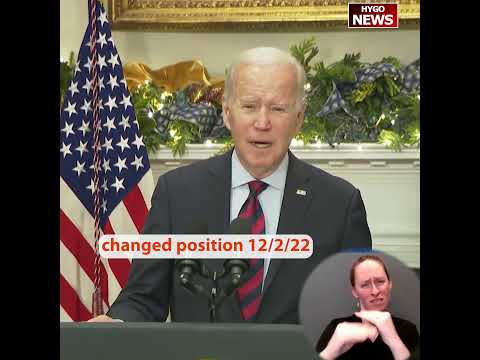
Reporter: In 1992, Biden Was One of Six Senators Who Voted Against Congress Imposing a Rail Contract — Why Is He Seeking the Same Intervention Now?
On 12/2/2022, a reporter at the White House press briefing raised a devastating historical parallel. In 1992, the last time Congress intervened to prevent a railroad labor shutdown, then-Senator Joe Biden had been one of only six senators who voted against the intervention. Biden had argued at the time that congressional imposition of a rail contract was “a dynamic that favors the railroads against the interests of the workers.” Now, as President, Biden was seeking exactly the kind of congressional intervention he had opposed as a senator. The reporter asked why Biden had changed his position. KJP couldn’t answer: “Look, I can’t — when the president has made a decision on this, if he makes a decision on this, you’ll hear directly from him. Don’t have anything to share or preview at this time.”
The 1992 Precedent
The reporter’s question referenced a specific historical vote with direct relevance to the current situation. “In 1992, the last time Congress intervened to prevent a labor rail shutdown, Joe Biden was one of six senators and only six to say that the Congress should not intervene, that it’s a dynamic that favors the railroads against the interests of the workers,” the reporter said.
The 1992 episode was a clear historical parallel. Congress had passed legislation imposing a contract on rail unions to prevent a strike. Biden, then a senator from Delaware, had been one of just six senators who voted against the imposition. His stated reason at the time was that congressional intervention in rail disputes structurally favored the railroads over workers.
This 1992 position was consistent with Biden’s self-identity as a pro-labor senator. Forcing workers to accept a contract they had rejected was indeed favorable to the railroads and disadvantageous to workers. Biden’s 1992 vote reflected a principled position: when given a choice between letting workers strike (preserving their leverage) and forcing them to accept a deal (eliminating their leverage), Biden chose to preserve worker leverage.
Thirty years later, Biden was about to do the opposite. The administration was actively asking Congress to impose the tentative agreement on rejecting workers — exactly the kind of intervention that 1992 Senator Biden had opposed as anti-worker.
The Contradiction
The reporter’s question forced the administration to confront an uncomfortable contradiction. If 1992 Senator Biden was right that congressional intervention favored railroads over workers, then 2022 President Biden was doing something he had previously characterized as harmful to workers. Either Biden had changed his mind (and owed an explanation for the change), or he had abandoned his prior principles (and owed an explanation for the abandonment), or his prior position had been wrong (and he owed an acknowledgment of that).
Any of these possibilities required substantive engagement. A principled position change deserved explanation. A political position change deserved acknowledgment. A prior error deserved correction. KJP’s job was to offer some version of these engagements.
”I Can’t — When the President Has Made a Decision”
KJP’s response was a remarkable non-answer. “Look, again, I can’t, I’m — when the president has made a decision on this, if he makes a decision on this, you’ll hear directly from him. Don’t have anything to share or preview at this time,” KJP said.
The response was incoherent in multiple ways:
“When the president has made a decision on this, if he makes a decision on this” — The oscillation between “when” and “if” was confused. Biden had already made a decision. He was actively asking Congress to impose the contract. The administration was thanking Congress for moving the legislation forward. There was no “if” about it. The decision had been made and was being implemented.
“You’ll hear directly from him” — But the reporter wasn’t asking for a decision announcement. The reporter was asking about a reasoning explanation. Biden had already made the decision to seek congressional intervention. What needed explanation was why he had done so despite his prior opposition to similar intervention.
“Don’t have anything to share or preview at this time” — This was the dodge. KJP was declining to address the question by claiming she had nothing to say, even though the question was about already-public events (Biden’s 1992 vote) and already-public administration action (seeking congressional intervention).
The non-answer was particularly damaging because the reporter’s question was based entirely on facts that were already in the public record. KJP didn’t need to preview a decision or share sensitive information — she needed to explain a position change. The refusal to engage suggested that the administration had no defensible explanation for the contradiction.
The Bill Signing Context
The exchange occurred in the context of Biden’s signing of the rail imposition legislation. Just before the reporter’s question, Biden had thanked Congress for its action: “I want to thank Congress once again for being partners today, for averting this disaster and keeping our economy on a stable footing during the holiday season. I want to thank you all and I’m going to reach over here and sign this bill and make it official.”
The timing made the contradiction more acute. Biden was in the process of celebrating the congressional intervention that he had voted against in 1992. The reporter’s question was essentially asking: why are you celebrating what you previously opposed?
The celebration framing was notable. “Averting this disaster” and “keeping our economy on a stable footing” were the justifications for the intervention — economic stability trumping worker interests. These were the exact considerations Biden would have weighed in 1992, and he had then concluded that workers’ interests should take precedence over economic stability concerns. His 2022 conclusion was the opposite.
The Position Change Without Explanation
Politicians change positions over time. That’s normal. What’s not normal is changing positions without acknowledgment or explanation. Biden’s 1992 vote had been on the record for three decades. His current action directly contradicted that prior position. The minimum expected response to the reporter’s question was some version of: “Senator Biden took a certain position in 1992. President Biden now takes a different position because [reasons]. Here’s how to understand the change.”
No such explanation was ever provided. The administration simply moved forward with the intervention while avoiding any discussion of the prior position. This pattern — acting on current political needs while refusing to explain inconsistencies with prior positions — was characteristic of Biden’s approach to potentially embarrassing historical comparisons.
Similar patterns had emerged on other issues:
- Crime policy: Biden had supported tough-on-crime legislation in the 1990s that he had since distanced from
- Iraq War: Biden had voted for the war authorization in 2002 but later opposed the war
- Abortion: Biden’s position had evolved over decades of political career
- Same-sex marriage: Biden had initially opposed before supporting
- Healthcare: Biden had opposed Medicare for All while supporting public option
In each case, Biden had changed positions without extensive public explanation. The changes were typically attributed to “evolution” or changing circumstances without detailed accounts of why specifically the changes had occurred. The rail strike was another instance of the same pattern.
The Union Impact
The 1992 parallel was particularly important because of its implications for Biden’s relationship with labor. The 1992 Senator Biden had earned labor’s trust by opposing intervention that favored railroads over workers. That trust contributed to labor’s support for Biden throughout his career.
The 2022 President Biden was doing the opposite — intervening in a way that favored railroads over workers. This action undermined the trust he had built through positions like his 1992 vote. Labor unions noticed the contradiction, and some publicly criticized Biden for his rail strike intervention.
The Brotherhood of Maintenance of Way Employees Division (one of the rejecting unions) issued a statement expressing disappointment. Other union leaders, including Bernie Sanders (a longtime labor ally), publicly opposed the imposition without sick leave. The political cost to Biden’s pro-labor reputation was real, even as he insisted he was still “the most pro-union president in history.”
The “Stable Footing” Framing
Biden’s rhetorical framing — “keeping our economy on a stable footing during the holiday season” — was strategically chosen. By emphasizing economic stability and the holiday season, Biden was creating a justification for intervention that emphasized consumer and business interests over worker interests.
The framing was effective for short-term political cover. Who could oppose keeping the economy stable during the holidays? But the framing was also deliberately silent on what was being traded for that stability. Worker interests — specifically, paid sick leave for rail employees who had to work in dangerous conditions — were the price being paid for holiday economic stability. Biden wasn’t acknowledging this trade-off.
Key Takeaways
- A reporter raised a devastating historical parallel: in 1992, Biden was one of only six senators who voted against Congress imposing a rail contract, arguing it “favors the railroads against the interests of the workers.”
- 2022 President Biden was actively seeking the exact intervention 1992 Senator Biden had opposed.
- The reporter asked KJP why Biden had changed his position; KJP couldn’t provide an explanation.
- Biden celebrated “Congress being partners” for the intervention — exactly the kind of intervention he had previously characterized as anti-worker.
- The pattern of position changes without public explanation was characteristic of Biden’s approach to historical inconsistencies.
Transcript Highlights
The following is transcribed from the video audio (unverified — AI-generated from audio).
- I want to thank Congress once again for being partners today, for averting this disaster and keeping our economy on a stable footing during the holiday season.
- I’m going to reach over here and sign this bill and make it official.
- In 1992, the last time Congress intervened to prevent a labor rail shutdown, Joe Biden was one of six senators — only six — to say that Congress should not intervene.
- It’s a dynamic that favors the railroads against the interests of the workers.
- Why would he seek congressional intervention now?
- When the president has made a decision on this, if he makes a decision on this, you’ll hear directly from him.
Full transcript: 145 words transcribed via Whisper AI.