 HYGO News
 KJP Won't Say Why Biden Didn't Notify Public Of Classified Docs When He Found Out
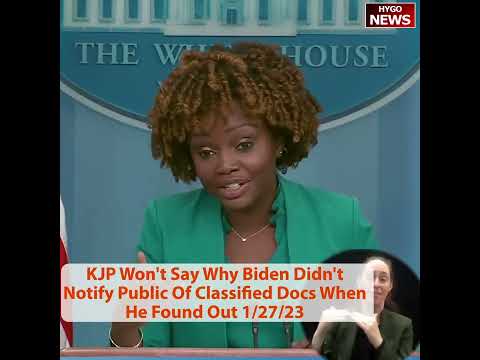
Reporter: Why Didn’t Biden Go Public on November 2 When Lawyers Told Him? KJP: “Refer You to White House Council”
In late January 2023, a reporter asked White House Press Secretary Karine Jean-Pierre the pointed question about why Biden didn’t publicly disclose the classified documents when he first learned of them in November 2022. “Why didn’t the president go public on November 2nd when he found out from his lawyers a class by documents were found in the House?” the reporter asked. KJP’s response was standard: “I would refer you to the White House Council. Who has put out statements on this on their timeline and speaking to this.” When reporter pressed about pre-investigation timing, KJP continued: “Federal investigation, who could have gone public at that point? I would refer you to the White House Council.” The November 2 date was crucial — it preceded the midterms and the public knew nothing while administration had known for days.
The November 2 Date
November 2 context:
Midterm elections — November 8.
Six days before — Elections.
Discovery date — At Penn Biden Center.
Political implications — Massive.
Public unaware — For months.
The November 2 discovery date was politically critical. Biden’s team had known about classified documents before midterm elections but hadn’t disclosed this. Public revelation came in January 2023, nearly two months later.
The Pre-Election Timing
Pre-election timing:
Six days to midterms — Critical.
Political impact — If known.
Democratic advantage — From not knowing.
Trump contrast — Reduced.
Electoral calculation — Possible.
If public had known in November, midterm dynamics might have been different. Trump’s classified documents case had been political issue. Parallel Biden case would have complicated Democratic messaging.
The Reporter’s Question
The reporter’s precision:
Specific date — November 2.
Specific action — Going public.
Lawyer notification — When learned.
Context established — Timeline.
Accountability question — Pointed.
The specific date and action made the question hard to deflect. The reporter had established factual basis for political question about timing decisions.
”I Would Refer You to the White House Council”
KJP’s standard deflection. “I would refer you to the White House Council. Who has put out statements on this on their timeline and speaking to this,” KJP said.
The deflection:
Counsel referral — Standard.
Statements cited — As substitute.
Timeline reference — Without providing.
Standard pattern — Maintained.
No substantive engagement — Again.
The deflection to Counsel for timing decisions was inappropriate. The question wasn’t about legal strategy but about public communications decisions. These weren’t Counsel territory specifically.
”Federal Investigation, Who Could Have Gone Public at That Point?”
The reporter’s follow-up was sharp. “Federal investigation, who could have gone public at that point?” the reporter asked.
The follow-up:
Investigation question — About federal.
Pre-investigation period — November 2.
Going public authority — Question.
Legal constraint — Challenged.
Timing alternative — Implied.
The reporter was pointing out that November 2 preceded any federal investigation. No one was preventing Biden’s team from going public before investigation began. The deflection to Counsel suggested legal constraints that didn’t exist at the time.
The Investigation Timeline
Investigation timeline:
November 2 — Discovery.
DOJ notified — Days later.
John Lausch appointed — Initial investigation.
Hur Special Counsel — January 12, 2023.
Full investigation — Ongoing.
The federal investigation didn’t begin immediately. DOJ review started after notification, but initial days had no formal investigation preventing public disclosure. The timing question remained valid.
The Disclosure Decision
Disclosure decision:
Administrative choice — Not to disclose.
Legal advice — Possibly.
Political calculation — Possibly.
Timing — Pre-election.
Strategic choice — Made.
Someone in administration had made decision not to disclose. Whether this was legal advice, political calculation, or both, it was choice not required by circumstances. The decision-makers were accountable.
The Political Calculation Question
Political calculation questions:
Midterm impact — Of disclosure.
Democratic concerns — Voiced internally.
White House political office — Involvement.
Partisan timing — Suggested.
Manipulation charges — Possible.
Whether administration timing decisions were influenced by midterm political calculations was serious question. Any evidence of such influence would be politically devastating.
The Standard Handling
Normal handling of classified documents:
Reporting to NARA — Required.
Public disclosure — Variable.
Timing — Often delayed.
Investigation integrity — Can justify.
Standard practice — Complex.
Not all classified documents discoveries were publicly announced immediately. Some stayed confidential during investigation. The political environment around Biden’s case made timing questions specially charged.
The Pence Comparison
Pence comparison:
Pence documents — Found January 2023.
Public disclosure — Within days.
Proactive approach — Visible.
Contrast with Biden — Pointed.
Standard raised — By Pence.
Pence’s quick disclosure of his own documents raised standard for presidential disclosure. Biden’s two-month delay looked worse by comparison. The contrast was unfavorable.
The Trump Comparison
Trump comparison:
Trump case — Different.
Known publicly — Earlier.
Warrant used — Eventually.
Administration opposition — Visible.
Political framing — Different.
Trump’s case had been more public because administration had cooperated less. The warrant-based search became public quickly. Biden’s consent-based approach was less visible for longer.
The Accountability Gap
Accountability gap:
Key decision — Timing of disclosure.
Unclear reasoning — For delay.
Administration silence — Maintained.
Public interest — In explanation.
Gap — Persistent.
The timing decision was one of most politically significant aspects of whole affair. Yet administration refused to explain or justify. This was major accountability gap.
The Interrupted Question
The interruption:
“Federal investigation, who could have gone public at that point?” — Strong question.
“I would refer you to the White House Council” — Deflection.
“Go ahead, Alex. Go ahead, Alex.” — Moving on.
Pattern — Avoiding difficult questions.
Coverage — Of avoidance.
KJP’s quick move to next reporter ended the challenging line of questioning. This was standard pattern when specific questions became too pointed.
The Political Stakes
Political stakes:
Timing decisions — Politically sensitive.
Pre-midterm — Critical.
Electoral implications — Significant.
Investigation — Likely to examine.
Accountability — Eventually required.
The timing decisions were politically significant enough that Hur’s investigation would almost certainly examine them. Eventual findings would be consequential.
The Legal Advice Question
Legal advice question:
Biden’s lawyers — Advised not to disclose.
Political team — Possibly.
Combined decision — Possible.
Specific reasoning — Unclear.
Investigative issue — Major.
The extent to which timing was driven by legal advice versus political calculation would be investigative question. Different conclusions had different implications.
The Midterm Dynamics
Midterm dynamics:
Close elections — Multiple races.
Trump issues — Including documents.
Democratic advantage — From contrast.
Biden approval — Below average.
Every factor mattered — For close races.
In context of close midterm races, Biden classified documents revelation could have affected outcomes. The delay preserved Democratic advantage on this issue.
The Discovery Circumstances
Discovery circumstances:
Penn Biden Center — First location.
Office cleanup — Context.
Lawyers present — During discovery.
Accidental discovery — Claimed.
Routine work — Framing.
The circumstances of discovery matter for evaluating handling. If discovery was during routine cleanup, immediate public disclosure might not be standard. But extended delay created questions.
The Two-Month Period
Two-month delay:
November 2 — First discovery.
January 9 — Public revelation.
Nine weeks — Of silence.
Administrative knowledge — Throughout.
Voter knowledge — Zero.
Nine weeks was substantial delay. During that period, administration knew but public didn’t. Whether this served legitimate investigative purposes or political interests was key question.
The Investigation Integrity Claim
Investigation integrity claim:
Administration defense — For delay.
Investigator preferences — Cited.
Confidentiality requested — Claimed.
Cooperation required — Invoked.
Legitimate interests — Asserted.
The investigation integrity argument had some merit but didn’t fully explain delay. Some investigations do proceed with public notification. The universal application here was questionable.
The Midterm Calendar
Midterm calendar:
Ballots being cast — Early voting.
Campaign ending — November 8.
Closing arguments — Being made.
Trump documents — Still issue.
Symmetry missing — In public.
The midterm calendar made timing politically crucial. Public knowledge during final week could have affected close races. Delaying disclosure past election preserved certain political dynamics.
The Administrative Processes
Administrative processes:
Counsel involvement — Yes.
Political office — Possibly involved.
Biden personally — Informed.
Strategy decisions — Made.
Timing set — By someone.
The specific administrative process that decided timing was important. Which decision-makers prioritized what factors would be investigative question. Administration silence on this was notable.
The Broader Accountability
Broader accountability:
Congressional oversight — Coming.
Investigation conclusions — Eventually.
Media scrutiny — Sustained.
Voter evaluation — 2024.
Historical record — Being written.
The accountability would come through multiple mechanisms. Congress, Hur investigation, media, voters would all assess administration handling. Current silence delayed but didn’t prevent accountability.
The Information Control
Information control:
Successfully maintained — Through election.
Eventually broke — After election.
Timing revealed — Gradually.
Damage — Still significant.
Questions remaining — Many.
Administration had successfully controlled information through critical period. After election, gradual revelation began. But damage from delay, once revealed, was still substantial.
The Historical Parallels
Historical parallels:
Nixon documents — Late disclosure.
Clinton emails — Timing issues.
Various scandals — Timing questions.
Pattern — Of delay being controversial.
Political cost — Often realized.
Timing of scandal disclosures had been issue in previous political controversies. Administrations often delayed announcements to their perceived benefit. The political cost of such delays often came eventually.
Key Takeaways
- A reporter asked KJP the pointed question: “Why didn’t the president go public on November 2nd when he found out from his lawyers a class by documents were found in the House?”
- November 2 was six days before midterm elections.
- KJP deflected: “I would refer you to the White House Council.”
- When reporter pressed about pre-investigation period, KJP continued deflection: “Federal investigation, who could have gone public at that point? I would refer you to the White House Council.”
- The question highlighted two-month delay from initial discovery to public disclosure, preserving political dynamics through midterms.
- The Counsel referral was inappropriate for timing questions about public communications decisions rather than legal matters.
Transcript Highlights
The following is transcribed from the video audio (unverified — AI-generated from audio).
- I want to go back to November 2nd. Why didn’t the president go public on November 2nd when he found out from his lawyers a class by documents were found in the House?
- I would refer you to the White House Council.
- Who has put out statements on this on their timeline and speaking to this?
- My colleagues from the White House Council has had conversations with many of you answering questions on this.
- Federal investigation, who could have gone public at that point?
- I would refer you to the White House Council. Go ahead, Alex. Go ahead, Alex.
Full transcript: 108 words transcribed via Whisper AI.