 HYGO News
 KJP: we had plan & success in immigration at Southern Border, blame Republicans have no plans
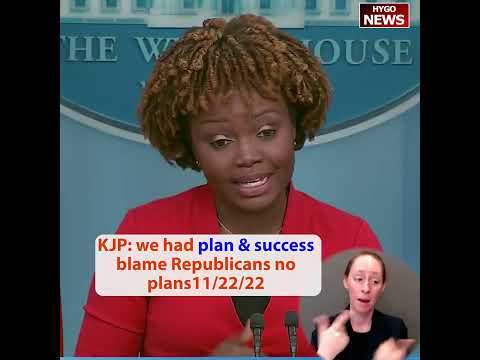
KJP Claims Biden “Has a Plan” for the Border — Points to Day-One Immigration Bill That Never Passed, Never Implemented, Never Helped
On 11/22/2022, White House Press Secretary Karine Jean-Pierre defended Biden’s border policy by pointing to a “comprehensive immigration plan” the president had put forth “on his first day in the White House.” KJP said: “We have a plan. We’ve been putting that forward. McCarthy has no plan. The Republican Party has no plan. They do nothing except do political stunts.” But the “plan” she referenced — the U.S. Citizenship Act of 2021 — had been introduced nearly two years earlier and had never passed Congress, never been implemented, and never reduced border encounters. The plan KJP cited as evidence of administration action was itself a document that had done nothing to address the ongoing crisis. A reporter asked a pointed follow-up: “Is there a change in approach?” KJP’s response was that the administration had “a plan we put forward” — meaning no change.
”Day One Plan”
KJP’s defense began with an appeal to the administration’s early actions. “The first day on the president’s first day in the White House, he put forth a comprehensive immigration plan because he knew how important it was to move forward with getting this done,” KJP said.
The “day one plan” KJP referenced was the U.S. Citizenship Act of 2021, introduced in both chambers of Congress on February 18, 2021. The bill proposed:
- A path to citizenship for approximately 11 million undocumented immigrants already in the United States
- Increased refugee admissions caps
- Additional resources for border processing
- Changes to asylum adjudication procedures
- Increased legal immigration channels
The bill was comprehensive in scope but was introduced without a clear path to passage. It required 60 Senate votes that didn’t exist, didn’t attract Republican support, and wasn’t a priority for Democratic leadership. The bill was referred to committees in both chambers and never received a floor vote.
By November 2022 — 21 months after introduction — the bill was dead in terms of legislative action. It had not been amended, marked up, or voted on. It existed as a document in the Congressional Record, nothing more.
KJP’s invocation of this bill as evidence of administration planning was rhetorically strange. Pointing to legislation that had failed to advance was not evidence of a successful strategy — it was evidence of a strategy that hadn’t worked. “We had a plan” is different from “we succeeded in implementing a plan.” KJP was citing the former as if it were the latter.
”McCarthy Has No Plan”
KJP then returned to attacking Republicans. “McCarthy has no plan. The Republican Party has no plan. They do nothing except do political stunts,” KJP said.
The claim that Republicans had “no plan” for the border was factually questionable. Republican proposals throughout 2022 had included:
- Reinstating Remain in Mexico (MPP)
- Building additional border barriers
- Expanding Title 42 enforcement
- Cutting federal funding for sanctuary cities
- Penalties for employers hiring undocumented workers
- Enhanced border patrol funding and staffing
Whether these proposals would work was debatable. Whether they were wise policy was debatable. But claiming that Republicans had “no plan” was inaccurate. They had multiple specific proposals, some of which had been implemented during the Trump administration with measurable effects on border encounters.
The “no plan” charge was particularly ironic coming from an administration whose cited evidence of planning was a failed bill from 22 months earlier. If a failed bill counted as “a plan,” then surely the multiple specific Republican proposals also counted as plans. KJP was applying different standards to Democratic and Republican ideas.
”Is There a Change in Approach?”
The reporter pressed for specifics. “So is there a change in approach? So given that you’re changing leadership at CBP, does that signal that the administration is going to change course at all?” the reporter asked.
The question was about whether the departure of Chris Magnus as CBP Commissioner — which had been forced over his performance on the border crisis — signaled a broader policy change. Magnus had been widely criticized for his detached management style and perceived lack of urgency about the crisis. His removal suggested that someone in the administration had recognized that the border approach wasn’t working.
If the administration was changing leadership because of performance concerns, a reasonable inference was that broader policy changes might follow. The reporter was asking KJP to confirm or deny this inference.
”We Feel That We Have a Plan”
KJP’s response was essentially “no.” “We feel that we have a plan that we have put forward. Instead of doing political stunts and making this about politics, you know, why don’t Speaker McCarthy, soon to be Speaker McCarthy, actually put a plan before us, actually come to the table and put some work into it,” KJP said.
“We feel that we have a plan” was the entirety of the policy response. No specifics. No changes. No new initiatives. No adjustments based on the CBP leadership change. The administration’s position was that the existing plan was adequate and the problem was Republican obstruction rather than plan failure.
The “come to the table and put some work into it” line was the final pivot to blaming Republicans. But this framing inverted the normal political dynamic. It’s typically the responsibility of the party in power to convene, lead, and implement policy. The minority party’s role is to oppose, criticize, and propose alternatives — not to “come to the table” with the administration’s agenda.
The Success Claim
The title of the clip referenced KJP’s claim of “success” at the Southern Border. This was consistent with the broader administration messaging throughout 2022 — that the border situation was under control, that plans were working, and that criticism was political rather than substantive.
But the data contradicted the success claim. Fiscal year 2022 had produced 2.4 million border encounters — the highest annual total ever recorded. Monthly encounter numbers were regularly exceeding 200,000 — levels that would have been considered catastrophic in previous administrations. The number of “gotaways” (people detected but not apprehended) was estimated at 600,000 additional migrants. Cartel smuggling operations had expanded. Fentanyl trafficking was contributing to a national overdose crisis.
Calling this record “success” required redefining the word. The administration was treating the crisis as something to be managed rather than something to be reduced, and measuring success by whether the management was holding together rather than whether the underlying numbers were improving.
The Post-Title 42 Challenge
The exchange was particularly relevant because Title 42 was ending. Without Title 42’s authority to quickly expel migrants, the administration would need new tools to manage the border. The “day one plan” KJP cited — the U.S. Citizenship Act of 2021 — didn’t include those tools. It focused on legal pathways, not enforcement mechanisms. It couldn’t substitute for Title 42’s expulsion authority.
The administration’s actual post-Title 42 approach would emerge over subsequent months, including new processing centers, expanded parole programs, and new asylum procedures. None of these had been clearly articulated in November 2022. KJP’s defense — “we have a plan” — was functionally empty because she couldn’t describe what the plan would actually do as Title 42 ended.
Key Takeaways
- KJP pointed to Biden’s “day one” immigration bill as evidence of administration planning — but the bill had never passed, never been implemented, and never reduced border encounters.
- She claimed Republicans “have no plan” — though Republicans had multiple specific proposals that had been implemented with measurable effects under previous administrations.
- When asked if the CBP leadership change signaled broader policy changes, KJP said “we feel that we have a plan” — meaning no.
- The title’s claim of “success in immigration” contradicted FY2022 data showing 2.4 million border encounters — the highest ever recorded.
- The administration’s messaging was circular: any critique of the plan was met with Republican blame, and any Republican proposal was dismissed as a stunt.
Transcript Highlights
The following is transcribed from the video audio (unverified — AI-generated from audio).
- We have put a solution to this. We have said here are the ways that we can deal with this.
- The first day on the president’s first day in the White House, he put forth a comprehensive immigration plan.
- We have a plan. We’ve been putting that forward. McCarthy has no plan.
- Is there a change in approach? Given that you’re changing leadership at CBP, does that signal that the administration is going to change course at all?
- We feel that we have a plan that we have put forward.
- Instead of doing political stunts and making this about politics, why don’t Speaker McCarthy come to the table?
Full transcript: 176 words transcribed via Whisper AI.