 HYGO News
 KJP Says Exploding Cost Of So-Called 'Inflation Reduction Act' Is 'A Good Thing'
By HYGO News
Published
· Updated
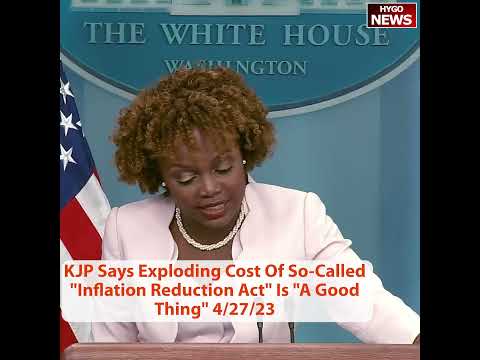
KJP Says Exploding Cost Of So-Called “Inflation Reduction Act” Is “A Good Thing”
White House Press Secretary Karine Jean-Pierre defended during an April 2023 briefing the Penn Wharton Budget Model’s dramatic new cost estimate for the Inflation Reduction Act’s climate provisions — now “more than a trillion dollars over 10 years” compared to the original $385 billion estimate. Jean-Pierre called the tripled cost estimate “a good thing” because it reflected more manufacturing and clean energy projects being deployed than originally scored.
The Penn Wharton Budget Model
- Updated estimate: Updated cost estimate.
- Tripled projection: Tripled cost projection.
- 10-year timeframe: 10-year timeframe.
- Independent analysis: Independent analysis.
- Professional budgeting: Professional budgeting.
The Original vs. New
- $385 billion original: $385 billion original.
- $1 trillion new: Over $1 trillion new estimate.
- 260%+ increase: 260%+ increase.
- Dramatic revision: Dramatic revision.
- Implementation reality: Implementation reality.
Jean-Pierre’s “Good Thing”
- Cost embrace: Cost embrace.
- Policy success metric: Policy success metric.
- Counter-intuitive framing: Counter-intuitive framing.
- Political positioning: Political positioning.
- Narrative control: Narrative control.
The Climate Provision Focus
- Specific area: Specific area of cost growth.
- Implementation details: Implementation details.
- Manufacturing projects: Manufacturing projects.
- Clean energy deployment: Clean energy deployment.
- Policy effectiveness: Policy effectiveness.
The JCT Assumption
- Joint Committee on Taxation: Joint Committee on Taxation.
- Professional analysis: Professional analysis.
- Underestimation acknowledgment: Underestimation acknowledgment.
- Implementation reality: Implementation reality.
- Analytical revision: Analytical revision.
The “Private Sector Investments”
- Investment framing: Investment framing.
- Economic development: Economic development.
- Private sector activity: Private sector activity.
- Policy success: Policy success.
- Economic impact: Economic impact.
The Deficit Reduction Claim
- “Reduces deficit”: “Reduces the deficit” claim.
- Time passes: “As time passes.”
- Second decade: “Second decade and beyond.”
- Long-term framework: Long-term framework.
- Fiscal argument: Fiscal argument.
The “Rich Tax Cheats”
- Enforcement emphasis: Enforcement emphasis.
- Populist framing: Populist framing.
- Wealthy targeting: Wealthy targeting.
- Revenue generation: Revenue generation.
- Political messaging: Political messaging.
The CBO Context
- Congressional Budget Office: Congressional Budget Office.
- Expert analysis: Expert analysis.
- Underestimation: Underestimation.
- Professional analysis: Professional analysis.
- Fiscal analysis: Fiscal analysis.
The Policy Reality
- Bill implementation: Bill implementation.
- Real-world adoption: Real-world adoption.
- Corporate response: Corporate response.
- Investment patterns: Investment patterns.
- Market effects: Market effects.
The Political Strategy
- Cost reframing: Cost reframing.
- Success narrative: Success narrative.
- Achievement claim: Achievement claim.
- Political positioning: Political positioning.
- Strategic communication: Strategic communication.
The Fiscal Context
- Deficit concerns: Deficit concerns.
- Government spending: Government spending.
- Republican criticism: Republican criticism.
- Political debate: Political debate.
- Economic impact: Economic impact.
The Climate Investment
- Clean energy: Clean energy deployment.
- Manufacturing: Manufacturing expansion.
- Investment incentives: Investment incentives.
- Policy effectiveness: Policy effectiveness.
- Economic development: Economic development.
The Reporter’s Logic
- Fiscal concern: Fiscal concern.
- Cost analysis: Cost analysis.
- Professional inquiry: Professional inquiry.
- Accountability pursuit: Accountability pursuit.
- Democratic function: Democratic function.
The Administration Defense
- Success reframing: Success reframing.
- Policy achievement: Policy achievement.
- Implementation success: Implementation success.
- Economic impact: Economic impact.
- Political positioning: Political positioning.
The Historical Context
- IRA passage: IRA passage.
- Cost estimates: Cost estimates.
- Implementation realities: Implementation realities.
- Policy evolution: Policy evolution.
- Fiscal history: Fiscal history.
The Republican Critique
- Spending concerns: Spending concerns.
- Fiscal responsibility: Fiscal responsibility.
- Policy critique: Policy critique.
- Political messaging: Political messaging.
- Electoral preparation: Electoral preparation.
The Policy Implementation
- Tax credits: Tax credits.
- Direct spending: Direct spending.
- Regulatory frameworks: Regulatory frameworks.
- Corporate incentives: Corporate incentives.
- Consumer subsidies: Consumer subsidies.
The Climate Agenda
- Paris Agreement: Paris Agreement.
- Net zero: Net zero goals.
- International leadership: International leadership.
- Clean energy transition: Clean energy transition.
- Policy framework: Policy framework.
The Economic Analysis
- Investment multiplier: Investment multiplier.
- Economic development: Economic development.
- Job creation: Job creation.
- Technological advancement: Technological advancement.
- Long-term growth: Long-term growth.
The Political Implications
- 2024 election: 2024 election.
- Policy positioning: Policy positioning.
- Voter appeal: Voter appeal.
- Strategic communication: Strategic communication.
- Electoral preparation: Electoral preparation.
The Administrative Strategy
- Success framing: Success framing.
- Cost management: Cost management.
- Policy achievement: Policy achievement.
- Political messaging: Political messaging.
- Narrative control: Narrative control.
The Fiscal Debate
- Budget concerns: Budget concerns.
- Deficit impact: Deficit impact.
- Long-term projections: Long-term projections.
- Economic effects: Economic effects.
- Policy trade-offs: Policy trade-offs.
The Media Coverage
- Budget analysis: Budget analysis.
- Political commentary: Political commentary.
- Fiscal reporting: Fiscal reporting.
- Policy debate: Policy debate.
- Public engagement: Public engagement.
Key Takeaways
- Jean-Pierre defended exploding IRA climate provision costs as “a good thing.”
- Penn Wharton Budget Model revised cost from $385 billion to over $1 trillion over 10 years.
- She said the cost increase reflects more manufacturing and clean energy deployment.
- Jean-Pierre argued it means “more private sector investments.”
- She claimed IRA “increasingly reduces the deficit as time passes.”
- The exchange showcased administration’s reframing of cost overruns as policy success.
Transcript Highlights
The following quotations are drawn from an AI-generated Whisper transcript of the briefing and should be considered unverified pending official transcript release.
- “I wanted to ask you about the Inflation Reduction Act. The Penn Wharton budget model just came out.” — Reporter framing
- “The new estimate based on implementation details for the climate provision is now more than a trillion dollars over 10 years.” — Reporter framing
- “Is government spending a concern for this president?” — Reporter question
- “The higher score reflects that the Joint Committee on Taxation Assumption, that the Inflation Reduction Act will spur more manufacturing projects and more clean energy deployment than when JCT originally scored the bill.” — Karine Jean-Pierre
- “That is a good thing. It means more private sector investments.” — Karine Jean-Pierre
- “The Inflation Reduction Act increasingly reduces the deficit as time passes, including that second decade.” — Karine Jean-Pierre
Full transcript: 175 words transcribed via Whisper AI.