 HYGO News
 KJP: 'Not Assisting' In Secret Service Investigation Of Cocaine Found In West Wing
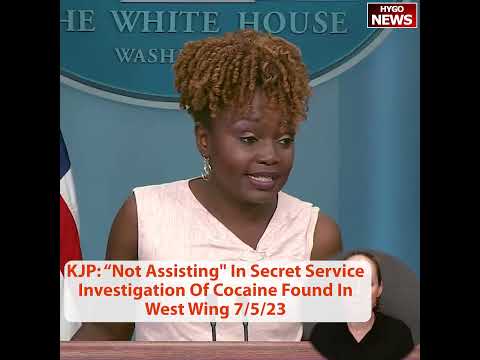
KJP Says White House Is “Not Assisting” in Secret Service Investigation of Cocaine Found in West Wing
On July 5, 2023, when asked point-blank how the White House was cooperating with the Secret Service investigation into cocaine discovered in the West Wing, Press Secretary Karine Jean-Pierre gave a response that stunned reporters: the White House was “not assisting in anything.” The blunt declaration that the most powerful office in the country was entirely uninvolved in investigating how an illegal substance ended up on its own premises raised immediate questions about whether the administration was interested in finding answers or in maintaining distance from an embarrassing situation.
The Exchange That Defined the Briefing
A reporter asked a straightforward question about the White House’s role in the investigation: “Can you just tell us how the White House is assisting the Secret Service with this investigation? Have you made any White House officials available for interviews with law enforcement, for example?”
Jean-Pierre’s response was immediate and unequivocal: “Look — look, we’re not assisting in anything. This is under the Secret Service purview. This is their — their, kind of, guidance and guideline, their — their world. And so we’re going to let them do their job. We are not involved in this. This is something that the Secret Service handles. It’s under their protocol.”
The answer was remarkable for its directness. Most institutions that discover illegal substances on their premises would emphasize their cooperation with law enforcement. Jean-Pierre did the opposite, going out of her way to stress that the White House had no role in the investigation and was “not involved.”
The phrasing “we’re not assisting in anything” was particularly notable. The reporter had asked how the White House was assisting, implicitly assuming that any institution would cooperate with an investigation taking place on its own grounds. Jean-Pierre’s response rejected the premise entirely. The White House was not merely declining to lead the investigation — it was declining to participate in it at all.
The Secret Service Jurisdiction Argument
Jean-Pierre’s defense rested on jurisdictional grounds. The Secret Service is responsible for security at the White House, and any investigation into security incidents on the premises falls within its authority. In that narrow sense, Jean-Pierre was technically correct that the investigation was “under their purview.”
However, the jurisdictional argument did not explain why the White House would not cooperate with or assist the investigation even in a supporting role. Federal investigations routinely involve cooperation from the institutions where incidents occur. Employees are interviewed, access logs are reviewed with institutional assistance, and organizational leaders typically express active interest in facilitating the process.
The White House’s posture of total noninvolvement suggested a political calculation rather than a legal one. By keeping the White House entirely separate from the investigation, the administration could avoid any obligation to comment on findings, share information about who had access to the relevant areas, or address follow-up questions about the investigation’s progress.
The Context: Cocaine Found on the Fourth of July Weekend
The cocaine was discovered in the West Wing on Sunday, July 2, 2023, during the Fourth of July holiday weekend. The discovery came at a particularly sensitive time for the Biden administration. Hunter Biden’s well-documented struggles with drug addiction had been a recurring source of political controversy, and his frequent visits to the White House had drawn scrutiny from Republican critics.
Jean-Pierre had separately made it a priority during the same briefing to establish that President Biden, First Lady Jill Biden, Hunter Biden, and the entire Biden family had been at Camp David from Friday through Tuesday. The family returned to the White House on July 4 for the Independence Day celebration, where Hunter was given a prominent position on the Truman Balcony during the fireworks display.
By emphasizing the family’s absence and simultaneously declaring the White House uninvolved in the investigation, Jean-Pierre created a narrative wall around the Biden family. The implicit message was: the Bidens were not there when it was found, the White House is not involved in the investigation, and any speculation about the family’s connection to the cocaine is unfounded.
What “Not Assisting” Meant for the Investigation
The practical implications of the White House’s noninvolvement became apparent in the weeks that followed. The Secret Service investigation was limited in scope and resources. Without active White House cooperation in identifying who had been in the relevant areas, reviewing internal access logs beyond what the Secret Service independently maintained, or making staff available for interviews, the investigation operated with significant constraints.
The area where the cocaine was found was described as “heavily traveled,” with multiple entrances and a high volume of visitors from staff-led tours. The combination of a busy location, a holiday weekend, and limited cooperation from the White House created conditions that made identifying a culprit exceptionally difficult.
Critics argued this outcome was predictable. By characterizing the investigation as entirely the Secret Service’s responsibility and declining to assist, the White House ensured that the investigation was unlikely to reach a conclusion. An unsolved case would generate less political damage than one that pointed to anyone in the Biden orbit.
Reporters Push Back on the Posture
The “not assisting” comment did not go unchallenged by the press corps. Subsequent questions probed the White House’s level of interest in finding out what happened, with reporters noting the disconnect between the administration’s stated concern and its hands-off approach.
When asked how determined the President was to get to the bottom of the situation, Jean-Pierre said Biden thought it was “very important” to find answers. But the gap between expressing importance and actually assisting the investigation was exactly what reporters were highlighting. If the President considered it important, why was his White House declining to cooperate with the investigators?
The tension between the administration’s words and its actions on the cocaine investigation became a recurring theme in press briefings throughout July 2023. Jean-Pierre would consistently express confidence in the Secret Service while simultaneously making clear that the White House was contributing nothing to the effort.
The Investigation’s Conclusion
The Secret Service ultimately closed its investigation without identifying a suspect. The agency cited the high-traffic nature of the location, the volume of visitors during the holiday weekend, and the limited forensic evidence available. The closure was announced with little fanfare, and the White House treated it as a settled matter.
For critics, the outcome validated their concerns about the White House’s noninvolvement. An investigation into an illegal substance found in the most secure building in the country concluded without answers, and the institution with the most direct access to relevant information had declared from the outset that it was “not assisting in anything.”
Key Takeaways
- When asked how the White House was assisting the Secret Service cocaine investigation, KJP said bluntly: “We’re not assisting in anything. We are not involved in this.”
- The declaration of noninvolvement went beyond deferring to the Secret Service’s jurisdiction — it signaled that the White House would not cooperate with, facilitate, or participate in the investigation in any capacity.
- Jean-Pierre had separately emphasized that the entire Biden family was at Camp David from Friday through Tuesday, establishing their absence before any reporter raised the question.
- The White House’s hands-off posture limited the investigation’s access to institutional knowledge about who was in the West Wing during the relevant period.
- The Secret Service ultimately closed the investigation without identifying a suspect, an outcome critics attributed in part to the White House’s refusal to assist.