 HYGO News
 KJP dodges: cut or increases discretionary spending?
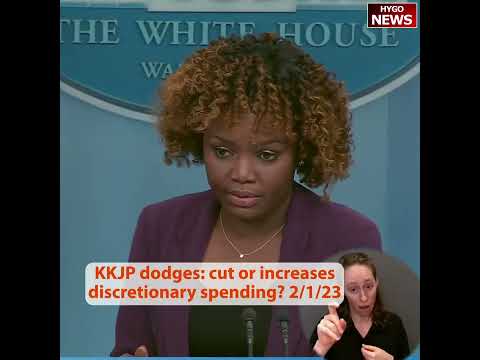
Reporter Asks About Discretionary Spending Cuts in Budget — KJP: “Not Going to Get Ahead of the President”
In February 2023, a reporter asked White House Press Secretary Karine Jean-Pierre whether Biden would be open to discretionary spending cuts or plan to increase it in his upcoming March budget. “Sitting entitlements aside from the other things Republicans are saying is that there ought to be a reduction in discretionary spending. Is that something the President is in any way open to or will he put forward a budget on March 9th that increases discretionary spending?” the reporter asked. KJP dodged: “So I’m not going to get ahead of the President, right? As you saw from our memo yesterday, the President is going to have his budget on March 9th. He is calling and asking the Speaker to put forward his budget as well so the American people can see what it is that they’re thinking about.”
The Discretionary Spending Question
Question:
Distinct from entitlements — Framed.
GOP position — Noted.
Biden openness — Asked.
Budget plan — Specific date.
Substantive — Policy inquiry.
The discretionary spending question was substantive policy inquiry. Distinct from entitlements framed. GOP position on reductions noted. Biden openness asked. Specific budget date March 9 referenced. Substantive policy question.
”Not Going to Get Ahead of the President”
Deflection:
Standard — Response.
Preserve — Flexibility.
March 9 wait — Required.
Administrative discipline — Shown.
Strategic — Choice.
The “not going to get ahead of the president” deflection was standard response preserving flexibility for actual budget unveiling. March 9 wait required before details. Administrative discipline shown. Strategic choice maintained.
The Budget Date Reference
Date:
March 9, 2023 — Specific.
Budget release — Announced.
Administrative planning — In place.
Political preparation — Underway.
Detail wait — Required until then.
The specific March 9 budget release date was announced. Administrative planning in place. Political preparation underway. Detail wait required until budget release. Standard pattern for major policy announcements.
”Calling and Asking the Speaker to Put Forward His Budget”
McCarthy challenge:
Budget demanded — From McCarthy.
Transparency — Requested.
Public view — Sought.
Strategic — Framing.
Pressure — Applied.
The call for McCarthy’s budget was strategic framing applying pressure. Budget transparency demanded from Republicans. Public view of Republican plans sought. Strategic political pressure applied through public demand.
”So the American People Can See What It Is That They’re Thinking About”
Framing:
Public interest — Invoked.
Republican plans — Opaque.
Democratic demand — Transparency.
Political messaging — Used.
Pressure framing — Standard.
The “American people can see” framing invoked public interest for Republican plans transparency. Democratic demand for Republican budget specificity. Political messaging framework used standardly. Pressure framing continued.
The Discretionary Spending Context
Context:
Non-entitlement — Federal spending.
Defense — Major portion.
Domestic programs — Various.
Congressional — Appropriations.
Battle ground — Annually.
Discretionary spending context covered non-entitlement federal spending including defense major portion and various domestic programs. Congressional appropriations annually. Political battle ground for cuts and increases.
The GOP Cut Demands
Demands:
Various proposals — Across GOP.
Specific cuts — Debated.
Freedom Caucus — Deep cuts.
Leadership cautious — Some.
Details — Varying.
GOP cut demands varied across party. Various specific cuts debated. Freedom Caucus wanted deep cuts. Leadership more cautious about specific politically toxic cuts. Details varying across members and proposals.
The Biden Budget Preview
Preview:
Upcoming release — March 9.
Presidential priorities — Stated.
Political positioning — Served.
Implementation variable — Through Congress.
Symbolic — Largely.
Biden budget preview anticipated March 9 release. Presidential priorities would be stated. Political positioning served. Implementation variable through Congress. Largely symbolic document though important statement.
The President’s Budget Role
Role:
Executive proposal — Annually.
Statutory requirement — Mostly.
Political document — Significant.
Congressional action — Required.
Implementation — Various outcomes.
The President’s budget role was annually required statutory document. Significant political document beyond pure administrative function. Congressional action required for actual implementation. Various outcomes possible.
The March 9 Date Significance
Significance:
Late — Comparatively.
First Monday — February traditional.
Administrative delay — Sometimes.
Political timing — Coordinated.
SOTU — Following up.
The March 9 date was comparatively late. First Monday in February was traditional release date. Administrative delays sometimes occurred. Political timing coordinated with other events like State of the Union. Following up on SOTU themes.
The Political Positioning Ahead
Ahead:
Biden priorities — To reveal.
GOP demands — Meet or counter.
Negotiations — Context for.
Electoral year — Approaching.
Strategic — Release timing.
Political positioning ahead of budget release involved Biden priorities to reveal, GOP demands to meet or counter, negotiations context for debt ceiling, electoral year approaching, strategic release timing choice.
The McCarthy Budget Demand
Demand:
Speaker produce — Budget.
Public visibility — Required.
Political pressure — Applied.
Strategic reversal — Of demand.
Standard tactic — From administration.
The call for McCarthy budget was strategic reversal of typical demand direction. Public visibility required for Republican plans. Political pressure applied through public demand. Standard tactic from administration for political positioning.
The Transparency Framing
Framing:
Public sees plans — Demanded.
Congressional budget — Required.
Both parties — Framed as needing.
Democratic demand — Made.
Political balance — Sought.
The transparency framing demanded public sees plans from both parties. Congressional budget required normally. Both parties framed as needing transparency. Democratic demand made for Republican specificity. Political balance sought through framing.
The Budget Process Reality
Reality:
Presidential budget — Advisory.
Congressional action — Required.
Negotiations — Multiple.
Final budget — Different usually.
Years — Of process.
Budget process reality involved presidential budget as advisory document. Congressional action required for actual appropriations. Multiple negotiations over months. Final budget usually different from either starting position. Years of process typical.
The Discretionary vs. Entitlement Distinction
Distinction:
Discretionary — Annual appropriations.
Entitlements — Automatic spending.
Political toxicity — Different.
Both important — Spending.
Reform prospects — Different.
The discretionary versus entitlement distinction was important. Discretionary through annual appropriations. Entitlements through automatic spending formulas. Different political toxicity — entitlements more toxic to cut. Both important spending. Different reform prospects.
The Entitlement Set-Aside
Set-aside:
“Sitting aside” — Reporter phrase.
McCarthy disclaimer — Referenced.
Discretionary focus — Instead.
Separate topic — Treated as.
Acknowledgment — Of complexity.
The reporter’s “sitting entitlements aside” phrase acknowledged McCarthy’s disclaimer on Medicare and Social Security while asking about discretionary as separate topic. Complexity acknowledged through phrase. Different question about discretionary.
The Republican Specificity Problem
Problem:
Vague on specifics — Of cuts.
Political risk — Of details.
Leadership cautious — On specifics.
Various factions — Different views.
Strategic ambiguity — Maintained.
The Republican specificity problem was that leadership remained vague on specific cuts. Political risk of specific details. Leadership cautious on specifics that could attack. Various factions had different views. Strategic ambiguity maintained within party.
The Political Leverage Question
Leverage:
Budget presentation — Required by some.
Negotiation framework — Established.
Public pressure — Through demand.
Political — Use of process.
Both sides — Engaged.
Political leverage through budget presentation demands was strategic. Negotiation framework established through mutual budget pressure. Public pressure through transparency demands. Political use of budget process by both sides.
The Biden Budget Preview Content
Content:
Traditional priorities — Likely.
Deficit reduction — Claimed.
Tax increases — On wealthy.
Programs — Various.
Political statement — Primarily.
Biden budget preview content likely included traditional Democratic priorities, claimed deficit reduction through tax increases on wealthy, various programs funded, primarily political statement about priorities and approach.
The Eventual Budget Release
Eventual:
March 9, 2023 — Release.
$6.9 trillion — Total.
Priorities announced — Various.
Deficit reduction — Claim.
Implementation uncertain — Congressional.
The eventual March 9 budget release would be $6.9 trillion total with various priorities announced, deficit reduction claim made, implementation uncertain through Congressional process.
The Debt Ceiling Context Continues
Context:
Ongoing crisis — Background.
Budget release — Timing critical.
Negotiation framework — Affected.
Political dynamics — Continuing.
Timeline pressure — Building.
Debt ceiling context continuing as ongoing crisis background. Budget release timing critical for negotiation framework. Political dynamics continuing. Timeline pressure building toward default deadline.
The Congressional Response Expected
Expected:
Counter-proposals — Eventually.
Criticism — Immediate.
Negotiations — Begin.
Various positioning — Continues.
Political theater — Continuous.
Congressional response expected counter-proposals eventually from GOP. Criticism immediate on Biden budget. Negotiations would begin technically. Various positioning continues. Political theater continuous throughout process.
The GOP Budget Pressure
Pressure:
Administrative demand — For Republican budget.
Strategic positioning — Used.
Internal GOP — Difficulty.
Public pressure — Applied.
Democratic tool — For leverage.
GOP budget pressure through administrative demand was strategic positioning. Internal GOP difficulty in producing specific budget that satisfied various factions. Public pressure applied. Democratic tool for political leverage.
The Biden Administrative Strategy
Strategy:
Hold budget — Until March 9.
Attack GOP — Through demands.
Preserve options — For negotiation.
Message control — Maintained.
Strategic release — Timing.
Biden administrative strategy held budget until March 9 release while attacking GOP through budget demands. Preserved negotiating options. Message control maintained. Strategic release timing chosen.
The Democratic Coalition Support
Support:
Budget priorities — United.
Progressive — Favoring spending.
Moderate — Cautious sometimes.
Base mobilization — Required.
Coalition — Generally supportive.
Democratic coalition support for Biden budget priorities was generally united. Progressive favoring spending increases. Moderate cautious sometimes on deficit. Base mobilization required for budget fight. Coalition generally supportive of direction.
The Republican Budget Challenges
Challenges:
Internal divisions — Deep.
Specific cuts — Politically toxic.
Leadership caution — Strategic.
Freedom Caucus demands — Difficult.
Unified budget — Difficult.
Republican budget challenges included deep internal divisions, politically toxic specific cuts, strategic leadership caution, Freedom Caucus demands difficult to accommodate, unified budget production difficult.
The Policy Debate Substance
Substance:
Real policy — Debates.
Political — Dimensions.
Ideological — Differences.
Practical — Considerations.
Complex — Budgeting.
Policy debate substance involved real policy debates about spending priorities. Political dimensions added. Ideological differences between parties. Practical considerations about programs. Complex budgeting realities beyond political framing.
The Press Secretary Pattern
Pattern:
Deflection — Standard.
Wait for announcement — Used.
Political attack — Added.
Substantive answer — Avoided.
Template — Applied.
Press secretary pattern showed standard deflection, wait for announcement approach, political attack on opponents added, substantive answer avoided directly, template applied across topics.
The Fiscal Policy Complexity
Complexity:
Multiple priorities — Competing.
Budget math — Technical.
Economic effects — Debated.
Political reality — Dominant.
Trade-offs — Numerous.
Fiscal policy complexity involved multiple competing priorities, technical budget math, debated economic effects, politically reality dominant over pure economics, numerous trade-offs requiring choices.
The Long-Term Budget Outlook
Outlook:
Structural deficits — Growing.
Entitlement pressures — Demographic.
Interest costs — Rising.
Reform needed — Eventually.
Political — Difficulty.
Long-term budget outlook involved growing structural deficits, demographic entitlement pressures, rising interest costs on debt. Reform eventually needed but politically difficult. Continuing fiscal pressures over years.
The Political Messaging Consistency
Consistency:
Budget release — Until.
Attacks before — Coordinated.
Message discipline — High.
Administrative — Unified.
Strategy — Long-term.
Political messaging consistency maintained until budget release. Attacks before release coordinated. High message discipline. Administrative unified approach. Long-term strategy throughout budget process.
The 2024 Campaign Implications
Implications:
Budget stake — Campaign.
Priorities display — Document.
Political weapon — For attacks.
Electoral positioning — Through budget.
Narrative building — Continues.
2024 campaign implications of budget were real. Budget stake in campaign. Priorities display through document. Political weapon for attacks from both sides. Electoral positioning through budget choices. Narrative building continues.
The Economy Context
Context:
Inflation — Declining.
Employment — Strong.
Growth — Continuing.
Uncertainty — Remaining.
Budget effects — On economy.
Economic context had inflation declining, employment strong, growth continuing, uncertainty remaining about future. Budget effects on economy matter. Fiscal and monetary policy coordination important.
The Administrative Messaging Coordination
Coordination:
OMB — Budget preparation.
Press office — Messaging.
Departments — Priorities.
Political office — Strategy.
Coordinated — Release.
Administrative messaging coordination involved OMB budget preparation, press office messaging strategy, departments for priorities, political office strategy. Coordinated release across organization.
The Democratic Political Messaging
Messaging:
Priorities positive — Framed.
Fiscal responsibility — Claimed.
Tax fairness — Emphasized.
Programs protected — Asserted.
Framing consistent — Across.
Democratic political messaging framed priorities positively, claimed fiscal responsibility through tax increases on wealthy, emphasized tax fairness, asserted program protection for vulnerable populations, consistent framing across messaging.
The Republican Counter-Messaging
Counter:
Excessive spending — Claimed.
Tax increases — Opposed.
Fiscal conservatism — Invoked.
Attack budget — Reflexive.
Alternative — Vague.
Republican counter-messaging claimed excessive spending, opposed tax increases, invoked fiscal conservatism, attack budget reflexively, alternative vague on specifics across party.
The Press Coverage Patterns
Patterns:
Both sides — Reported.
Budget coverage — Technical.
Political analysis — Added.
Coverage complex — Inherently.
Readers challenged — To follow.
Press coverage patterns reported both sides of budget politics. Budget coverage technical by nature. Political analysis added to coverage. Coverage complex inherently. Readers challenged to follow detailed policy disputes.
The Voter Knowledge Limits
Limits:
Budget details — Complex.
Awareness variable — Across.
Priorities — Understood broadly.
Specifics — Not usually.
Political framing — Dominates.
Voter knowledge limits on budget details were real. Complex document. Variable awareness across voters. Broad priorities understood sometimes. Specifics not usually known. Political framing dominates public perception.
The Reform Discussion Periodic
Periodic:
Fiscal reform — Discussed.
Budget process — Reforms.
Implementation — Rare.
Consensus lacking — Usually.
Status quo — Continues.
Reform discussion periodic on fiscal reform, budget process reforms. Implementation rare. Consensus lacking usually across parties. Status quo continuing despite discussed reforms.
The Long-Term Fiscal Issues
Issues:
Demographic changes — Real.
Entitlement pressures — Growing.
Interest costs — Rising.
Tax base — Issues.
Reform delayed — Continuously.
Long-term fiscal issues included real demographic changes affecting programs, growing entitlement pressures, rising interest costs on debt, tax base issues. Reform delayed continuously.
The Political Reality Constraints
Constraints:
Elections — Drive decisions.
Short-term — Focus.
Third rail — Politics.
Compromise — Difficult.
Reform — Elusive.
Political reality constraints on fiscal reform included elections driving decisions toward short-term focus, third rail politics of entitlements, difficult compromise across parties, reform elusive despite need.
The Press Secretary’s Daily Function
Function:
Multiple topics — Address.
Consistent messaging — Maintain.
Deflection appropriate — Sometimes.
Information provide — Limited.
Political defense — Primary.
Press secretary’s daily function involved addressing multiple topics, maintaining consistent messaging, appropriate deflection sometimes, limited information provision, primary political defense of administration.
The Reporter’s Substantive Question
Question:
Policy focus — Clear.
Alternatives explored — Both directions.
Legitimate inquiry — Professional.
Accountability — Attempted.
Value — Real.
Reporter’s substantive question had clear policy focus, explored both directions (cuts or increases), legitimate professional inquiry, attempted accountability, real value to coverage.
The Budget’s Political Theater Role
Role:
Messaging — Through document.
Priorities display — Public.
Attack material — Generated.
Campaign — Setup.
Negotiation starting — Point.
Budget’s political theater role involved messaging through document, public priorities display, attack material generated for both sides, campaign setup, negotiation starting point traditionally.
The Administrative Discipline
Discipline:
Wait until release — Standard.
No previews — Detail-wise.
Message control — Priority.
Consistent — Across topics.
Strategic — Approach.
Administrative discipline on budget maintained wait until release standard, no detail previews, message control priority, consistent across topics, strategic approach throughout preparation.
The Media Waiting
Waiting:
Pre-release — Coverage building.
Speculation — About priorities.
Preview stories — Published.
Anticipation — Generated.
Released — Analysis follows.
Media waiting pre-release involved building coverage, speculation about priorities, preview stories published, anticipation generated. When released, analysis would follow with detailed coverage.
The Political Calendar
Calendar:
State of the Union — February 7.
Budget release — March 9.
Debt ceiling pressure — Building.
Coordinated — Events.
Strategic — Timing.
Political calendar had State of the Union February 7, budget release March 9, debt ceiling pressure building throughout. Coordinated events strategically timed for political effect.
The State of the Union Lead-In
Lead-in:
Upcoming — Address.
Priorities preview — Partial.
Political stage — Major.
Budget connection — Clear.
Campaign — Warm-up.
State of the Union lead-in provided upcoming address opportunity for priorities preview partial, major political stage for Biden, clear budget connection, campaign warm-up through major address.
The Press Secretary’s Role Continuity
Continuity:
Through cycles — Multiple.
Patterns consistent — Across.
Topics rotate — Naturally.
Templates applied — Broadly.
Discipline — Maintained.
Press secretary’s role continuity through multiple news cycles showed patterns consistent across topics that rotated naturally, templates applied broadly, discipline maintained throughout demanding position.
The Democratic Coalition Unity
Unity:
Budget — Generally supportive.
Debt ceiling — United.
GOP attacks — Shared.
Message discipline — High.
Coalition strong — On issues.
Democratic coalition unity was strong on budget generally supportive, debt ceiling united approach, GOP attacks shared, high message discipline, coalition strong on fiscal issues.
The Republican Coalition Complexity
Complexity:
Internal divisions — Real.
Budget specifics — Contested.
Leadership challenged — Daily.
Policy coherence — Lacking.
Strategy difficult — Uniform.
Republican coalition complexity showed real internal divisions, contested budget specifics, leadership challenged daily, lacking policy coherence, difficult uniform strategy across caucus.
The Budget’s Historical Role
Role:
Annual — Document.
Political — Statement.
Administrative — Plan.
Congressional — Starting point.
Compromise — Result.
The budget’s historical role was annual document with political statement, administrative plan elements, Congressional starting point, compromise result typically. Ritual and substance combined.
The Fiscal Federalism
Federalism:
Federal — Level.
States — Different.
Local — Affected.
Interactions — Complex.
Budget implications — Across.
Fiscal federalism affected budget implications across federal, state, local levels. Complex interactions between levels. Federal budget choices affected states and localities.
The Press Briefing’s Budget Coverage
Coverage:
Preview stage — Current.
Post-release — Extensive.
Political analysis — Added.
Technical detail — Covered.
Multiple briefings — Span.
Press briefing’s budget coverage preview stage current. Post-release would be extensive. Political analysis added. Technical detail covered. Multiple briefings would span budget release and aftermath.
The Strategic Communication
Communication:
Coordinated — Release.
Multiple — Messengers.
Consistent — Messaging.
Platforms — Various.
Sophisticated — Execution.
Strategic communication around budget release coordinated across multiple messengers with consistent messaging, various platforms utilized, sophisticated execution of comprehensive political operation.
The 2024 Campaign’s Budget Role
Role:
Priorities — Campaign material.
Attack lines — From opponents.
Defense — From administration.
Voter messaging — Developed.
Platform — Established.
2024 campaign’s budget role had priorities as campaign material, attack lines from opponents developed, defense from administration prepared, voter messaging developed, platform established through budget.
The Administrative Budget Tradition
Tradition:
Each president — Submits.
Policy document — Significant.
Political — Also.
Historical — Record.
Administrative — Function.
Administrative budget tradition involved each president submitting budget annually. Significant policy document. Political tool also. Historical record created. Administrative function formally required.
The Economic Messaging Integration
Integration:
Budget — Economic message.
Priorities — Revealed.
Economic vision — Implicit.
Narrative building — Budget part.
Consistency — Across messaging.
Economic messaging integration with budget revealed economic vision implicitly through priorities. Budget was part of narrative building. Consistency across messaging maintained around economic themes.
The Press Briefing’s Continuing Function
Function:
Information partial — Provided.
Questions addressed — Some.
Pattern — Maintained.
Documentation — Of exchanges.
Historical value — Preserved.
Press briefing’s continuing function provided partial information, addressed some questions, maintained patterns across topics, documentation of exchanges preserved. Historical value through record.
The Political Positioning Long-Term
Long-term:
Multiple events — Building.
Narrative — Continuous.
2024 — Eventually.
Stake — Rising.
Preparation — Ongoing.
Political positioning long-term through multiple events building continuous narrative toward 2024 eventually. Stakes rising. Preparation ongoing across many briefings, statements, speeches.
The Reporter’s Continued Professionalism
Professionalism:
Substantive questions — Continued.
Policy focus — Maintained.
Accountability — Sought.
Professional — Manner.
Value — Real.
Reporter’s continued professionalism through substantive questions, policy focus maintained, accountability sought, professional manner throughout, real value to public discourse.
The Administrative Messaging Strategy Assessment
Assessment:
Disciplined — Highly.
Consistent — Across topics.
Professional — Generally.
Effective — Variable.
Sustainable — Questions.
Administrative messaging strategy assessment was highly disciplined, consistent across topics, professional generally, variable effectiveness, questions about sustainability long-term.
The Budget’s Eventual Impact
Impact:
Symbolic — Primarily.
Negotiation starting — Point.
Campaign material — Used.
Policy debate — Framed.
Historical record — Created.
Budget’s eventual impact was primarily symbolic, negotiation starting point, used as campaign material, frames policy debate, creates historical record. Real impact through appropriations process separate.
The Ongoing Fiscal Politics
Politics:
Continuing — Patterns.
Partisan — Divisions.
Compromise difficult — Usually.
Crisis driven — Often.
Reform elusive — Structurally.
Ongoing fiscal politics continued patterns of partisan divisions, difficult compromise usually, crisis-driven action often, elusive reform structurally across decades.
The Democratic Political Organization
Organization:
Professional — Operation.
Coordinated — Messaging.
Strategic — Approach.
Sophisticated — Communication.
Effective — Generally.
Democratic political organization was professional operation, coordinated messaging, strategic approach, sophisticated communication, generally effective at maintaining message discipline and coalition unity.
The Individual Briefing Context
Context:
Within pattern — Larger.
Daily contribution — To.
Documentation — Value.
Historical — Record.
Democratic function — Served partially.
Individual briefing context was within larger pattern across days and weeks. Daily contribution to overall pattern. Documentation value in transcripts. Historical record built. Democratic function served partially through continued engagement.
Key Takeaways
- A reporter asked KJP about whether Biden would include discretionary spending cuts in his March 9 budget.
- Question distinguished from entitlements: “Sitting entitlements aside from the other things Republicans are saying is that there ought to be a reduction in discretionary spending.”
- KJP deflected: “I’m not going to get ahead of the President.”
- Budget date referenced: “The President is going to have his budget on March 9th.”
- Strategic demand on McCarthy: “He is calling and asking the Speaker to put forward his budget as well so the American people can see what it is that they’re thinking about.”
- The exchange illustrated administration’s wait-until-release approach to budget details combined with public pressure on Republicans to produce their own budget.
Transcript Highlights
The following is transcribed from the video audio (unverified — AI-generated from audio).
- Sitting entitlements aside from the other things Republicans are saying is that there ought to be a reduction in discretionary spending.
- Is that something the President is in any way open to or will he put forward a budget on March 9th that increases discretionary spending?
- So I’m not going to get ahead of the President, right?
- As you saw from our memo yesterday, the President is going to have his budget on March 9th.
- He is calling and asking the Speaker to put forward his budget as well.
- So the American people can see what it is that they’re thinking about.
Full transcript: 106 words transcribed via Whisper AI.