 HYGO News
 KJP Can't Name A Single Thing To Reach Out On Debt Limit; It's The President's Economy...
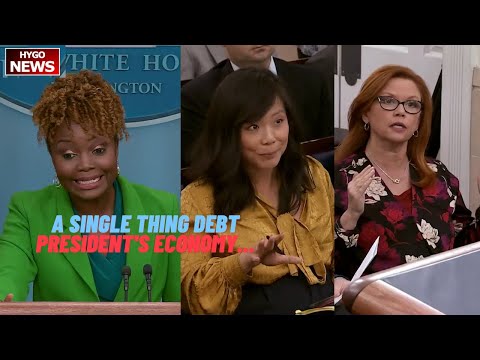
KJP Can’t Name a Single Thing To Reach Out on Debt Limit; “It’s the President’s Economy…”
On May 1, 2023, White House Press Secretary Karine Jean-Pierre faced sustained questioning from reporters about President Biden’s refusal to negotiate with House Speaker Kevin McCarthy on the debt ceiling. The briefing featured reporters challenging Jean-Pierre on whether the White House had taken any concrete steps to engage with Republicans, pressing her with the argument that “it’s the President’s economy,” and asking why Biden had not urged Senate Majority Leader Chuck Schumer to advance a clean debt ceiling bill. Jean-Pierre maintained the administration’s position that raising the debt ceiling was not negotiable and that it was Congress’s “constitutional duty” to act, but she could not cite a single outreach effort the White House had made toward the Speaker.
Has the White House Reached Out?
The most pointed exchange of the briefing came when a reporter asked whether the White House had taken any action to initiate conversations with Speaker McCarthy on the budget, given that Jean-Pierre had said Biden was willing to discuss the budget and appropriations process separately from the debt ceiling.
The reporter asked: “The first you would indicate earlier that the President is prepared to talk about the budget appropriations process and that he’d be happy to meet with Speaker McCarthy but not on whether the debt limit is raised. Has the White House done anything to reach out to the Speaker to begin that conversation over the budget? And what happens if he does want to talk about the debt limit in concert with that discussion?”
Jean-Pierre deflected without answering whether any outreach had occurred: “I mean, we’ve been very clear, Matt. We’ve been very clear that, you know, and other important key programs that help Americans, you know, put meals, you know, make the ends meet, that’s something that is not acceptable. And so they need to do their job, their constitutional duty, as you’ve heard us say, over and over again and deal with the debt ceiling and not put six million jobs on the line.”
The reporter drew the logical conclusion: “So it sounds like no meeting in the works.”
Jean-Pierre responded by repeating her refrain: “What I could say is Congress must act and could say that over and over again. The President spoke to it moments ago.”
The inability to name a single outreach effort was significant because it suggested the White House was publicly demanding Republican action while privately taking no steps to initiate the budget discussions it claimed to be open to.
”It’s the President’s Economy”
A second reporter escalated the challenge by framing the standoff in terms of political responsibility. The reporter quoted Speaker McCarthy’s position and then turned it back on Biden: “Speaker McCarthy, I should say, reiterated yet again that we will not pass a debt ceiling that just raises it without doing something about our debt, talking about the need for negotiation. I know your position that you’re, you know, that this is the Republicans’ burden, right, to raise the debt ceiling. But it’s the President’s economy. So is he not going to have a meeting with McCarthy until McCarthy gives in? Will he be McCarthy’s bluffing here?”
The phrase “it’s the President’s economy” was a direct challenge to the White House’s attempt to place all responsibility on Congress. The reporter was noting that regardless of whose constitutional duty it was to raise the debt ceiling, the economic consequences of a default would fall on Biden’s presidency.
Jean-Pierre repeated the administration’s position: “The President is prepared to talk about budget and appropriations process. That’s what we have said. We are not a deadbeat nation. The President said that. You heard him, you heard directly from him moments ago. And the President said he’s happy to meet with McCarthy, but not on whether or not the debt limit gets extended. That’s not negotiable. We are continuing to be very firm about that, to be very clear.”
Banking Concerns and the Debt Ceiling
A reporter raised the convergence of the debt ceiling standoff with ongoing instability in the banking sector, noting that First Republic Bank had been seized by regulators that same day. The reporter asked whether the combination of banking fragility and debt ceiling uncertainty might cause Biden to adjust his approach.
The reporter asked: “Do you see a line of convergence at some point in which the public’s concern about is there a frailty in the banking system that can produce more uncertainty? And what you’ve talked about with debt ceiling potentially triggering, you know, cataclysmic events for the economy, if that’s not resolved, is there a point of intersection where these two issues collide that concerns the President and might that kind of an environment adjust his tactical strategy and how he’s dealing with the Speaker?”
Jean-Pierre acknowledged the concern but stayed on message: “The President is concerned. He’s concerned that Republicans are not doing their job and not living up to their constitutional duty. We have been saying that over and over again. This has never happened before.”
The reporter pressed further: “Would direct engagement perhaps change the dynamic?”
Jean-Pierre framed Biden’s public statements as sufficient engagement: “I think, by the President speaking every day on this issue answering questions. He’s speaking directly to Congress. The question should be to them. Why do they not want to do their constitutional duty?”
Why Not Start in the Senate?
A reporter posed a question that highlighted an apparent strategic gap: if Democrats controlled the Senate, why had Biden not asked Senate Majority Leader Schumer to pass a clean debt ceiling bill, which would put the onus on House Republicans to either pass it or publicly block it?
The reporter asked: “Given the fact that Democrats control the Senate, is there a reason the President hasn’t asked the Senate Majority Leader Schumer to put a clean debt ceiling increase on the floor? Maybe start the process or keep actions for possible?”
Jean-Pierre’s answer was notably deferential to Schumer’s autonomy: “The President has had conversations with Leader Schumer, Senator Schumer, and also Minority Leader Jeffries. They’ve talked several times. But it doesn’t stop us from saying what House Republicans should have done, right, which has put forth and focused on the debt ceiling. As far as to your question on Leader Schumer, I leave him to the process on how to move forward with the Senate.”
The answer dodged the question of why the administration had not pushed for Senate action, instead leaving it to Schumer’s discretion. Senate Majority Leader Schumer had opted to hold hearings to condemn the House bill rather than advancing his own legislation or voting on the House-passed bill.
Additional Context
The May 1, 2023 briefing came at a critical moment in the debt ceiling crisis. The House had passed the Limit, Save, Grow Act on April 26, which would raise the debt ceiling by $1.5 trillion or through March 2024 in exchange for spending cuts and policy changes. The Biden White House dismissed it as “not a plan” but “a recipe for economic disaster.” Meanwhile, the Treasury Department warned that the U.S. could default as early as June 1 without congressional action.
Despite Jean-Pierre’s insistence that there would be no negotiation, Biden called Speaker McCarthy approximately one hour after this briefing. The two ultimately met at the White House on May 9, and negotiations led to the Fiscal Responsibility Act, signed on June 3, 2023, which suspended the debt limit through January 2025 in exchange for spending caps.
Key Takeaways
- Jean-Pierre could not name a single outreach effort the White House had made to Speaker McCarthy on the budget, despite claiming Biden was “happy to meet” to discuss appropriations separately from the debt ceiling.
- A reporter challenged Jean-Pierre with “it’s the President’s economy,” arguing that Biden bore political responsibility for any economic fallout regardless of whose constitutional duty it was to raise the debt ceiling.
- Jean-Pierre maintained that raising the debt ceiling was “not negotiable” and that Congress must act on its “constitutional duty,” repeating the phrase multiple times throughout the briefing.
- When asked why Biden had not urged Senate Majority Leader Schumer to pass a clean debt ceiling bill, Jean-Pierre deferred to Schumer’s process rather than explaining the omission.
- Biden called McCarthy approximately one hour after this briefing, and the two sides ultimately negotiated a deal signed on June 3, 2023, contradicting the White House’s stated refusal to negotiate.