 HYGO News
 KJP Accuses House Republicans Of "Manufacturing A Crisis" On Debt Limit
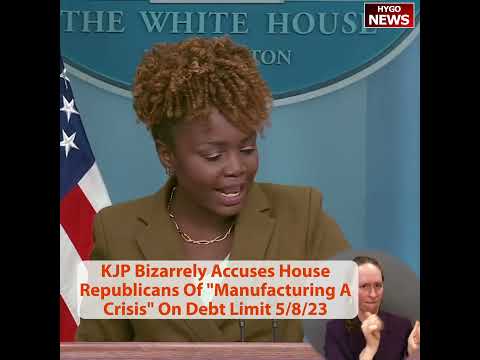
KJP Accuses House Republicans Of “Manufacturing A Crisis” On Debt Limit
White House Press Secretary Karine Jean-Pierre held the administration’s no-conditions debt ceiling line during a May 2023 briefing — even as Senate Minority Leader Mitch McConnell publicly told Senate Republicans there was little Senate room for ceiling negotiations and that the deal had to be worked out between President Biden and Speaker Kevin McCarthy. Asked about McConnell’s hands-off posture, KJP framed the standoff as House Republicans “manufacturing a crisis on something that has been done 78 times since 1960.” She underscored: “Congress must avoid default without conditions, without conditions.” The exchange compressed weeks of White House messaging into a single briefing answer.
The McConnell Posture
- Hands-off framing: McConnell publicly framed the Senate as outside ceiling negotiations.
- Biden-McCarthy framing: McConnell framed the deal as Biden-McCarthy direct negotiation.
- Editorial reach: The McConnell posture put pressure on direct White House-House talks.
- 2011 contrast: McConnell had been a direct negotiator in 2011.
- Hearing record: The McConnell posture sits in the formal record.
The Manufactured Crisis Framing
- KJP framing: KJP framed the standoff as House Republicans “manufacturing a crisis.”
- 78 times reference: KJP cited 78 ceiling actions since 1960.
- Editorial choice: The framing places strategic intent on House Republicans.
- Hearing record: The framing is now in the formal record.
- Long arc: The framing remained central to White House messaging.
The 78 Times Reference
- Historical count: The ceiling has been raised, extended, or revised approximately 78 times.
- 1960 reference: KJP used 1960 as the historical anchor.
- Editorial reach: The reference frames ceiling action as routine.
- Hearing record: The reference is now in the formal record.
- Long arc: The reference remained central to White House messaging.
The Constitutional Duty Framing
- KJP framing: KJP framed ceiling action as Congress’s constitutional duty.
- “Congress must act” framing: KJP used “Congress must act” language.
- Editorial choice: The framing places obligation on Congress.
- Hearing record: The framing is now in the formal record.
- Long arc: The framing remained central to White House messaging.
The Without Conditions Framing
- Triple repetition: “Congress must avoid default without conditions, without conditions.”
- Editorial reach: The repetition emphasized the no-conditions posture.
- White House discipline: The repetition reflected White House message discipline.
- Hearing record: The repetition is now in the formal record.
- Long arc: The framing remained central to White House messaging.
The Regular Order Framing
- KJP framing: KJP framed ceiling action as “regular order.”
- Editorial choice: The framing places the standoff outside regular order.
- Hearing record: The framing is now in the formal record.
- Long arc: The framing remained central to White House messaging.
- Long arc: The framing operates as both defense and offense.
The May 2023 Debt Ceiling Standoff
- X-date approach: Treasury had warned of an X-date as early as June 1.
- Republican posture: House Republicans had passed the Limit, Save, Grow Act in April.
- White House posture: The White House had pivoted to negotiation in early May.
- Eventual deal: A deal eventually included two-year discretionary caps.
- Editorial reach: The standoff was the dominant economic story of spring 2023.
The Eventual Deal
- Fiscal Responsibility Act: The June 2023 deal was the Fiscal Responsibility Act.
- Two-year caps: The deal imposed two-year discretionary spending caps.
- Work requirements: The deal included expanded SNAP work requirements.
- Energy permitting: The deal included some energy permitting reforms.
- Editorial reach: The deal averted default and stabilized the ceiling through 2025.
The McCarthy-Biden Dynamic
- Direct negotiation: The eventual deal emerged from direct McCarthy-Biden negotiation.
- McConnell distance: McConnell remained largely outside the negotiations.
- Editorial reach: The Biden-McCarthy dynamic shaped the deal contours.
- Hearing record: The dynamic sits in the formal record.
- Long arc: The dynamic shaped subsequent fiscal politics.
The 2011 Comparison
- 2011 deal: VP Biden negotiated the 2011 Budget Control Act with McConnell.
- $2.3 trillion target: The 2011 deal targeted $2.3 trillion in cuts.
- Editorial reach: The 2011 deal established the modern playbook.
- Hearing record: The 2011 context sits in the formal record.
- Long arc: The 2011 playbook continues to shape ceiling negotiations.
The Republican Strategy
- Spending caps demand: Republicans demanded spending caps as ceiling condition.
- Limit, Save, Grow Act: House Republicans passed the bill in April 2023.
- Public-facing posture: The strategy was designed for clip distribution.
- Long arc: The strategy remained central to Republican messaging.
- Hearing impact: The strategy placed the spending demand on the formal record.
The White House Strategy
- No-conditions framing: White House defended no-conditions ceiling action.
- Manufactured crisis framing: White House framed the standoff as Republican-driven.
- Constitutional duty framing: White House framed ceiling action as Congress’s duty.
- Editorial reach: The strategy was central to White House messaging.
- Long arc: The strategy remained central through the standoff.
The Constitutional Duty Question
- Article I scope: Article I gives Congress power over taxation and spending.
- Constitutional ambiguity: Constitutional debate continues on ceiling action.
- 14th Amendment debate: Some scholars argued for 14th Amendment-based unilateral action.
- Editorial reach: The constitutional question shaped the public debate.
- Hearing record: The constitutional context is now in the formal record.
The 14th Amendment Question
- Constitutional argument: Some scholars argued the 14th Amendment prohibits debt default.
- Biden response: Biden expressed openness but did not act on this argument.
- Operational question: Whether Treasury could act on this basis was contested.
- Editorial reach: The argument remained academic through the standoff.
- Long arc: The argument may resurface in future debt ceiling debates.
The Treasury Position
- Yellen position: Treasury Secretary Yellen had rejected prioritization as a viable option.
- Operational concerns: Treasury cited operational concerns about prioritization.
- Constitutional concerns: Treasury cited constitutional concerns about prioritization.
- Editorial line: The Treasury position contradicts the Republican prioritization framing.
- Hearing record: The Treasury position sits opposite the Republican framing.
The Briefing Discipline
- KJP discipline: KJP maintained message discipline through repeated questioning.
- Editorial reach: The discipline reflected coordinated White House messaging.
- Hearing record: The discipline is now in the formal record.
- Long arc: The discipline shaped subsequent White House messaging.
- Long arc: The discipline became a model for crisis briefings.
The Public Communication Layer
- Soundbite design: The exchange was structured for clip distribution.
- Documentary value: The hearing record now contains a clean White House framing.
- Media uptake: The clip moved on conservative media as a Republican response argument.
- Audience targeting: KJP’s style is built for retail political distribution.
- Long arc: The framing remained central to White House messaging through 2024.
The Republican Response
- Crisis denial: Republicans rejected the manufactured crisis framing.
- Spending demand: Republicans defended spending demands as fiscally responsible.
- Editorial reach: Republicans framed the standoff as fiscal accountability.
- Hearing posture: Republican senators offered alternative framings during the same hearings.
- Long arc: The Republican response shaped subsequent messaging.
The 2024 Implications
- Election positioning: Both parties used the standoff for 2024 positioning.
- Fiscal politics: Fiscal politics shape Senate and presidential races.
- Long arc: The episode will shape debt ceiling politics through 2024 and beyond.
- Hearing legacy: The hearing record will be cited in future debt ceiling debates.
- Long arc: The standoff outcome stabilized the ceiling through 2025.
Key Takeaways
- KJP held the no-conditions ceiling line in a May 2023 briefing.
- McConnell publicly told Senate Republicans the deal was Biden-McCarthy direct negotiation.
- KJP framed the standoff as House Republicans “manufacturing a crisis.”
- KJP cited “78 times since 1960” as the historical baseline for ceiling action.
- KJP underscored “Congress must avoid default without conditions, without conditions.”
- The framing remained central to White House messaging through the standoff.
Transcript Highlights
The following quotations are drawn from an AI-generated Whisper transcript of the briefing and should be considered unverified pending official transcript release.
- “Leader McConnell has made it pretty clear that there’s little room for the Senate to be involved” — reporter
- “There shouldn’t be negotiations on the debt, on the debt limit” — KJP
- “This is something that they should get to regular order and get to work on” — KJP
- “We should not have House Republicans manufacturing a crisis on something that has been done 78 times since 1960” — KJP
- “Congress must avoid default without conditions, without conditions” — KJP
- “The President is not going to change course here. We’ve been very, very clear that they need to do their job” — KJP
Full transcript: 150 words transcribed via Whisper AI.