 HYGO News
 KJP: Biden Declared 'Entire U.S. Arctic Ocean Off-Limits To New Oil And Gas Leasing'
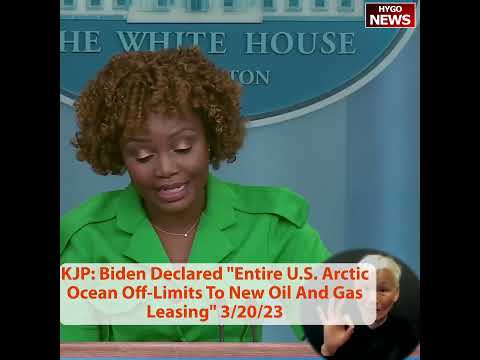
KJP: Biden Declared “Entire U.S. Arctic Ocean Off-Limits To New Oil And Gas Leasing”
White House Press Secretary Karine Jean-Pierre pushed back at a reporter’s framing of “conflicting signals” from the Biden administration during a March 2023 briefing, defending the president’s approval of the ConocoPhillips Willow Project by pointing to his concurrent declaration that the “entire U.S. Arctic Ocean off limits to new oil and gas leasing” and Interior Department preparations to protect 13 million acres in Alaska. The exchange captured the administration’s attempt to message simultaneous approval of a major oil project and dramatic conservation measures as a coherent climate agenda.
The “Conflicting Signals” Accusation
- Reporter’s framing: A journalist characterized the Willow approval and Arctic protection as inconsistent climate messaging.
- Youth activist reference: The question specifically invoked young activists who had protested the Willow Project.
- Willow approval timing: The ConocoPhillips Alaska project had been approved just days before the briefing.
- Messaging challenge: The administration needed to reconcile a major oil project approval with climate leadership claims.
- Jean-Pierre’s response: The press secretary directly rejected the “conflicting signals” framing.
The Arctic Ocean Declaration
- Full coverage: Biden declared the entire U.S. Arctic Ocean off-limits to new oil and gas leasing.
- Acreage involved: The declaration covered approximately 2.8 million acres of Arctic Ocean waters.
- OCS authority: The action used authorities under the Outer Continental Shelf Lands Act.
- Permanence questions: Legal experts debated whether a subsequent administration could reverse the designation.
- Existing leases: The declaration did not affect existing oil and gas leases already issued.
The 13 Million Acre Protection
- Interior Department action: The Interior Department announced preparations to protect 13 million acres in Alaska.
- NPR-A location: Most of the protected area lies within the National Petroleum Reserve-Alaska.
- Regulatory framework: New regulations would limit development activity across the protected acreage.
- Federal public lands: The NPR-A is federal public land managed by the Bureau of Land Management.
- Wildlife considerations: The protected acreage includes critical caribou and other wildlife habitat.
The Willow Project Tensions
- Climate concerns: Environmental groups calculated Willow would generate 280 million metric tons of CO2.
- Youth activism: TikTok and other platforms generated unprecedented grassroots opposition to the project.
- Legal necessity claim: The administration argued ConocoPhillips’s legal leases required approval.
- Political choice perception: Critics argued the administration had more discretion than it acknowledged.
- Campaign pledge: Biden’s 2020 “no drilling on federal lands” pledge returned as a political liability.
Messaging Reconciliation Attempt
- Conservation counterweight: The administration paired Willow approval with dramatic conservation measures.
- Scale comparison: 13 million acres and 2.8 million Arctic Ocean acres far exceeded Willow’s 68,000-acre footprint.
- Timing choreography: Announcement of conservation measures paired with the approval rather than follow-up.
- Net benefit narrative: The administration framed the package as net beneficial for climate goals.
- Activist skepticism: Environmental groups largely rejected the offset framing as insufficient.
The Broader Climate Portfolio
- Inflation Reduction Act: The IRA remained the administration’s signature climate accomplishment with $369 billion in provisions.
- Emissions targets: The administration committed to 50-52% emissions reduction below 2005 levels by 2030.
- Methane rules: EPA methane regulations were being finalized for oil and gas operations.
- Electric vehicle support: IRA tax credits supported accelerated EV adoption and domestic manufacturing.
- Solar expansion: Administration actions expanded solar energy deployment on federal lands.
The Young Activist Challenge
- Political visibility: Youth climate activists had generated unprecedented visibility for the Willow Project.
- 2024 implications: Democratic strategists worried about youth voter turnout concerns.
- Generational frame: Younger voters viewed climate as defining political issue.
- Social media influence: Activist mobilization on TikTok, Instagram, and Twitter amplified Willow opposition.
- Alienation risk: Approval of Willow risked alienating a critical voter demographic.
Legal Lease Complications
- Lease rights protection: Federal oil and gas leases confer property-like rights that are legally protected.
- Takings clause exposure: Canceling valid leases could trigger constitutional takings claims.
- Settlement costs: Potential legal settlement costs could reach billions of dollars.
- Scale-down alternative: The approved plan was scaled back from ConocoPhillips’ original proposal.
- Environmental review: Additional environmental review had been required before final approval.
The Indigenous Dimension
- North Slope Iñupiat: Many Iñupiat communities supported Willow for economic benefits.
- Village economics: Oil revenue provides critical funding for village government and services.
- Other tribes: Tribes outside the immediate area largely opposed the project on climate grounds.
- Consultation process: Administration consulted with affected tribal governments during the decision.
- Competing tribal voices: The indigenous community was not monolithic in its views.
Political Aftermath
- Lawsuit filings: Environmental groups filed federal lawsuits challenging the approval.
- Congressional response: Some progressive Democrats criticized the administration publicly.
- Administration defense: White House officials continued emphasizing the conservation counterweight.
- Media coverage: The decision generated sustained negative coverage in climate-focused media.
- Election implications: Democratic polling continued to show concern about youth voter engagement.
Key Takeaways
- Jean-Pierre rejected the “conflicting signals” framing, pointing to Biden’s Arctic Ocean declaration and 13-million-acre Alaska protection.
- The Arctic Ocean off-limits declaration covered approximately 2.8 million acres of U.S. Arctic waters.
- The Interior Department’s planned 13 million acre protection concentrates mostly in the National Petroleum Reserve-Alaska.
- The conservation measures were timed to accompany rather than precede the Willow Project approval.
- Environmental activists largely rejected the conservation-as-offset framing as insufficient climate protection.
- The administration attempted to reconcile a major oil project approval with its climate leadership claims.
Transcript Highlights
The following quotations are drawn from an AI-generated Whisper transcript of the briefing and should be considered unverified pending official transcript release.
- “He just last week he declared the entire US Arctic Ocean off limits to new oil and gas leasing.” — Karine Jean-Pierre
- “The Interior Department also announced it’s preparing new regulations to protect 13 million acres in Alaska.” — Karine Jean-Pierre
- “The president is going to continue to fight.” — Karine Jean-Pierre
- “Just a few days ago he green-lighted the wheel of project in Alaska so this it looks like he’s sending conflicting signals here.” — Reporter framing
- “Can you maybe elaborate on what his approach is on the environment and what he’s sending especially young activists who protested the wheel of project?” — Reporter question
- “I would disagree with that.” — Karine Jean-Pierre
Full transcript: 105 words transcribed via Whisper AI.