 HYGO News
 Kennedy questioned Biden's SBA nominee: 'How does it work?' 2/3/2021
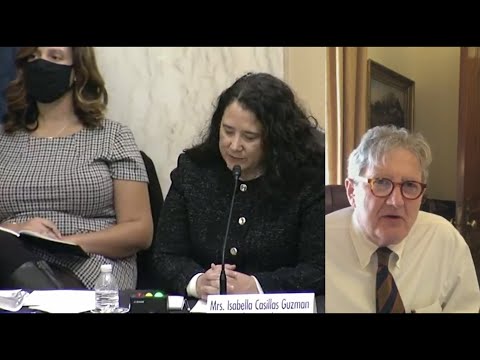
Kennedy Questioned Biden’s SBA Nominee: “How Does It Work?”
On February 3, 2021, Senator John Kennedy (R-LA) questioned Isabel Guzman, President Biden’s nominee to lead the Small Business Administration, during her Senate confirmation hearing. The exchange became notable for Guzman’s repeated inability or unwillingness to offer opinions on core small business policy questions, including how pass-through entity tax provisions worked, whether a minimum wage increase or an earned income tax credit was better for low-income workers, and the basic mechanics of the earned income tax credit itself.
Guzman, who served as director of California’s Office of the Small Business Advocate, described herself as “a lifelong advocate for small business” but consistently deferred to future research rather than offering substantive answers to Kennedy’s policy questions.
The Pass-Through Entity Tax Question
Kennedy began his questioning by asking about the 2017 tax provision that exempted 20 percent of income for pass-through entities — including LLCs, LLPs, S-corporations, partnerships, and sole proprietorships — from the federal income tax. He asked Guzman whether this was a good idea or a bad idea.
“I would work in partnership with the Office of Advocacy on issues like this to understand some of the research they’ve done, as well as be the voice of small business,” Guzman responded. “While I don’t have a specific opinion on that, I would love to get back to you and talk to you further about it.”
When Kennedy asked if she was even familiar with how the provision worked, Guzman said: “I’m familiar that there has been some tax benefits for these types of organizations, but I would need to get back to you on that.”
Kennedy pointed out that taxes are a fundamental cost of doing business for small businesses: “Obviously, your job is to help small business women, small business men, and taxes represent a cost to doing business, just like your electricity bill, your insurance bill.”
Committee Chairman Ben Cardin intervened to acknowledge Kennedy’s point was well-taken, noting that the committee did not have jurisdiction over the tax code but that the impact on small businesses warranted further examination. Cardin expressed his own view that “small businesses have not benefited to the same extent that larger companies that use the corporate tax rate from the 2017 tax bill.”
The Minimum Wage vs. Earned Income Tax Credit
Kennedy then posed what became the central question of the exchange: “What’s a better way, as a matter of policy, to increase people’s wages? A minimum wage increase or an increase in the earned income tax credit?”
Guzman again deferred: “I would need to evaluate that. It’s similar to my response to you on the previous tax question that I would need to further research the matter and share with you at a different time.”
Kennedy pressed further: “How does the earned income tax credit program work?”
Guzman struggled to explain the basic mechanics: “SBA would, in terms of the impact on small businesses, I really honestly could not share with you at this time.”
Kennedy clarified he was asking about the program itself, not just its impact on small businesses. Guzman offered only: “With the earned income tax credit, businesses are — all of these programs are trying to ensure that small businesses are able to take the tax benefits and credits that can support their businesses. Again, I can’t offer you anything further.”
Kennedy concluded by urging Guzman to learn more about the earned income tax credit, arguing that it was directly relevant to her prospective role. He noted that the Congressional Budget Office estimated a $15 minimum wage would cost 1.3 million jobs “in the middle of what some of my colleagues say is a recession from the pandemic.” An earned income tax credit increase, he argued, would put more money in low-income workers’ hands “without causing people to be laid off.”
The FAST Program and Innovation Grants
Kennedy also questioned Guzman about Small Business Innovation Research grants, Small Business Technology Transfer awards, and the FAST (Federal and State Technology Partnership) program, which was designed to ensure these grants were more evenly distributed geographically.
Guzman confirmed her familiarity with these programs and noted that “there’s definitely disproportionate use in certain geographies.” She described outreach efforts by agencies participating in SBIR to “reach communities who don’t traditionally access these programs.”
Kennedy cut in to say he did not believe the FAST program was working: “I don’t think the FAST program has worked. It’s still not leveling the playing field. But we’ll save that topic for another day.”
Background
The hearing took place as the Biden administration was pushing for a $1.9 trillion COVID relief package that included a provision to raise the federal minimum wage to $15 per hour. The minimum wage debate was particularly relevant to the SBA because the majority of minimum wage workers are employed by small businesses, and the CBO’s analysis projected significant job losses in the small business sector if the increase took effect.
Guzman was ultimately confirmed as SBA Administrator on March 16, 2021. Kennedy’s questioning highlighted concerns shared by many Republican senators that Biden nominees were being selected based on ideological alignment rather than policy expertise.
Key Takeaways
- Senator Kennedy pressed SBA nominee Isabel Guzman on fundamental small business policy questions, including pass-through entity taxation and the earned income tax credit, and she repeatedly could not offer substantive answers or explain how key programs worked.
- Guzman was unable to answer whether a $15 minimum wage or an expanded earned income tax credit would be better policy for increasing wages without harming small businesses.
- Kennedy argued that the CBO’s estimate of 1.3 million lost jobs from a $15 minimum wage made the earned income tax credit a less disruptive alternative for helping low-income workers.
- Committee Chairman Cardin acknowledged Kennedy’s concerns about tax policy impacts on small businesses and suggested the committee needed to examine the issue further.