 HYGO News
 John Kirby Says The Purpose Of The Afghan Withdrawal Report Is 'Not Accountability'
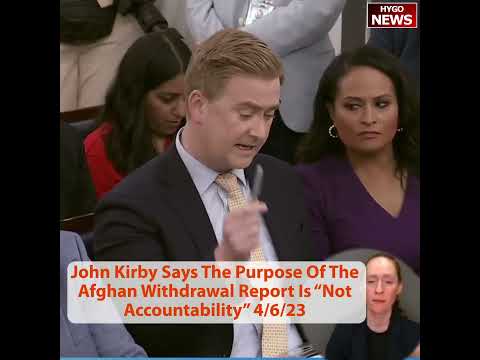
John Kirby Says The Purpose Of The Afghan Withdrawal Report Is “Not Accountability”
NSC spokesman John Kirby explicitly told Fox News correspondent Peter Doocy during an April 2023 White House briefing that the Biden administration’s Afghanistan withdrawal review was “not about accountability today” but “about understanding” — directly conflicting with widespread public and congressional demands for accountability for the chaotic withdrawal that killed 13 U.S. service members. Doocy had asked “who’s going to get fired over this?” and pressed Kirby on how Biden could trust the Presidential Daily Brief if intelligence assessments had been so catastrophically wrong.
Doocy’s “Who Gets Fired” Question
- Direct accountability: Direct accountability question.
- Firing expectations: Expectations of terminations.
- Institutional accountability: Institutional accountability standard.
- Personnel consequences: Personnel consequences expected.
- Responsibility attribution: Responsibility attribution demand.
Kirby’s Stark Admission
- “Not accountability”: Explicit “not accountability” framing.
- “Understanding” purpose: “Understanding” as purpose.
- Process separation: Process from accountability separation.
- Lessons learned: “Lessons learned” purpose.
- Institutional learning: Institutional learning emphasis.
The PDB Question
- Presidential Daily Brief: Presidential Daily Brief reference.
- Intelligence legitimacy: Intelligence legitimacy concerns.
- Trust implications: Presidential trust implications.
- Decision-making quality: Decision-making quality questions.
- Future reliance: Future intelligence reliance.
The “Intelligence Is Hard” Defense
- Hard business: Intelligence described as “hard business.”
- Mosaic metaphor: Intelligence mosaic metaphor.
- Professional excuse: Professional challenge excuse.
- Institutional defense: Institutional defense.
- Systemic limitation: Systemic limitation acknowledgment.
The Mosaic Challenge
- Piece combinations: Intelligence pieces combined.
- Incomplete information: Incomplete information nature.
- Uncertainty acceptance: Uncertainty acceptance.
- Professional methodology: Professional methodology.
- Limitations acknowledgment: Limitations acknowledgment.
The Doocy Follow-up
- All pieces wrong: “All pieces are incorrect.”
- Complete failure: Complete analytical failure.
- Systemic problem: Systemic problem framing.
- Intelligence quality: Intelligence quality critique.
- Trust erosion: Trust erosion implications.
The Accountability Avoidance
- Explicit rejection: Explicit accountability rejection.
- Process emphasis: Process emphasis instead.
- Future-focused: Future-focused framing.
- Career protection: Career official protection.
- Political protection: Political protection mechanism.
The Military Leaders Reference
- Military advice: Military leader advice.
- Professional judgment: Professional judgment.
- Command responsibility: Command responsibility.
- Combatant commanders: Combatant commander input.
- Senior leadership: Senior leadership.
The “Bad Intel” Admission
- Intel admission: Admission that intel was bad.
- Analytical failure: Analytical failure acknowledgment.
- Institutional limitation: Institutional limitation.
- Professional responsibility: Professional responsibility.
- Credibility implications: Credibility implications.
The Presidential Trust Question
- Future decisions: Future decision implications.
- Intelligence reliance: Intelligence product reliance.
- Executive trust: Executive branch trust.
- Institutional credibility: Institutional credibility.
- Policy implications: Policy implications.
The Public Accountability Expectations
- Democratic norms: Democratic accountability norms.
- Government responsibility: Government responsibility expectations.
- Taxpayer interest: Taxpayer interest in accountability.
- Historical precedent: Historical accountability precedent.
- Moral obligation: Moral obligation considerations.
The Family Response
- Gold Star families: Gold Star family perspectives.
- Justice demands: Justice demand continuation.
- Political engagement: Political engagement.
- Public advocacy: Public advocacy continuation.
- Media presence: Media presence maintenance.
The Congressional Position
- Bipartisan demand: Bipartisan accountability demand.
- Investigation continuation: Continued investigation.
- Oversight expansion: Oversight expansion.
- Document demands: Document demand escalation.
- Hearing schedule: Hearing schedule increases.
The Institutional Standards
- Corporate accountability: Corporate accountability parallel.
- Professional standards: Professional standards expectations.
- Government service: Government service obligations.
- Career consequences: Career consequence norms.
- Systemic reform: Systemic reform needs.
The Political Insulation
- Presidential protection: Presidential protection.
- Senior official protection: Senior official protection.
- Political appointee immunity: Political appointee immunity.
- Career official exposure: Career official exposure.
- Blame distribution: Blame distribution patterns.
The Historical Comparison
- Vietnam accountability: Vietnam-era accountability.
- Iraq war accountability: Iraq war accountability.
- Prior incidents: Prior incident responses.
- Pattern analysis: Pattern analysis.
- Systemic issues: Systemic issue continuation.
The Rhetorical Strategy
- Understanding vs. accountability: Understanding vs. accountability distinction.
- Process vs. outcome: Process vs. outcome emphasis.
- Lessons learned: Lessons learned framing.
- Future improvement: Future improvement emphasis.
- Political insulation: Political insulation strategy.
Key Takeaways
- Kirby explicitly stated the Afghanistan review’s purpose was “not accountability” but “understanding.”
- Peter Doocy directly asked “who’s going to get fired over this?”
- Kirby acknowledged intelligence “was bad” but defended as “hard business” with “mosaic” nature.
- Doocy questioned how Biden could trust the Presidential Daily Brief given intelligence failures.
- The admission that accountability wasn’t the purpose conflicted with public expectations.
- The exchange crystallized the administration’s approach to deflecting responsibility questions.
Transcript Highlights
The following quotations are drawn from an AI-generated Whisper transcript of the briefing and should be considered unverified pending official transcript release.
- “This document and this effort isn’t about accountability today, it’s about understanding.” — John Kirby
- “The purpose of it is to study lesson learned.” — John Kirby
- “John, who’s going to get fired over this?” — Peter Doocy
- “How can President Biden ever trust when they come into the Oval Office with the PDB that anything in there is legit?” — Peter Doocy
- “Intelligence is a mosaic. What if the mosaic, all the pieces are incorrect?” — Peter Doocy / John Kirby exchange
- “Intelligence is hard business.” — John Kirby
Full transcript: 112 words transcribed via Whisper AI.