 HYGO News
 John Kirby Refuses To Comment On Allegations Of Corruption Against Biden's Entire Family
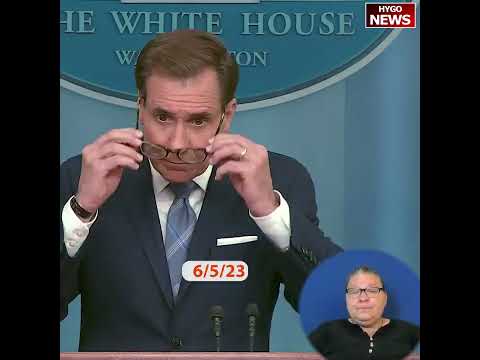
John Kirby Refuses To Comment on Allegations of Corruption Against Biden’s Entire Family
On June 5, 2023, National Security Council spokesman John Kirby faced questions at the White House briefing on multiple fronts: allegations from the House Oversight Committee about $10 million in payments to the Biden family, the appropriateness of sending U.S. officials to China on the anniversary of the Tiananmen Square massacre, increasingly aggressive Chinese military intercepts of American aircraft and ships, and a Microsoft Outlook outage. Kirby’s two-word dismissal of the Biden family corruption allegations and his characterization of Chinese military aggression as “part and parcel of an increasing level of aggressiveness” were the most discussed moments of the briefing.
”No and No” on Biden Family Allegations
The most striking exchange of the briefing came when a reporter asked Kirby about the House Oversight Committee’s investigation into Biden family finances. The committee had issued a report on May 10 alleging that members of the Biden family had received approximately $10 million from foreign sources while Joe Biden was Vice President.
The reporter laid out the allegation and asked two direct questions: “On May 10th, they issued a report showing that the Biden family allegedly funneled $10 million into their bank accounts while Joe Biden was vice president. Members of the committee have said there may be several national security concerns at hand here with their alleged ties to the foreign countries. Admiral, have you read the report yourself and do you personally think that there are any national security concerns here?”
Kirby’s response was just two words: “No, no.”
The brevity of the answer was remarkable. Kirby confirmed that he had not read the Oversight Committee’s report and simultaneously dismissed any national security concerns arising from the alleged foreign payments, without engaging with the substance of the allegations. For a National Security Council spokesman to state that he had not reviewed a congressional report alleging foreign financial ties to the sitting President’s family raised questions about whether the NSC was deliberately avoiding the issue.
Chinese Military Aggression in the Air and at Sea
The briefing also focused significantly on escalating Chinese military provocations. Within the span of a week, the U.S. military had experienced two close encounters with the Chinese People’s Liberation Army: one in the air and one at sea.
A reporter asked Kirby to characterize what China was doing. He responded with notable candor: “Sadly, Ed, these are part and parcel of an increasing level of aggressiveness by the PLA, the PRC’s military.”
Kirby described the air intercept in detail: “You saw in the air intercept that they forced our aircraft and RC-135 to basically go through the jet wash. You saw the bump in the cockpit. That shows you how close that Chinese fighter was to our jet.”
He also addressed the maritime encounter in the Taiwan Strait: “And in the maritime intercept in Taiwan Strait, it’s 150, 140, 150 yards. Speaking as an old sailor myself, I’ll tell you, that’s pretty close when you’re in open waters like that.”
Kirby drew a distinction between routine military intercepts and the Chinese incidents: “These are intercepts. Now, look, air and maritime intercepts happen all the time. Heck, we do it. The difference is when we do it, when we feel like we need to do it, it’s done professionally, and it’s done inside the international law, and it’s done in accordance with the rules of the road. These two that you saw recently and they have happened with more frequency than we’d like. Not all of them are unsafe and unprofessional, but these two were.”
Tiananmen Square Anniversary and China Visit
Reporters questioned the optics of the administration sending two senior officials to Beijing on the anniversary of the 1989 Tiananmen Square massacre, when the Chinese government killed an unknown number of pro-democracy protesters.
A reporter asked: “You just said that this was a these two incidents are part of a pattern of an increasing level of aggressiveness. So why was it appropriate to send two senior officials to visit China on the anniversary of the Tiananmen Square massacre?”
Kirby pushed back on the premise: “A couple of things. First of all, it wasn’t timed to the anniversary of the Tiananmen Square. Number two, it wasn’t timed specifically to deal with these intercepts.”
When the reporter pressed on whether it was a “messaging misstep,” Kirby was dismissive: “We would not call it a misstep. I mean, this was a long-plan trip, and this is the way the schedules worked out. But I think, honestly, people would be criticizing the timing of Tiananmen Square just making a whole heck of a lot out of nothing.”
The characterization of Tiananmen anniversary concerns as “making a whole heck of a lot out of nothing” drew criticism from human rights advocates who argued the anniversary held profound significance and that the administration should have been more sensitive to the optics of high-level engagement with Beijing on that specific date.
U.S.-China Diplomatic Contacts
Kirby confirmed that U.S. officials were in Beijing at the time of the briefing and that there had been a handshake between U.S. and Chinese officials at the Shangri-La Dialogue defense conference. When asked if there had been further communication beyond the handshake, Kirby noted: “I think you know we have two officials in Beijing right now.”
The diplomatic engagement was occurring simultaneously with the aggressive military incidents, reflecting the Biden administration’s “compete, not conflict” approach to China that involved maintaining high-level communication channels even while condemning specific military provocations.
Microsoft Outage and Mauritius
In lighter moments, a reporter asked whether the NSC was monitoring a Microsoft Outlook outage for potential foul play. Kirby said briefly: “Nothing more.”
A reporter then followed up on a question from the previous week about Mauritius. Kirby’s response was candidly self-deprecating: “You know what? It was a second today where I’m thinking, I wonder if I should make myself ready on Mauritius. And then I thought, nah, there’s like no way that question’s going to come up again. So I do not have an answer for your brother. I’m sorry. I’ll have to get back to you.”
The exchange provided a rare moment of humor in an otherwise tense briefing.
Additional Context
The June 5, 2023 briefing came at a time when multiple investigations into the Biden family’s financial dealings were advancing in Congress. The House Oversight Committee’s May 10 report detailed bank records showing payments from foreign entities to Biden family members, with Committee Chairman James Comer alleging the payments totaled approximately $10 million. The committee argued these payments raised national security concerns because they came from foreign nationals and entities in countries where U.S. policy was at stake.
Kirby’s “no and no” dismissal was consistent with the White House’s broader strategy of refusing to engage substantively with the Oversight Committee’s findings, treating the investigation as a political exercise rather than a legitimate national security inquiry. Critics argued that the NSC’s refusal to even review the committee’s findings was a dereliction of its security mission.
The Chinese military encounters described by Kirby continued an escalating pattern that had been building throughout 2023, contributing to what many analysts described as the most strained period in U.S.-China relations in decades.
Key Takeaways
- Kirby dismissed the House Oversight Committee’s allegations of $10 million in foreign payments to Biden family members with a two-word response: “No, no,” confirming he had not read the report and did not see national security concerns.
- Kirby described Chinese military intercepts of U.S. assets as “part and parcel of an increasing level of aggressiveness,” detailing how a Chinese fighter forced a U.S. RC-135 through its jet wash and a Chinese ship came within 150 yards in the Taiwan Strait.
- When questioned about sending U.S. officials to China on the Tiananmen Square anniversary, Kirby dismissed the criticism as “making a whole heck of a lot out of nothing.”
- Kirby humorously admitted he had failed to prepare for a follow-up question about Mauritius: “I thought, nah, there’s like no way that question’s going to come up again.”
- The briefing highlighted the tension between the administration’s refusal to engage with congressional investigations into Biden family finances and its acknowledgment of growing Chinese military provocations.