 HYGO News
 Jean-Pierre: I haven’t seen you in a long time, I always say that to Josh
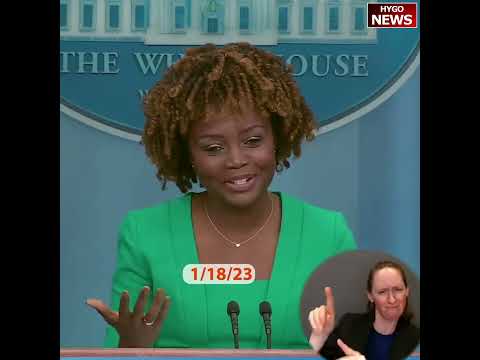
KJP’s Briefing Banter: “I Feel Like I Haven’t Seen You” — Questions Correspondents’ Regular Attendance — Announces Around-the-Room Approach
In January 2023, White House Press Secretary Karine Jean-Pierre opened a briefing with characteristic banter that showed her sometimes-awkward relationship with the press corps. “Okay, Darlene, welcome. I feel like I haven’t seen you in a long time,” KJP said to Associated Press reporter Darlene Superville. When the reporter began to reply, KJP continued: “I always say that to Josh and he’s like, no, that’s not true.” Speaking to Josh Boak of Associated Press directly, KJP continued the theme: “With that, I say this all the time, Josh. I haven’t seen you in a long time. And you always tell me you’ve been here.” She then announced an around-the-room approach: “I got a lovely letter from Tamer Keith, your president of the Correspondents Association, and she asked that I go around. So I’m gonna do that. Okay, Courtney.”
The Briefing Opening Style
KJP’s opening style was informal:
Personal greetings — To reporters.
Conversational tone — Not formal.
Reporter names used — Rapport building.
Bantering comments — Light entertainment.
Welcome approach — Friendly.
This opening approach was KJP’s typical style. Unlike some more formal predecessors, she often began briefings with casual conversation. The approach had virtues of warmth but could also come across as unfocused.
The “Haven’t Seen You” Pattern
KJP’s “haven’t seen you” framing was apparently recurring. “I always say that to Josh and he’s like, no, that’s not true,” KJP said about Josh Boak.
The pattern:
Familiar phrase — Repeated to reporters.
Reporter pushback — “Not true.”
Self-aware acknowledgment — KJP.
Pattern recognition — Visible.
Humor element — Intended.
KJP was noting her own pattern of saying “haven’t seen you” when the reporters had actually been present regularly. This self-awareness was humorous but also revealing — suggesting KJP wasn’t always noting reporter attendance accurately.
The Professional Implication
The recurring pattern had professional implications:
Reporter attendance — Being miscategorized.
Memory accuracy — Questioned.
Familiarity claims — Unfounded.
Press relationships — Complicated.
Briefing awareness — Less than complete.
For a press secretary, knowing who is regularly attending briefings is basic. Consistently misremembering attendance suggested either poor attention to press corps composition or inadequate preparation. The self-mocking didn’t fully excuse the pattern.
”I Say This All the Time, Josh”
KJP addressed Josh Boak directly. “With that, I say this all the time, Josh. I haven’t seen you in a long time. And you always tell me you’ve been here,” KJP said.
The exchange:
Direct address — Josh Boak.
“All the time” — Recurring pattern.
Reporter correction — Routine.
Familiar territory — Acknowledged.
Mutual joke — Perhaps.
Josh Boak had been covering the White House for AP. His regular attendance should have been obvious. The repeated “haven’t seen you” was either confusing for KJP or representing genuine gap in her attention to press composition.
The Ongoing Joke Dynamic
The exchange had humor dynamic:
KJP’s claim — Of absence.
Boak’s denial — Of absence.
Established routine — Between them.
Ice-breaker function — Social.
Briefing tone setting — Warmth.
Some reporters might have found this light exchange helpful for briefing atmosphere. Others might have found it evasive — using humor to avoid focus on substantive press work. The effectiveness depended on reporter preference and briefing context.
”Good to See You, Josh”
KJP closed the interaction. “Okay, bye. Good to see you, Josh. Kick us off,” KJP said.
The closure:
“Kick us off” — Starting questions.
Casual sign-off — From exchange.
Transition — To substantive content.
Rapport maintenance — Despite banter.
Proceeding to work — Now.
The casual interaction had consumed some briefing time but KJP was now ready to proceed. “Kick us off” indicated that the substantive portion was beginning.
The Around-the-Room Announcement
KJP announced a new approach. “I’m actually gonna go around. I got a lovely letter from Tamer Keith, your president of the Correspondents Association, and she asked that I go around. So I’m gonna do that. Okay, Courtney,” KJP said.
The announcement:
Around-the-room — Systematic approach.
Tamara Keith request — WHCA president.
Letter reference — Formal communication.
Implementation — Immediate.
Starting with Courtney — First reporter.
The WHCA’s letter asking for around-the-room question approach was significant. It suggested concerns about KJP’s question distribution. Some reporters felt they weren’t getting equitable access to questions. The around-the-room approach was response.
The WHCA Letter Context
The White House Correspondents’ Association letter:
Tamara Keith — NPR, WHCA president.
Formal request — For approach change.
Organization pressure — From press corps.
Collective concern — About access.
Administrative response — Modifying approach.
WHCA serving as press corps representative was traditional role. When it wrote to press secretary about procedures, administration usually took note. KJP’s adoption of around-the-room approach showed willingness to adjust to press concerns.
The Question Distribution Issue
Previous question distribution had generated concerns:
Same reporters called — Frequently.
Less established reporters — Often bypassed.
Favoritism appearance — Created.
Access equity — Lacking.
Press corps frustration — Building.
The shift to around-the-room approach addressed these concerns. Systematic calling order ensured more reporters got questions. This was administrative accommodation to press corps feedback.
The Starting Reporter
“Okay, Courtney” likely referred to Courtney Kube of NBC News or similar reporter. Who started the around-the-room order was meaningful:
First position — Advantageous.
Topic setting — By first question.
Attention to network — Starting choice.
WHCA representation — Through order.
Selection signal — By KJP.
The specific reporter chosen to start indicated KJP’s choices even within the around-the-room approach. This had less flexibility than fully discretionary calling but still had KJP discretion in starting point.
The KJP Communication Style
The briefing opening reflected KJP’s communication style:
Casual/informal — Often.
Banter-heavy — Frequently.
Personal comments — Common.
Professional transitions — Then to substance.
Relationship emphasis — Over content.
This style differed from some predecessors. Formal press secretaries might have dispensed with personal banter and moved directly to substance. KJP’s approach was more personal, which was stylistic choice with mixed reception.
The Criticism of Briefings
By early 2023, KJP’s briefings had been criticized:
Substantive responses — Often lacking.
Deflection patterns — Frequent.
Reading from binder — Regular.
Follow-up handling — Challenging.
Communication effectiveness — Questioned.
The personal banter opening was part of KJP’s broader style that had drawn mixed reviews. Some found her warmth refreshing; others found her briefings lacking in depth and responsiveness.
The Predecessors Comparison
Previous Obama/Biden era press secretaries had different styles:
Jen Psaki — Predecessor, more polished.
Josh Earnest — Obama era, detailed.
Jay Carney — Earlier Obama, policy-focused.
Robert Gibbs — First Obama term, casual.
Various styles — Across administrations.
Jen Psaki, KJP’s predecessor, had been praised for detailed briefings. Transition to KJP had been somewhat rocky. Comparisons to Psaki were often unfavorable to KJP in press coverage.
The Press Briefing Evolution
Press briefings had evolved significantly:
Traditional Q&A — Original form.
Camera-ready — Increasingly.
Social media clips — Generated.
Political weapons — For/against admin.
Entertainment value — Expected.
The modern press briefing was part information exchange and part political theater. Press secretaries needed to balance substantive responses with political messaging. KJP’s style emphasized the personal over the substantive.
The Daily Routine
The daily briefing had predictable structure:
Opening — Often banter.
Topper — Announcements/issues.
Q&A — Reporter questions.
Cuts — Possible.
Ending — Move to next activity.
KJP’s opening banter was part of this structure. How much time banter consumed vs. substantive content was part of critique about her effectiveness. More banter meant less time for substantive response.
The Reporter Relationships
KJP had specific reporter relationships:
Some warm — Like with Boak.
Some cool — With various others.
Professional boundaries — Maintained generally.
Personal references — Used selectively.
Mutual respect — In varying degrees.
The Boak reference was example of warm reporter relationship. Other reporters had less comfortable dynamics with KJP. These patterns affected briefing dynamics and coverage.
The Substantive Briefing
After the banter opening, substantive briefing would begin. Topics for January 22 briefing likely included:
Classified documents — Ongoing.
Debt ceiling — Current crisis.
Foreign policy — Various.
Economic issues — Continuing.
Political developments — Domestic.
These topics would receive questions. The around-the-room approach would distribute questions systematically. Each would be addressed through KJP’s standard patterns of response.
The WHCA Role
WHCA as organization:
Represents press corps — Traditionally.
Negotiates access — With White House.
Addresses concerns — Raised by members.
Maintains traditions — Like correspondents dinner.
Organizes events — Press-related.
WHCA’s letter about question distribution was part of its role. When collective press concerns emerged, WHCA was the channel for raising them with administration. This was institutional function.
The Administration Response
KJP’s adoption of around-the-room approach was positive response:
Feedback accepted — From WHCA.
Implementation immediate — Next briefing.
Good-faith effort — Apparent.
Structural change — To question distribution.
Equity improvement — For reporters.
The response showed administration willingness to adjust based on press feedback. This maintained relationships with press corps even amid other tensions about briefing substance.
The Briefing Room Dynamics
The briefing room had complex dynamics:
Permanent press corps — Regular attendees.
Visiting reporters — Less regular.
Foreign press — Sometimes present.
WHCA seating — Assigned positions.
Access hierarchy — Within press corps.
The around-the-room approach would address the hierarchy somewhat. By working through positions systematically, less prominent reporters would get opportunities. This was democratization of briefing access.
Key Takeaways
- KJP opened a briefing with characteristic banter: “I feel like I haven’t seen you in a long time” to reporter Darlene Superville.
- She acknowledged the recurring pattern: “I always say that to Josh and he’s like, no, that’s not true.”
- To Josh Boak (AP), she continued: “I say this all the time, Josh. I haven’t seen you in a long time. And you always tell me you’ve been here.”
- KJP announced a procedural change: “I got a lovely letter from Tamer Keith, your president of the Correspondents Association, and she asked that I go around.”
- The WHCA letter requesting around-the-room question approach addressed concerns about question distribution equity.
- The exchange showed KJP’s informal briefing style and willingness to adjust procedures based on press corps feedback.
Transcript Highlights
The following is transcribed from the video audio (unverified — AI-generated from audio).
- Okay, Darlene, welcome. I feel like I haven’t seen you in a long time.
- I always say that to Josh and he’s like, no, that’s not true.
- With that, I say this all the time, Josh. I haven’t seen you in a long time.
- And you always tell me you’ve been here. Okay, bye. Good to see you, Josh. Kick us off.
- I’m actually gonna go around. I got a lovely letter from Tamer Keith, your president of the Correspondents Association, and she asked that I go around.
- So I’m gonna do that. Okay, Courtney.
Full transcript: 106 words transcribed via Whisper AI.