 HYGO News
 Is there a perception issue in the other direction on inflation?
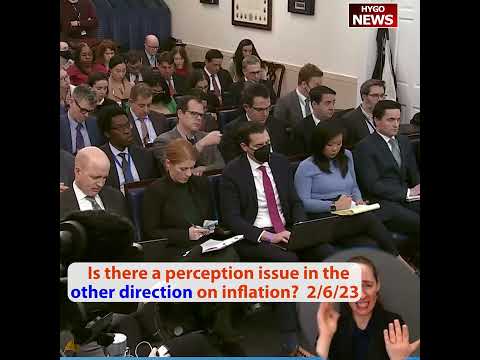
Reporter: Is White House’s Perception Of Inflation The Problem? — Deese: “No, Not At All”
In February 2023, a reporter posed a sharp question to NEC Director Brian Deese flipping the “perception” framing back on the administration itself. “A number of them dealt with this perception issue of how Americans are feeling differently than a lot of the positive data you have. Is there a perception issue in the other direction on inflation? Because when the President says he’s not responsible for inflation, that it’s a global issue and things like that, is there a problem or maybe a gap somewhere in how the White House views inflation when so many Americans feel it on a daily and weekly basis when they’re having to meet their obligations. Is there a perception gap on inflation here?” Deese rejected the premise firmly: “No, not at all. I mean, you have a President who has gone out and said that his top economic priority is to bring down inflation. You have a President that prioritized working with Congress to pass a bill called the Inflation Reduction Act, which, and as a result, in no small part because of those efforts, we’re now seeing progress. That progress is not sufficient. We need to keep making progress.”
The Reframe of Perception
Reframe:
Administration claim — Public misperceives.
Reporter flip — Administration misperceives.
Bi-directional — Perception.
Sharp rhetoric — Tool.
Challenge — To framing.
The reporter’s reframe of perception was sharp rhetorical tool. Administration had claimed Americans misperceived actually-strong economy. Reporter flipped this: maybe administration misperceived what Americans actually experienced. Bi-directional perception possibility was challenge to framing.
The “Other Direction” Framing
Other direction:
Novel — Approach.
Reverse — Template.
Accountability — Redirected.
Logic — Employed.
Professional — Framing.
The “other direction” framing was novel approach that reversed standard administrative template. Rather than accepting that Americans were misperceiving, reporter suggested maybe administration was misperceiving. Accountability redirected through logic.
”When President Says He’s Not Responsible”
Biden claim invoked:
Responsibility — Denied.
Global issue — Framing.
Distance — From inflation.
Political — Defensive.
Problem — Identified.
The reporter invoked Biden’s “not responsible” claim and “global issue” framing. This distancing from inflation had been controversial. Problem identification was made: administration was distant from inflation reality.
”Americans Feel It On a Daily and Weekly Basis”
Daily reality:
Direct experience — Of Americans.
Daily inflation — Felt.
Weekly bills — Experienced.
Obligations — Difficult.
Real impact — Direct.
The “daily and weekly basis” reality was direct Americans’ experience. Daily inflation was felt in grocery prices. Weekly bills reflected it. Meeting obligations was difficult. Real impact on lives was direct.
The Perception Gap Question
Perception gap:
White House view — Optimistic.
American experience — Negative.
Gap real — Perhaps.
Administrative disconnect — Possible.
Fundamental question — Asked.
The perception gap question was fundamental. White House view was optimistic about progress. American experience was negative. Gap between these was real. Possible administrative disconnect with everyday reality was substantive concern.
”No, Not At All”
Deese rejection:
Firm no — Immediate.
“Not at all” — Absolute.
Defense mobilized — Quickly.
Reality acceptance — Refused.
Standard response — Denial.
Deese’s “No, not at all” was immediate firm rejection of the premise. Absolute denial mobilized defense quickly. Reality acceptance about administrative perception was refused. Standard political denial response.
”Top Economic Priority”
Top priority:
Inflation reduction — Claimed.
Presidential focus — Stated.
Priority — Officially.
Stated publicly — Multiple times.
Defense point — Used.
Deese’s “top economic priority is to bring down inflation” point was defense against disconnect charge. If president’s top priority was inflation, administration couldn’t be disconnected from it. Officially stated priority was defensive point.
The Inflation Reduction Act Invoked
IRA invoked:
Named — Specifically.
Passed — 2022.
Climate/health — Primary content.
Inflation connection — Debated.
Rhetorical value — Used.
Deese invoked the Inflation Reduction Act specifically. Passed in 2022, the bill was primarily climate and health investment. The inflation connection in the name was debated. Rhetorical value was used as defense point.
The Inflation Reduction Act Reality
IRA reality:
Climate investment — Major.
Healthcare savings — Real.
Drug pricing — Reform.
Direct inflation effect — Limited.
Naming — Political.
The actual IRA content was major climate investment, real healthcare savings through drug pricing reform, specific policy improvements. Direct inflation reduction effect was economists’ debate. Naming was partially political.
”In No Small Part Because of Those Efforts”
Credit claimed:
“In no small part” — Credit.
“Those efforts” — Administration actions.
Progress — Credited.
Political — Narrative.
Causation — Claimed.
Deese’s “in no small part because of those efforts” claimed administrative credit for inflation progress. Progress was credited to administration actions. Political narrative of success was constructed through causation claim.
The Federal Reserve Credit
Fed credit:
Powell — Aggressive.
Rate hikes — Inflation fighting.
Primary — Mechanism.
Administration — Less direct.
Attribution — Debated.
The Federal Reserve under Jerome Powell deserved much credit for inflation fighting through aggressive rate hikes. This monetary policy was primary inflation reduction mechanism. Administration role was less direct. Attribution was debated.
”Progress Not Sufficient”
Progress acknowledgment:
“Not sufficient” — Honest.
More needed — Stated.
Reality — Acknowledged partially.
Humility — Some.
Forward — Commitment.
Deese’s “progress is not sufficient” was honest acknowledgment. More work needed was stated. Reality was acknowledged partially. Some humility shown. Forward commitment to continued effort expressed.
”Keep Making Progress”
Forward commitment:
Continued effort — Pledged.
Future — Orientation.
Administration work — Ongoing.
Results — Promised.
Patience — Requested implicitly.
The “keep making progress” forward commitment was standard political framing. Continued administration effort was pledged. Future orientation used. Results promised. Patience requested implicitly from frustrated Americans.
The White House Internal View
Internal view:
Data positive — Generally.
Trend improving — Some.
Accomplishments real — Yes.
Optimism — Internal.
Gap with public — Real.
The White House internal view was generally positive about data, improving trends, real accomplishments. Internal optimism was genuine. But gap with public perception was real and persistent.
The Public External View
External view:
Prices high — Still.
Daily struggle — Real.
Accomplishments — Abstract.
Pessimism — Widespread.
Gap visible — Large.
Public external view was prices remained high even if declining, daily struggle was real, accomplishments were abstract compared to experience, pessimism was widespread, gap with administration view was large.
The Macro-Micro Tension
Tension:
Macro data — Improving.
Micro experience — Difficult.
Statistical — vs. lived.
Aggregate — vs. individual.
Communication challenge — Real.
The macro-micro tension was real substantive issue. Macro economic data was improving in many respects. Micro individual experience remained difficult. Statistical aggregate versus lived individual reality was communication challenge.
The Inflation Timeline Details
Timeline:
Peak — 9.1% June 2022.
February 2023 — Around 6%.
Declining — Pattern.
Still high — Historically.
Targeting — 2%.
Inflation timeline showed peak 9.1% June 2022, around 6% February 2023, declining pattern, still high historically, targeting Fed’s 2%. Progress was real but incomplete. Experience lagged data improvement.
The Housing Price Persistence
Housing:
Prices — Remained high.
Mortgage rates — 6-7%.
Affordability — Crisis.
Major category — Of inflation.
Persistent — Challenge.
Housing prices remained high persistently. Mortgage rates at 6-7% were high. Affordability was crisis level. Housing was major inflation category. Persistent challenge affected perception.
The Energy Price Variability
Energy:
Gas prices — Variable.
Natural gas — Utility bills.
Heating — Winter costs.
Direct daily — Impact.
Political — Visibility.
Energy price variability had direct daily impact. Gas prices at pumps. Natural gas utility bills. Winter heating costs. Direct daily experience fed political visibility of inflation beyond statistics.
The Food Price Stickiness
Food:
Grocery prices — Higher.
Restaurants — More expensive.
Daily purchases — Affected.
Family budgets — Strained.
Visibility — High.
Food price stickiness meant grocery and restaurant prices stayed higher. Daily purchases were affected. Family budgets strained. Visibility was high through daily shopping. Political perception through every grocery trip.
The Deese Professional Response
Professional response:
Firm defense — Of administration.
Facts cited — IRA, priorities.
Substantive — Engagement.
Respectful — Of question.
Political — Performance.
Deese’s professional response was firm defense of administration, specific fact citation of IRA and priorities, substantive engagement with question, respectful treatment of reporter, political performance executed.
The Reporter’s Professional Work
Professional work:
Sharp reframe — Smart.
Substantive — Question.
Accountability-focused — Yes.
Well-structured — Framing.
Quality — Journalism.
The reporter’s sharp reframe was smart substantive question. Accountability-focused approach. Well-structured framing. Quality journalism displaying sophisticated understanding of political communication dynamics.
The Communication Strategy Challenge
Challenge:
Messaging limits — Real.
Reality-based — Limit.
Spin available — Limited.
Credibility cost — Accruing.
Long-term — Implications.
The communication strategy challenge was real. Messaging limits were evident. Reality-based limits on spin existed. Available spin was limited. Credibility cost was accruing. Long-term political implications were real.
The 2024 Campaign Economic Challenge
Campaign challenge:
Record to defend — Mixed.
Inflation blame — Real.
Accomplishments — Partial.
Voter perception — Persistent.
Strategy — Difficult.
The 2024 campaign economic challenge would require defending mixed record, accepting some inflation blame, highlighting partial accomplishments, confronting persistent voter perception. Strategy would be difficult.
The Bidenomics Strategy
Bidenomics:
Eventually launched — 2023.
Strategic branding — Effort.
Marketing — Substantial.
Reception — Mixed.
Ongoing — Evolution.
The Bidenomics strategy would eventually launch in 2023 as strategic branding effort with substantial marketing. Reception was mixed initially. Strategy evolved over time. Whether effective was debated.
The Deese Departure Timing
Departure:
Brainard successor — Announced.
Transition — February 2023.
Final briefings — Deese’s.
Legacy — Being shaped.
Continuity — Maintained.
Deese’s departure with Brainard as successor was in transition during February 2023. These were among his final briefings. Legacy was being shaped. Continuity would be maintained through successor.
The Economic Team Evolution
Evolution:
Original team — Transition.
Lael Brainard — NEC Director.
Janet Yellen — Continuing.
Cecilia Rouse — CEA.
Team evolution — Normal.
Economic team evolution was normal administrative turnover. Lael Brainard would take NEC Director. Janet Yellen continued Treasury. Cecilia Rouse at CEA. Team evolution was standard pattern.
The Historical Comparison
Historical:
Clinton messaging — Stronger.
Obama messaging — Mixed.
Trump messaging — Forceful.
Biden messaging — Challenged.
Different styles — Evident.
Historical comparison showed Clinton had strong economic messaging, Obama was mixed, Trump was forceful (even when questionably accurate), Biden was challenged by reality and delivery. Different presidential styles evident.
The Long-Term Political Implications
Long-term implications:
Perception — Slowly changing.
Reality — Improving gradually.
Strategy — Evolving.
2024 — Central.
Outcome — Uncertain.
Long-term political implications showed perception slowly changing, reality improving gradually, strategy evolving, 2024 as central political moment. Outcome was uncertain despite progress.
Key Takeaways
- A reporter flipped the perception framing: maybe the White House has “a perception issue in the other direction on inflation.”
- The sharp question: is there “a gap somewhere in how the White House views inflation when so many Americans feel it on a daily and weekly basis.”
- Deese rejected firmly: “No, not at all.”
- He cited priority: “You have a President who has gone out and said that his top economic priority is to bring down inflation.”
- He cited IRA: “You have a President that prioritized working with Congress to pass a bill called the Inflation Reduction Act.”
- He acknowledged insufficient progress: “That progress is not sufficient. We need to keep making progress.”
Transcript Highlights
The following is transcribed from the video audio (unverified — AI-generated from audio).
- A number of them dealt with this perception issue of how Americans are feeling differently than a lot of the positive data you have.
- Is there a perception issue in the other direction on inflation?
- Because when the President says he’s not responsible for inflation, that it’s a global issue and things like that, is there a problem or maybe a gap somewhere in how the White House views inflation when so many Americans feel it on a daily and weekly basis when they’re having to meet their obligations.
- No, not at all. I mean, you have a President who has gone out and said that his top economic priority is to bring down inflation.
- You have a President that prioritized working with Congress to pass a bill called the Inflation Reduction Act, which, and as a result, in no small part because of those efforts, we’re now seeing progress.
- That progress is not sufficient. We need to keep making progress.
Full transcript: 169 words transcribed via Whisper AI.