 HYGO News
 Is it abuse for Elon Musk to use Twitter to tell users to vote for Republicans in midterms?
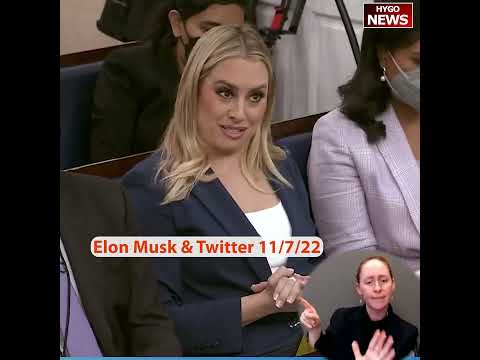
Reporter Asks If Elon Musk “Abused” Twitter by Telling Users to Vote Republican — KJP Punts: “Every Eligible American Has the Right to Make Their Voices Heard”
On 11/8/2022, Election Day, a reporter asked White House Press Secretary Karine Jean-Pierre whether Elon Musk’s use of Twitter to tell users to vote for Republicans in the midterms constituted an “abuse” of his position as the platform’s new CEO. Musk had tweeted to his 115 million followers recommending that independent voters choose Republican candidates — a departure from the platform’s previous political neutrality norms under its prior ownership. KJP declined to answer directly, citing Hatch Act restrictions. “I’m limited to what I can say about elections from the podium,” she said. “Every eligible American has the right to make their voices heard, and I’m just going to leave it there."
"Is It an Abuse?”
The reporter’s question used the framing the Biden White House had been applying to Musk’s Twitter takeover throughout the fall. “My last question would be about Elon Musk and Twitter on a lighter note. Is it an abuse for Elon Musk as the new Twitter CEO to use the platform to tell users to vote for Republicans in the midterms?” the reporter asked.
The question’s framing — “abuse” — carried significant implications. An abuse of a social media platform suggested something more serious than a CEO expressing political opinions. It implied Musk was misusing his position, exploiting his ownership, or potentially violating platform norms. The word “abuse” also echoed Biden’s own November 9, 2022 comments (the day after this exchange) that Musk’s business dealings were “worth being looked at” — language that sounded like a veiled threat of government action.
Musk had tweeted on November 7: “To independent-minded voters: Shared power curbs the worst excesses of both parties, therefore I recommend voting for a Republican Congress, given that the Presidency is Democratic.”
The tweet was notable for several reasons. First, it was a departure from the platform’s previous political posture — under Jack Dorsey and prior leadership, Twitter had avoided platform-level political endorsements. Second, Musk’s personal following — over 115 million users — gave his political speech extraordinary reach. Third, coming from the owner of a major communications platform, the endorsement raised questions about whether he was using the platform’s algorithms or his ownership status to amplify his own political views.
”Limited to What I Can Say”
KJP’s response invoked the Hatch Act. “So I saw that reporting that was earlier today, right? So, you know, look, I’m limited to what I can say about elections from the podium,” KJP said.
The Hatch Act restricts executive branch employees from engaging in political activity during official duties. The White House Press Secretary could not, from the official podium, endorse candidates, criticize partisan messaging, or weigh in on campaign-related controversies. This was a legitimate constitutional and statutory constraint, and KJP frequently invoked it when uncomfortable political questions arose.
But the Hatch Act didn’t prohibit KJP from addressing the underlying question about whether a CEO’s political speech on his own platform constituted “abuse.” She could have said: “The First Amendment protects Elon Musk’s right to express his political views like any other American, and the White House respects that right while disagreeing with his recommendation.” That would have been substantive without being partisan.
Instead, KJP chose minimal engagement — acknowledging the question, citing the Hatch Act limitation, and offering a generic platitude that didn’t address the specific issue raised.
”Every Eligible American”
KJP’s substantive response was a content-free truism. “Broadly speaking, I can say that every eligible American has the right to make their voices heard, and I’m just going to leave it there as to not get involved in any kind of election,” KJP said.
The statement was unimpeachable in its abstract form — yes, every eligible American has the right to vote and express political opinions. But it was also a non-answer. The reporter had asked whether a specific CEO’s use of a specific platform to deliver a specific political message constituted an “abuse.” KJP responded with a general principle about American voting rights that applied to everyone and specifically addressed nothing.
The “I’m just going to leave it there” closer was a familiar KJP technique — treating a non-answer as a complete response and shutting down follow-up questions. By refusing to elaborate, she avoided the harder questions: Does the White House consider platform owners expressing political views problematic? Is there a distinction between a CEO’s personal speech and platform-level amplification? Should there be any regulatory response to concentrated political speech by platform owners?
The Biden-Musk Backdrop
The exchange took place against a rapidly deteriorating Biden-Musk relationship. Musk had emerged in 2022 as an increasingly vocal critic of the administration, questioning COVID policies, criticizing government overreach, and — as of his October Twitter acquisition — signaling intent to change the platform’s content moderation approach.
The Biden administration’s responses had been increasingly pointed:
- On November 9 (one day after this exchange), Biden would say Musk’s business dealings were “worth being looked at” — language that sounded threatening coming from the president.
- KJP had been asked about potential national security reviews of Twitter under Musk’s ownership.
- The administration had declined to comment on whether it was considering any regulatory action against Musk’s various businesses (Twitter, SpaceX, Tesla).
The pattern suggested the White House viewed Musk as a political opponent who had become a particular problem after acquiring a major communications platform. The “abuse” framing in the reporter’s question echoed language the administration had encouraged in characterizing Musk’s Twitter ownership.
The “Lighter Note”
The reporter’s characterization of the question as “on a lighter note” was itself interesting. Describing a question about platform abuse and election influence as “lighter” suggested the reporter was either signaling the question wasn’t meant as a serious accusation or was trying to make the Hatch Act limitation less applicable by framing it as casual conversation.
KJP treated it as a serious question regardless — invoking the Hatch Act and declining substantive engagement. The decision reflected the Biden communications strategy: when in doubt about whether to engage with Musk-related questions, err on the side of saying less.
The First Amendment Dimension
The exchange raised but didn’t address a fundamental First Amendment question. Elon Musk, as a private citizen, had the same right to political speech as any other American. As the owner of a social media platform, he didn’t lose that right simply because his speech was broadcast to millions of followers.
Critics of Musk’s endorsement argued that platform owners should maintain neutrality to avoid using their platform power for political advantage. Defenders argued that Musk’s tweet was personal speech that users could follow, ignore, or disagree with like any other Twitter content. The debate cut across traditional political lines — some progressives who supported content moderation argued Musk’s personal speech was fine, while some conservatives who generally opposed corporate political activism worried about the precedent.
KJP’s refusal to engage with any of these distinctions — and her retreat to a generic “every eligible American has the right” platitude — left the substantive question unresolved. The White House had an opportunity to articulate a principled position on platform owner speech versus platform-level manipulation, and passed on it.
Key Takeaways
- A reporter asked if Musk’s Twitter endorsement of Republicans constituted an “abuse” of his position as platform CEO.
- KJP invoked the Hatch Act — “I’m limited to what I can say about elections from the podium.”
- She responded with a generic truism: “Every eligible American has the right to make their voices heard.”
- Musk had tweeted that he recommended “voting for a Republican Congress” to his 115 million followers.
- The next day, Biden said Musk’s business dealings were “worth being looked at” — language that sounded threatening from a sitting president.
Transcript Highlights
The following is transcribed from the video audio (unverified — AI-generated from audio).
- Is it an abuse for Elon Musk as the new Twitter CEO to use the platform to tell users to vote for Republicans in the midterms?
- I saw that reporting that was earlier today.
- I’m limited to what I can say about elections from the podium.
- Every eligible American has the right to make their voices heard.
- I’m just going to leave it there as to not get involved in any kind of election.
- Broadly speaking, I can say that every eligible American has the right.
Full transcript: 103 words transcribed via Whisper AI.