 HYGO News
 Investigate Trump, A Proper Use Of Federal Taxpayer Dollars?
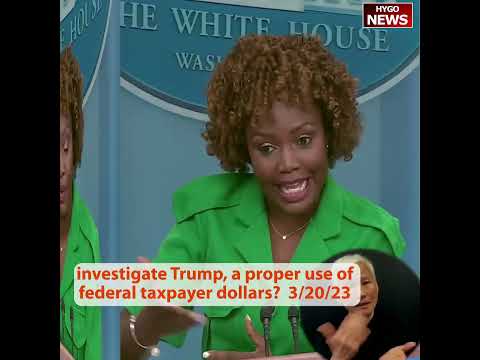
Investigate Trump, A Proper Use Of Federal Taxpayer Dollars?
White House Press Secretary Karine Jean-Pierre declined to comment during a March 2023 briefing on House Republicans’ request to speak with Manhattan District Attorney Alvin Bragg about his ongoing investigation into former President Donald Trump. When a reporter asked whether the White House viewed the congressional inquiry as a proper use of federal taxpayer dollars, Jean-Pierre pivoted to generic messaging about bipartisan cooperation on economic policy — but avoided any substantive response to the underlying constitutional separation-of-powers question.
The House Republican Request
- Letter to Bragg: House Judiciary, Oversight, and House Administration committees sent a joint letter to DA Alvin Bragg.
- Document demands: The committees demanded documents and testimony related to the Trump investigation.
- Constitutional concerns: Legal scholars questioned Congress’s authority to interfere with state prosecutions.
- Political motivation: Critics argued the request was intended to provide political cover for Trump.
- Bragg’s response: The Manhattan DA pushed back against what he called improper congressional interference.
The Manhattan Investigation Context
- Hush money payments: Bragg’s investigation focused on hush money payments to Stormy Daniels before the 2016 election.
- Michael Cohen role: Trump’s former attorney Michael Cohen testified extensively before the grand jury.
- Stormy Daniels testimony: Daniels herself testified before the New York grand jury.
- Indictment timeline: The grand jury was expected to vote on indictment within weeks of the briefing.
- Historical first: A Trump indictment would mark the first criminal charges against a former U.S. president.
Jean-Pierre’s Deflection
- “Not going to speak”: The press secretary said she was “just not going to speak” to the question.
- Unfinished thought: The transcript captured an unfinished “un-look” suggesting difficulty framing a response.
- Hatch Act considerations: Active criminal investigations of political figures require careful briefing room navigation.
- DOJ independence: White House avoided any appearance of commenting on criminal investigations.
- Redirect to economy: The press secretary pivoted to Biden’s economic agenda and bipartisan cooperation themes.
The Bipartisan Cooperation Pivot
- Economic emphasis: Jean-Pierre emphasized Biden’s willingness to work with Republicans on economic policy.
- Bottom up, middle out: The “economy from the bottom up, middle out” phrasing was an administration talking point.
- Two-year successes: The press secretary referenced economic accomplishments of the administration’s first two years.
- Infrastructure examples: Bipartisan Infrastructure Law and CHIPS Act passed with Republican support.
- Venue shifting: Redirecting to economic cooperation shifted attention from investigation questions.
The Separation of Powers Question
- Federalism concerns: State prosecutions are generally beyond congressional interference.
- Legislative purpose: Congress’s document requests require legitimate legislative purpose.
- Precedent limitations: Historical precedents limit congressional intrusion into prosecutorial decisions.
- Judicial review: Federal courts ultimately determine legitimate scope of congressional inquiries.
- State sovereignty: States maintain substantial sovereign authority over criminal matters within their borders.
Congressional Authority Limits
- Legislative necessity: Committees must demonstrate legislative purpose for document requests.
- Executive branch privilege: Separate privileges apply to executive branch documents and personnel.
- State officials: State prosecutors are not federal employees subject to congressional oversight.
- Subpoena power: Congressional subpoenas require judicial enforcement against non-cooperative recipients.
- Contempt proceedings: Congressional contempt citations require ultimate DOJ or court action.
The Political Calculus
- Trump political vulnerability: Investigations posed potential political damage to the Republican frontrunner.
- Republican defense strategy: House Republicans coordinated defense of Trump through investigation interference.
- Democratic caution: Democrats carefully avoided appearing to orchestrate investigations against opponents.
- Media coverage: The investigation and House response generated sustained coverage.
- 2024 implications: The investigation would affect Trump’s renomination campaign.
DA Bragg’s Position
- Investigation independence: Bragg emphasized his independent professional obligations as district attorney.
- Rejection of interference: He publicly rejected congressional demands as improper.
- Legal authority: New York state law governed his prosecutorial authority.
- Evidence review: Standard grand jury processes continued regardless of congressional pressure.
- Public response: Bragg’s public statements emphasized institutional integrity over political considerations.
The Investigation’s Legal Theory
- Federal election law: Some charges potentially connected to federal campaign finance violations.
- State falsification: New York state charges involved falsifying business records.
- Felony elevation: Elevating misdemeanor record falsification to felony required proving concealment of another crime.
- Novel legal theory: The indictment would test untested legal theories.
- Prosecutorial discretion: Bragg exercised significant discretion in choosing to pursue charges.
Media and Public Reception
- Historic significance: Potential indictment received unprecedented media coverage.
- Polling reaction: Public opinion polls measured reaction to potential indictment.
- Trump response: Trump mobilized political supporters in response to investigation.
- Legal analysis: Legal commentators debated merits and challenges of potential charges.
- International attention: The investigation drew global media interest.
Key Takeaways
- Jean-Pierre declined to comment on House Republicans’ inquiry into Manhattan DA Alvin Bragg’s Trump investigation.
- The press secretary pivoted to generic messaging about Biden’s willingness to work with Republicans on economic policy.
- The House Republican request raised significant constitutional separation-of-powers concerns.
- The investigation focused on hush money payments to Stormy Daniels during the 2016 presidential campaign.
- DA Bragg publicly rejected congressional interference, emphasizing his independent prosecutorial authority.
- The White House maintained careful distance from commenting on any pending criminal investigations.
Transcript Highlights
The following quotations are drawn from an AI-generated Whisper transcript of the briefing and should be considered unverified pending official transcript release.
- “I’m just not going to speak because that is an un-look.” — Karine Jean-Pierre
- “If Republicans want to work with us in a bipartisan way to deliver for the American people to continue to build on the successes that we have seen in the last two years when it comes to the economic policy, building an economy from the bottom up, middle out, he’s willing to have that conversation.” — Karine Jean-Pierre
- “House Republicans are requesting to speak with the Manhattan District Attorney Elm Bragg about his ongoing investigation into former President Trump.” — Reporter framing
- “Is that the view of the White House of proper use of federal taxpayer dollars to investigate or try to find out what a local prosecutor’s will is?” — Reporter question
- “The President has said this over and over again.” — Karine Jean-Pierre
- “Building an economy from the bottom up, middle out.” — Karine Jean-Pierre
Full transcript: 133 words transcribed via Whisper AI.