 HYGO News
 Immigration problems: blame Republicans political stunts
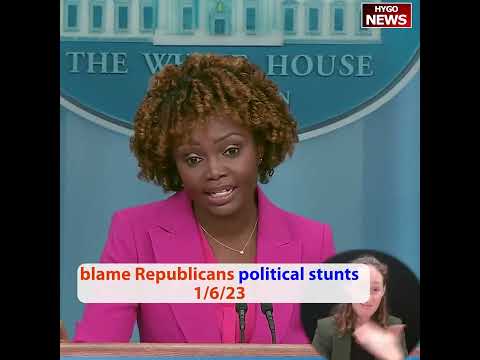
KJP on “Broken Immigration System”: Democrats “Ready to Work” But Republicans Do “Political Stunts”
On 1/6/2023, White House Press Secretary Karine Jean-Pierre again used the familiar Republican blame framing to explain immigration challenges. “What is happening, this broken immigration system that we have seen for decades now, is to actually get legislation done. And so, look, you know, what I have said and what many of us have said, like, we are ready to work. We are ready to put forth plans as we have,” KJP said. “And, you know, again, Republicans in Congress and Republicans official across the country who have done political stunts are not. And if they truly want to deal with this issue, they would come to the table and they would work with us on immigration reform, to true comprehensive immigration reform.”
The “Broken for Decades”
KJP acknowledged long-term dysfunction. “This broken immigration system that we have seen for decades now,” KJP said.
The “broken for decades” framing:
Long-term problem — Acknowledged.
Multiple administrations — Implicated.
Not just current — Responsibility.
Historical context — For challenges.
Reform need — Established.
This framing was:
Factually accurate — Immigration system had been broken.
Politically useful — Diluting current responsibility.
Standard framing — Across administrations.
Pre-Biden inheritance — Claim.
Reform difficulty — Acknowledged.
But the framing also:
Didn’t absolve current — Responsibility.
Long-term problem — Required current action.
Current administration choices — Mattered.
Progress possible — Through effort.
Deflection doesn’t solve — Actual problems.
”Legislation Done”
KJP identified the need. “To actually get legislation done,” KJP said.
The legislation need:
Real requirement — For lasting reform.
Congressional action — Necessary.
Bipartisan support — Typically.
Executive limits — On unilateral action.
Comprehensive approach — Preferred by administration.
But legislation required:
Political will — From both parties.
Compromise framework — Accepted.
Specific provisions — Negotiated.
Coalition building — Across differences.
Administration leadership — Genuinely.
The administration claim of:
“Ready to work” — On legislation.
“Plans put forth” — Allegedly.
“Comprehensive reform” — As goal.
“Day one” bill — Referenced.
Didn’t match:
Actual legislative activity — Limited.
Specific negotiations — Not observable.
Compromise willingness — Unclear.
Coalition building — Minimal.
Sustained effort — Absent.
”We Are Ready to Work”
KJP claimed readiness. “We are ready to work. We are ready to put forth plans as we have,” KJP said.
The “ready to work”:
Standard political framing — Always claimed.
Unprovable assertion — Can’t be disproven.
Deflection to others — Implicit.
Positive positioning — For administration.
Standard rhetoric — Across issues.
The “plans put forth”:
Comprehensive reform bill — From day one.
Still dormant — By January 2023.
Not actively negotiated — Visibly.
Mostly talking point — At this stage.
Administration use — For messaging.
Republicans “Not” Ready
KJP characterized Republicans. “Republicans in Congress and Republicans official across the country who have done political stunts are not,” KJP said.
“Political stunts” as characterization:
Standard administration line — Used regularly.
Blanket description — Of Republican activity.
Dismissive framing — Not substantive.
Cross-section attack — Congress and governors.
Political simplification — Of varied positions.
Republican immigration activity had:
Various components — Not monolithic.
Some substantive — Policy proposals.
Some performative — Political theater.
Mixed motivations — Across members.
Legitimate concerns — From constituents.
Calling all Republican engagement “stunts”:
Oversimplified — Reality.
Served political purposes — Administration.
Limited substantive discussion — Possible.
Polarized debate — Further.
Blocked potential compromise — Through hostility.
”Come to the Table”
KJP offered negotiation framing. “If they truly want to deal with this issue, they would come to the table and they would work with us on immigration reform,” KJP said.
The “come to the table”:
Standard negotiation framing — Political.
Administration readiness — Claimed.
Republican unwillingness — Implied.
Specific venue — Undefined.
Conditional cooperation — Required.
“Come to the table” required:
Actual table — Defined venue.
Mutual willingness — Both sides.
Shared framework — For discussion.
Compromise openness — From both.
Sustained engagement — Over time.
The reality:
No specific negotiations — Happening.
Administration position — Rigid.
Republican alternatives — Ignored.
Partisan framing — Persistent.
Limited outreach — From administration.
”True Comprehensive Immigration Reform”
KJP emphasized “true comprehensive”:
“True” — Implying Republican versions false.
“Comprehensive” — Administration preference.
“Immigration reform” — Standard goal.
The qualifiers:
Dismissed alternatives — Not “true.”
Specified preference — For comprehensive.
Standard language — For Democratic position.
Political positioning — Against incremental.
Maximum demand — Framing.
“Comprehensive” reform required:
Path to citizenship — For undocumented.
Border security — Enhanced.
Legal immigration reform — Modernization.
DACA protection — Codified.
Interior enforcement — Changes.
Republican-preferred reforms:
Border-first — Approach.
Enforcement emphasis — Priority.
Incremental — Smaller bills.
Specific provisions — Rather than omnibus.
Different coalition — Politically.
Insisting on “true comprehensive”:
Excluded Republican preferences — By definition.
Limited compromise options — Narrowly.
Made deals harder — Practically.
Protected administration position — Politically.
Continued stalemate — Predictably.
The Pattern of Deflection
The KJP response was deflection:
Acknowledged broken system — Decades.
Called for legislation — Standard.
Claimed administration readiness — Always.
Blamed Republicans — Routinely.
No specific action — Detailed.
This pattern across briefings:
Established blame framework — Republican.
Protected administration — From specifics.
Standardized response — To immigration questions.
Limited substantive debate — Publicly.
Continued political messaging — Regardless of results.
The Republican House Context
By January 2023:
Republican House majority — Taking control.
Hearings planned — On border.
Various proposals — From GOP.
Political pressure — Mounting.
Oversight activity — Increasing.
Republican positions included:
H.R. 2 — Border Security Act.
Various enforcement bills — Specific.
Title 42 continuation — Advocated.
Wall funding — Requested.
Asylum restrictions — Proposed.
The administration could have:
Negotiated on some provisions — Seriously.
Compromised on enforcement — For legalization.
Engaged specific proposals — Substantively.
Built coalitions — Across divisions.
Led on reform — Actively.
Instead:
Rhetorical engagement — Maintained.
Political positioning — Prioritized.
Blame framing — Used consistently.
Substantive progress — Limited.
Stalemate continued — Predictably.
The Broader Blame Strategy
The blame Republicans strategy:
Served political purposes — Short-term.
Protected administration — From accountability.
Maintained base — Support.
Generated media coverage — Often favorable.
Continued pattern — Established.
But the strategy:
Had diminishing returns — Over time.
Limited actual progress — Clearly.
Frustrated reform advocates — Sometimes.
Created 2024 vulnerabilities — Potentially.
Didn’t solve problems — Obviously.
By early 2023:
Two years into term — Blame losing power.
Voters expected results — Not just blame.
Media coverage — Evolving.
Political accountability — Increasing.
Strategic shift needed — But not executed.
The Brief Format
KJP’s response was brief. The 102-word transcript:
Short — Compared to some briefings.
Focused — On blame framing.
Clear message — Politically.
Deflective — From substance.
Standard length — For this topic.
Brief responses:
Can be effective — For clear messaging.
Limit substantive engagement — Inherently.
Serve political purposes — Well.
Standardize responses — Across contexts.
Control briefing time — Strategically.
The Underlying Policy Challenge
The real policy challenge:
Complex politics — Beyond simple blame.
Bipartisan obstacles — To reform.
Various interest groups — With competing demands.
Constitutional framework — For federal action.
Public opinion — Mixed and evolving.
Reform required:
Specific provisions — Negotiated.
Coalition building — Across lines.
Compromise acceptance — By administration.
Leadership engagement — Personal.
Sustained effort — Over time.
The administration’s approach:
Political messaging — Dominant.
Specific engagement — Limited.
Compromise framework — Rigid.
Leadership engagement — Delegated.
Sustained effort — Questionable.
The 2024 Calendar Impact
The 2024 election timing affected:
Administration priorities — Politically.
Legislative urgency — For specific actions.
Compromise willingness — Limited by base.
Republican opposition — Calcified.
Democratic discipline — Required.
For 2024:
Immigration would be — Major issue.
Administration record — Evaluated.
Policy results — Judged.
Political messaging — Contested.
Voter decisions — Influenced.
The blame Republicans strategy:
Could work politically — Partially.
Couldn’t replace results — Entirely.
Would be tested — In election.
Needed support — From base.
Limited general appeal — Potentially.
The Media Dynamic
Media response to blame framing:
Conservative outlets — Challenge.
Mainstream media — Sometimes accept.
Liberal media — Often embrace.
Independent observers — Varied.
Social media — Amplified across.
The blame framing:
Received mixed treatment — By outlets.
Enabled parallel narratives — Across media.
Limited cross-cutting — Understanding.
Polarized coverage — Further.
Fragmented public understanding — Of issues.
The Language of “Political Stunts”
“Political stunts” as accusation:
Sweeping characterization — Of opposition.
Dismissive framing — Of legitimate concerns.
Standard rhetoric — Across administrations.
Polarization tool — Effective.
Substantive avoidance — Facilitator.
Both parties accuse:
Each other of stunts — Regularly.
Legitimate activity — Of opposition.
Political theater — In various contexts.
Meaningful distinction — Often lost.
Voters caught between — Framings.
Key Takeaways
- KJP acknowledged the “broken immigration system that we have seen for decades now” — but continued current administration blame pattern.
- She claimed: “We are ready to work. We are ready to put forth plans as we have.”
- KJP characterized Republican activity as “political stunts” — sweeping dismissal of opposition engagement.
- She called for Republicans to “come to the table” for “true comprehensive immigration reform.”
- The “true comprehensive” framing excluded Republican-preferred incremental approaches by definition.
- The brief response exemplified standardized blame pattern used across immigration briefings.
- The deflection limited substantive policy debate while maintaining political messaging discipline.
Transcript Highlights
The following is transcribed from the video audio (unverified — AI-generated from audio).
- This broken immigration system that we have seen for decades now, is to actually get legislation done.
- We are ready to work. We are ready to put forth plans as we have.
- Republicans in Congress and Republicans official across the country who have done political stunts are not.
- If they truly want to deal with this issue, they would come to the table.
- They would work with us on immigration reform, to true comprehensive immigration reform.
Full transcript: 102 words transcribed via Whisper AI.