 HYGO News
 How To Lower Gas Prices? 'Studying' Shutting Down Pipeline, Immigrants Separated Hours 11/8/2021
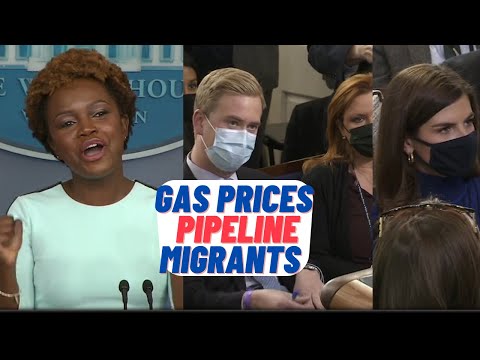
White House “Studying” Pipeline Shutdown While Gas Prices Surge, Refuses to Define Who Qualifies for Migrant Payments
On November 8, 2021, White House Deputy Press Secretary Karine Jean-Pierre held a briefing that produced two particularly notable exchanges. First, she was caught backtracking after initially slamming reporting about the Line 5 pipeline as “inaccurate,” only to admit moments later that the administration was indeed studying the impact of shutting it down — during a global energy crisis with heating costs rising. Second, she repeatedly refused to answer questions about who would qualify for the migrant compensation payments Biden had endorsed two days earlier, deflecting every question to the Department of Justice. The briefing also covered the administration’s lack of specifics on combating rising gas prices and declining poll numbers.
The Line 5 Pipeline Backtrack
Fox News reporter Peter Doocy asked Jean-Pierre why the administration was “now considering shutting down the Line 5 pipeline from Canada to Michigan” at a time when the Energy Secretary herself had acknowledged that heating costs would be higher for Americans that winter.
Jean-Pierre’s initial response was categorical: “Peter, that is inaccurate. That is not right. So any reporting indicating that some decision has been made, again, is not accurate.”
Doocy pushed back immediately: “What’s inaccurate?”
“The reporting about us wanting to shut down the Line 5,” Jean-Pierre said.
But Doocy clarified his question: “I didn’t say ‘wanting.’ I said, is it being studied right now? Is the administration studying the impact of shutting down the Line 5?”
Jean-Pierre’s reversal was instant: “Yes, we are. We are.”
When pressed on the contradiction, Jean-Pierre said she had misunderstood the question: “I thought you were saying that we were going to shut it down, but that is not inaccurate.” She confirmed that the Army Corps of Engineers was preparing an environmental impact study on the pipeline.
The exchange illustrated a pattern that had become familiar during the Biden administration’s first year: initial categorical denials followed by admissions that the underlying premise was correct. The fact that the administration was studying the potential shutdown of an active oil pipeline during a period of surging energy costs and heading into winter raised questions about whether the White House’s climate agenda was being prioritized over consumer energy prices.
Line 5 carries approximately 540,000 barrels per day of light crude oil and natural gas liquids from western Canada through Michigan. The pipeline was the subject of litigation between its operator, Enbridge, and the state of Michigan, which Governor Gretchen Whitmer had attempted to shut down the previous year.
No Answers on Migrant Payment Eligibility
The second major confrontation came over the migrant payment issue that had dominated headlines for a week. Just two days earlier, Biden had reversed his “garbage” denial and said that anyone who “lost your child” at the border “deserve some kind of compensation, no matter what the circumstance.”
Doocy asked Jean-Pierre to define who would actually qualify: “Now that the President is on the record, as of Saturday, supporting compensation for illegal immigrants who are separated from family at the border, who counts as separated? If somebody was just separated for a few hours or a few days, would they be eligible to settle a suit and get this payment from DOJ?”
Jean-Pierre deflected: “Peter, I will direct you to the Department of Justice for any specifics on that. We have, you’ve asked us this question, we have answered it, and I will refer you to the Department of Justice on any specifics.”
Doocy pressed further with a specific scenario: “Going back to 2018, some illegal immigrants were given a choice, get deported alone or get deported with their kids. If somebody chose to be separated, chose to go back by themselves without their family, would they be eligible to settle one of these lawsuits?”
Jean-Pierre refused to engage: “Peter, I’m going to refer you to the Department of Justice. I don’t have anything more to say, and I’m going to move on, OK?”
The refusal to answer even basic eligibility questions about a policy the president had publicly endorsed left the impression that the White House either had not worked through the details of its own position or was unwilling to defend them publicly.
No Specifics on Gas Prices
A reporter pressed Jean-Pierre on what tools the president had available to address rising gas prices beyond the Strategic Petroleum Reserve, which Energy Secretary Granholm had confirmed was “on the table.”
Jean-Pierre’s response lacked specifics: “We don’t have an announcement yet on anything to share at this time. We’re monitoring the prices, and we’re making sure that we have tools in our tool belts that we can try and use. But at this time, I don’t have anything new to share.”
When asked to lay out what those tools were, she offered only one: “The President spoke to this recently, but he’s also asked FTC to crack down on illegal pricing, right? That is one thing that he did on gouging in the market, and the FTC is responding.”
The FTC investigation into potential gasoline price gouging had been announced weeks earlier but had produced no actions. Meanwhile, the national average price of gasoline continued to climb, and the combination of studying a pipeline shutdown while unable to articulate a plan for lowering gas prices became a focal point for Republican criticism.
Declining Polls and Implementation Questions
Jean-Pierre was also asked about the President’s and Vice President’s declining poll numbers. She dismissed the concern by redirecting to policy: “One of the things that I want to say is that we are confident that our policies will improve the lives of nearly every American.”
On the implementation of the newly signed infrastructure bill, a reporter noted that Biden had said Americans would feel the impact within two to three months but had not identified a single specific project to launch. Jean-Pierre conceded she had no specifics: “I don’t have anything to announce as to any specifics. We’ll have more on the implementation of this as the days go by.”
She also could not provide a date for when Biden would sign the infrastructure bill, explaining that he wanted to wait for congressional members to return so they could be present at the ceremony.
When asked whether Congress should wait for a Congressional Budget Office score before voting on Build Back Better, Jean-Pierre pointed to the administration’s own analysis: “We put forward our score, and we said that it’s going to be more than paid for. I believe our number was 2.1 trillion.”
Key Takeaways
- Jean-Pierre initially called reports about a Line 5 pipeline study “inaccurate,” then admitted seconds later that the Army Corps of Engineers was indeed preparing an environmental impact study on shutting it down, during a winter when the Energy Secretary had acknowledged heating costs would rise.
- She refused to answer any questions about who would qualify for the migrant compensation payments Biden had publicly endorsed, including whether immigrants separated for only hours or who chose voluntary separation would be eligible, deflecting every question to DOJ.
- The White House could not articulate specific plans to lower gas prices beyond monitoring the situation and an FTC investigation into price gouging, could not name a single infrastructure project ready to launch, and dismissed declining poll numbers by expressing “confidence” in administration policies.