 HYGO News
 Heir apparent Vance; CROCKETT: black MAGA, problem with people of color; Dem fleeing TX backfiring
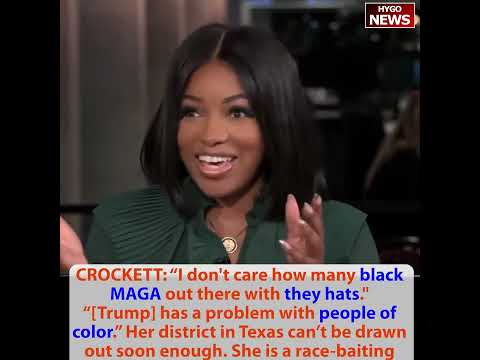
Heir apparent Vance; CROCKETT: black MAGA, problem with people of color; Dem fleeing TX backfiring
Three distinct items revealing a wider picture. Asked if JD Vance is “the heir apparent to MAGA,” Trump: “He would be probably favored at this point.” Trump also opened the door to a Vance-Rubio ticket: “I think Marco is also somebody that maybe would get together with JD in some form.” Rep. Jasmine Crockett attacked Trump on race: “I don’t care how many black MAGA out there with their hats. I want to be clear when we look at who it is that he’s kicking out of this country as people of color … he always disrespects and says that they are low IQ.” And Texas Democrat James Talarico got flummoxed when ABC News pressed whether fleeing the state is backfiring by blocking Texas flood-victim assistance legislation — Talarico called the question “a Republican talking point” while acknowledging the substantive consequence.
”Heir Apparent to MAGA”
The reporter’s question. “You said this morning that you probably won’t be running for a third term. This weekend, Secretary of State Rubio said that he thought JD Vance would be a great nominee. You could clear the entire Republican field right now. Do you agree that the heir apparent to MAGA is JD Vance?”
Trump confirming he will not pursue a third term. That is consistent with the constitutional constraint — the 22nd Amendment prohibits more than two elected terms. Trump’s confirmation reinforces that the 2028 Republican nomination is genuinely open.
“Do you agree that the heir apparent to MAGA is JD Vance?” That is the specific question. The reporter is inviting Trump to designate Vance as the successor.
Trump’s response. “Well, I think most likely, in all fairness, he’s the vice president. I think Marco is also somebody that maybe would get together with JD in some form. I also think we have incredible people, some of the people in the stage right here.”
That is measured endorsement rather than categorical designation. Trump acknowledges Vance is likely the heir. But he also floats the Marco Rubio alternative — and suggests a Vance-Rubio ticket (“get together with JD in some form”) rather than exclusively endorsing Vance alone.
“I also think we have incredible people, some of the people in the stage right here.” Trump preserving optionality. Other figures in his administration could emerge as 2028 candidates. He is not foreclosing the field.
”Too Early to Talk About It”
“So it’s too early, obviously, to talk about it. But certainly, he’s doing a great job and he would be probably favored at this point. And so I want people to see him and understand who he is.”
That is the operational posture. Vance is the favorite. But designation is premature. The 2028 cycle will develop. Multiple candidates may emerge. Trump is protecting his ability to influence the field without committing prematurely.
“I want people to see him and understand who he is.” That is Trump setting the stage for Vance’s continued visibility. More policy engagement. More media appearances. More public profile-building. The VP’s current operational tempo — active role in trade, AI, tariffs, broader administration work — is consistent with 2028 positioning.
The Vance-Rubio combination Trump mentioned is interesting. Rubio as Vance’s running mate, or vice versa, would produce a ticket balancing geographic reach (Ohio/Florida), demographic diversity (working-class white/Hispanic), and generational continuity (both mid-40s to 50s). It would be competitive in key battleground states.
Crockett on “Black MAGA”
Rep. Jasmine Crockett’s framing of Trump’s racial positioning. “This is a person that has a problem with people of color, period. I don’t care how many black MAGA out there with their hats.”
“I don’t care how many black MAGA out there with their hats.” That is a striking framing. Crockett is dismissing Black Trump supporters — whose existence is visible, documented, and politically important — as irrelevant to her characterization of Trump as racist.
The problem with that framing: Black Trump supporters are real people making real political choices. Their support for Trump reflects their own analysis of policy outcomes, cultural affinity, and political alignment. Characterizing them as irrelevant or as props that don’t count is itself a form of dismissing the agency of Black voters.
Trump’s 2024 performance with Black voters was historically strong for a Republican candidate. Approximately 14-16% of Black voters supported Trump — the highest Republican share in decades. That shift reflected real reconsideration by Black voters of their partisan alignment.
Crockett’s framing fights that shift by delegitimizing the Black voters who have reconsidered. But the effect, politically, is to further alienate Black voters who are open to Republican arguments. Rather than persuading them that Trump is racist, Crockett’s framing tells them that their political views don’t count.
”Kicking Out People of Color”
“I want to be clear when we look at who it is that he’s kicking out of this country as people of color.”
That is Crockett’s immigration framing. Deportations targeting “people of color.” The implication: deportations are racially motivated.
The factual picture: deportations target unauthorized immigrants. Unauthorized immigrants in the U.S. are demographically diverse — Central American, Caribbean, African, Asian, European, Middle Eastern. Because of geographic proximity and migration patterns, the largest single-category groups in unauthorized immigration are from Mexico and Central American countries. Those populations are demographically Hispanic and Indigenous.
Characterizing enforcement of immigration law against unauthorized immigrants as “kicking out people of color” conflates enforcement of the law with racial targeting. The enforcement targets unauthorized presence. The demographic composition of the unauthorized population determines who is affected. Racial categories are secondary to legal status.
”Low IQ”
“When we look at who he always disrespects and says that they are low IQ.”
That is a reference to Trump’s rhetorical pattern. Trump has used “low IQ” as a characterization of specific political opponents — earlier referenced about AOC and Crockett themselves. Kamala Harris. Various others.
Crockett is arguing Trump’s “low IQ” characterization is racially applied. He uses it, per her framing, for people of color specifically. That framing has support in specific examples but is not universally accurate — Trump has also characterized white politicians as “low IQ” when he views them unfavorably. The “low IQ” attack is Trump’s go-to political insult, applied to whoever he wants to insult, not specifically calibrated by race.
”Most Incompetent Cabinet”
Crockett pivoted. “Even though when you look at his cabinet, this has to be the most incompetent cabinet we have ever had in the history of this country.”
“Most incompetent cabinet in the history of this country.” That is the political characterization. Trump’s cabinet includes:
- Marco Rubio (Secretary of State, former U.S. Senator, serious foreign policy credentials)
- Scott Bessent (Treasury Secretary, former hedge fund manager, sophisticated economic background)
- Howard Lutnick (Commerce Secretary, former Cantor Fitzgerald CEO, extensive business experience)
- Pete Hegseth (Defense Secretary, former Fox News host, combat veteran)
- RFK Jr. (HHS Secretary, environmental lawyer, long public health advocacy)
- Tulsi Gabbard (DNI, former congresswoman, military intelligence officer)
- Brooke Rollins (Agriculture Secretary, former White House policy director)
Characterizing that cabinet as “most incompetent in the history of this country” requires dismissing significant professional credentials. The characterization is political framing, not neutral assessment.
”Signal Chat”
“When we’re talking about people that literally have the ability to drop bombs or order the bombs be dropped or make recommendations that bombs be dropped and they literally don’t know how to get the signal chat right.”
That is the Signal-chat reference — the incident earlier in the term where Jeffrey Goldberg was inadvertently added to a Signal group chat that included senior officials discussing military operations. Crockett is using that specific incident to characterize the cabinet as systemically incompetent.
One incident involving one mis-addressed Signal chat is specific operational failure. Characterizing the entire cabinet as “most incompetent in history” based on one incident is disproportionate. Every administration has had operational mistakes. The measure of incompetence is pattern, not single events.
”I’m Not Going Anywhere”
Crockett closed. “I’ve got news for the president. I am not going anywhere. No matter how many squiggly lines they draw in the state of Texas, I will be back and I will be on his behind and making sure the real accountability that the American people are demanding, whether they’re Democrats, Republicans or independents, that it is had when the Democrats take control of this house in the midterms.”
“Squiggly lines” is Crockett’s characterization of the redistricting map. Her district, per the proposed map, may be significantly altered. Crockett is asserting she will win reelection regardless.
“Democrats take control of this house in the midterms” — that is the expressed objective. The 2026 midterms. Democratic House majority.
Talarico and the Flood Legislation
ABC News pressed State Rep. James Talarico on whether fleeing Texas is backfiring. Texas faced devastating floods on July 4, 2025. Flood assistance legislation was on the Texas legislative agenda. The same quorum break that prevents redistricting also prevents flood-assistance legislation.
ABC: “Are you concerned that all of this could ultimately be a mistake if that legislation also becomes a victim of this?”
Talarico’s response. “This is a Republican talking point. I’m concerned that Greg Abbott decided to play politics with flood and they refused. But the reality is the consequence of the decision, regardless of whether or not it’s a talking point, is that this bill is not going to advance.”
“Republican talking point.” That is Talarico’s initial framing. Dismiss the question as political framing rather than substantive concern.
But then — importantly — Talarico acknowledges the substantive reality. “Regardless of whether or not it’s a talking point, is that this bill is not going to advance.”
The reporter presses. “Is that a bad thing if this bill doesn’t advance? And who put flood mitigation after redistricting on the agenda? The Republicans, they control the floor. They have made that decision.”
Talarico: “But there will be consequences to your decision here too. Will there not? And you know why they did that is so that they could play politics with those flood victims so they could pressure us to give away our constituents voices in the democratic process."
"Using Flood Victims”
“They’re using flood victims to try to get us to agree to these corrupt maps so they can rig the next election. We are not willing to sacrifice the American experiment. We begged them to prioritize flood victims and they refuse to do so. This is cynical politics at its worst.”
That is Talarico’s framing. Republicans are using flood victims to pressure Democrats. Democrats, by fleeing, are not sacrificing flood victims — Republicans are sacrificing flood victims by placing redistricting above flood assistance on the legislative calendar.
Whether that framing holds up depends on procedural specifics. If Republican leadership genuinely prioritized redistricting above flood assistance, the criticism has substance. If the two items could have been handled in sequence without the quorum break, Democrats bear the responsibility for blocking both.
The reporter’s point — that the flood victims are affected regardless of whose political framing wins — stands. Flood victims need legislation. The legislation is blocked. Texans affected by the July 4 floods will wait longer for assistance. That is the operational reality.
Three Different Stories
Vance as heir apparent (with Rubio possible). Crockett’s racial framing of Trump. Talarico’s flummoxed defense of the quorum break.
Each story is a specific marker in the ongoing political landscape. Vance’s 2028 positioning is a story about Republican future direction. Crockett’s racial framing is a story about Democratic Party messaging on race. Talarico’s defense is a story about the political and substantive cost of the Texas quorum break.
Together they sketch the political environment the midterms will test.
Key Takeaways
- Trump on Vance as MAGA heir apparent: “It’s too early, obviously, to talk about it. But certainly he’s doing a great job and he would be probably favored at this point.”
- Trump floated a Vance-Rubio combination: “I think Marco is also somebody that maybe would get together with JD in some form.”
- Rep. Jasmine Crockett attacked Trump on race: “I don’t care how many black MAGA out there with their hats … He has a problem with people of color, period” — dismissing Black Trump supporters.
- Crockett characterized Trump’s cabinet: “This has to be the most incompetent cabinet we have ever had in the history of this country.”
- Texas State Rep. James Talarico was pressed on whether fleeing the state backfires by blocking flood-victim assistance: “This is a Republican talking point … The reality is the consequence of the decision … is that this bill is not going to advance.”