 HYGO News
 11/12/2020 Georgia Secretary of State's Office addresses election results
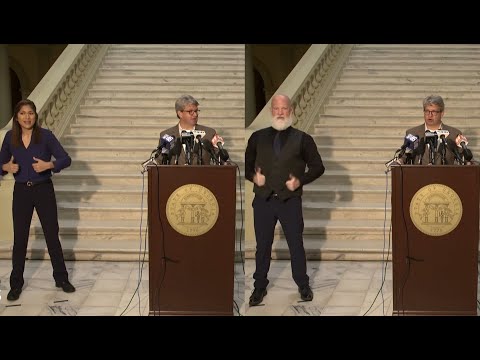
Georgia Secretary of State’s Office Addresses Election Results and Announces Hand Audit
On November 12, 2020, Georgia’s Statewide Voting System Implementation Manager Gabriel Sterling held a detailed press conference to explain the state’s decision to conduct a full hand audit of all presidential ballots cast in the state. With Biden leading Trump by approximately 14,072 votes out of nearly 5 million cast, Secretary of State Brad Raffensperger had announced a risk-limiting audit of the presidential race that would effectively become a complete hand recount — the largest in United States history. Sterling emphasized that the audit was designed to instill confidence in the election outcome regardless of which candidate was ahead, and addressed misinformation about voting machines, ballot flipping, and residency requirements ahead of the January 5 Senate runoff elections.
Why Georgia Chose a Full Hand Audit
Sterling explained the reasoning behind choosing the presidential race for the audit. He acknowledged that an easier option existed — auditing the Senate jungle primary — but said doing so “would have probably undermined confidence in the outcome of the presidential election.”
He was blunt about the emotional dynamics driving distrust: “When you are really emotionally tied to the outcome, anything you see that feeds your belief is believed by you. That is the rationale. That is the reason we’ve chosen to do this audit in this time, in this way.”
Sterling distinguished between an audit and a recount, noting they are governed by “two separate statutes, two separate sets of rules.” The audit was a legally required step, while a recount could be requested separately by the losing candidate if the margin fell within 0.5 percent.
On the technical question of why the audit became a full hand retally rather than a statistical sample, Sterling explained that the academic creators of risk-limiting audits had said that “if you get past 10 or 15 percent, you may as well do the whole thing.” Given that pulling even 10 percent of ballots would have required handling approximately 1.5 million ballots, it was “functionally and logistically easier” to count every ballot.
Logistics and Timeline
The hand audit was set to begin at 9:00 AM the following day and was required to be completed by midnight on Wednesday, November 18. Sterling said the state had hired outside groups for logistics and procedures, and that a training call with counties had been held that morning.
Each county would operate multiple audit teams, with auditors required to be Georgia residents. Observers from both parties would be present, and Sterling urged counties to livestream the process “so people can see the process as it happens.”
For ballots where voter intent was unclear, bipartisan adjudication teams composed of both Republicans and Democrats would make the determination. Sterling noted that very few presidential ballots had required adjudication in the initial count.
He set expectations for minor numerical changes, citing the 2016 Michigan recount as precedent: in that case, a manual recount of over 2 million hand-marked ballots changed the margin by approximately 100 votes. Sterling predicted Georgia’s changes would be even smaller because only about 25 percent of the state’s ballots — roughly 1.3 million — were hand-marked paper ballots, which are where human errors are most likely.
Addressing Misinformation
Sterling devoted significant time to debunking specific conspiracy theories. On claims about the Hammer and Scorecard programs allegedly flipping votes, he quoted then-CISA Director Chris Krebs: “Is nonsense and a hoax.”
He addressed questions about ballot security, explaining the chain of custody procedures including sealed boxes, unique identifiers, ballot tally sheets, and separate envelopes for adjudicated ballots that would be “married together again” with their original box.
Sterling also noted that approximately 24,000 Georgians chose to skip the presidential race entirely, and that differential vote totals between the presidential and Senate races varied by county in both directions — in Fulton County alone, Senator Perdue received about 9,000 more votes than Trump.
On the national change of address list showing 132,000 registered voters, Sterling explained that “federal law prohibits any mass list maintenance during an election year,” meaning the state was aware of the discrepancy but legally unable to act.
Warning About Residency and January Runoffs
Sterling issued a pointed warning about out-of-state residents attempting to register to vote in Georgia ahead of the January 5 Senate runoff elections, singling out Andrew Yang as the most prominent figure encouraging people to move to the state.
“In order to have the ability to register to vote in Georgia, you have to be a Georgia resident, which means you have to believe you’re staying in Georgia,” Sterling said. He cited Georgia law: registering to vote without being a legal resident or residing in the state temporarily just to vote is a felony carrying up to 10 years in prison and a $100,000 fine.
“If you want to move to Georgia and be part of the number one state in America to do business, we are happy to have you,” Sterling said. “But if you are here for the sole sake of politics, if you voted for Senate in one state and move here to another state… don’t game our system.”
Key Takeaways
- Georgia announced the largest hand audit in U.S. history, manually retallying all nearly 5 million presidential ballots to verify machine counts, with the process beginning November 13 and a completion deadline of midnight November 18.
- Sterling dismissed the Hammer and Scorecard conspiracy as “nonsense and a hoax,” set expectations for only minor numerical changes based on the 2016 Michigan precedent, and explained that bipartisan adjudication teams would resolve any ambiguous ballots.
- Ahead of the January 5 Senate runoffs, Sterling warned that registering to vote in Georgia without being a genuine resident is a felony carrying up to 10 years in prison, directly addressing calls for out-of-state activists to temporarily relocate for the elections.