 HYGO News
 Newsom Pretended to Tear Up: 'Trump Traumatizing Communities -- That's the Entire Point'; Trump Devastating Response: 'In Minneapolis I Waited for Walz 7 Days -- Same Guy Who Ran for VP, Very Dumb, Low IQ Individual Like Many Democrats'; Trump on LA: 'If There's Even a Chance of No Peace, We Stay There Until There's Peace'
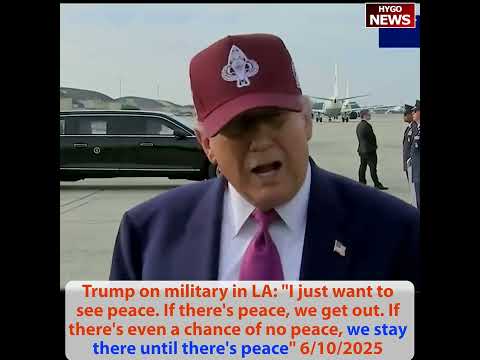
Newsom Pretended to Tear Up: “Trump Traumatizing Communities — That’s the Entire Point”; Trump Devastating Response: “In Minneapolis I Waited for Walz 7 Days — Same Guy Who Ran for VP, Very Dumb, Low IQ Individual Like Many Democrats”; Trump on LA: “If There’s Even a Chance of No Peace, We Stay There Until There’s Peace”
Gavin Newsom delivered an emotional address with tears on June 10-11, 2025. He claimed: “Donald Trump’s government isn’t protecting our communities, they’re traumatizing our communities. And that seems to be the entire point.” He lectured rioters on “peaceful” protest: “If you exercise your First Amendment rights, please do it peacefully. I know many of you are feeling deep anxiety, stress, and fear.” He framed Trump’s demands: “What Donald Trump wants most is your fealty, your silence to be complicit in this moment. Do not give in to him.” Trump’s devastating response referenced Minneapolis 2020: “I called in the military in Minneapolis, but it was seven days. I waited for this guy — the same guy that ran for vice president. He’s a very dumb person. He’s a Low IQ Individual like many Democrats are.” Trump established his LA doctrine: “If there’s peace, we get out. If there’s even a chance of no peace, we stay there until there’s peace.” On the Newsom phone call: “We actually spent 16 point something minutes on the phone. I told him he’s got to get his act together because you’re going to have some bad times in Los Angeles if he doesn’t.” On rioters: “These people are agitators. They’re troublemakers. I believe many of them are paid. These are insurrectionists.”
Newsom’s Emotional Address
Gavin Newsom delivered an emotional statement.
“Donald Trump’s government isn’t protecting our communities, they’re traumatizing our communities,” Newsom claimed.
He added the accusation: “And that seems to be the entire point.”
The Newsom Tears
The emotional performance was notable.
What Newsom did:
- Public speech about LA situation
- Appeared emotional
- Tears (allegedly pretended)
- Strong rhetorical framing
- Political theater
Why critics called it pretend:
- Trained political performance
- Calculated timing
- Rhetorical framework
- Pattern of behavior
- Political manipulation
The substantive content:
- Blamed Trump for “trauma”
- Portrayed enforcement as attack
- Ignored rioters’ violence
- Political rather than factual
- Base mobilization
The political calculation:
- 2028 presidential positioning
- Democratic base appeal
- Media sympathetic coverage
- Progressive credibility
- National profile building
”Trump’s Government Traumatizing Communities”
Newsom’s framing was specific.
What “traumatizing” referenced:
- ICE operations
- Deportations
- Arrests of illegal immigrants
- Federal enforcement
- Administrative action
Who was supposedly traumatized:
- Illegal immigrant communities
- Their families
- Sympathetic neighbors
- Progressive activists
- Democratic base
Why this framing was problematic:
- Ignored American victims of illegal immigration
- Centered illegal immigrant feelings over American safety
- Political rather than factual
- Selective trauma recognition
- Political positioning
The “entire point” claim:
- Suggested Trump intentionally causing trauma
- Rather than enforcing law
- Malicious rather than professional
- Personal rather than policy
- Dehumanizing characterization
”Please, Please Do It Peacefully”
Newsom lectured protesters.
“If you exercise your First Amendment rights, please, please do it peacefully.”
He addressed their emotions: “I know many of you are feeling deep anxiety, stress, and fear, but I want you to know that you are the antidote to that fear and that anxiety.”
The Newsom Paradox
His framing was politically difficult.
The problem with this approach:
- Acknowledged violence existed
- But continued supporting protesters
- Didn’t condemn violence strongly
- Actually legitimized movement
- Contradicted “no violence” narrative
What Bass and Waters had said:
- “There was no violence” (Waters)
- “Real solution is to stop the raids” (Bass)
- Minimized violence
- Supported demonstrators
- Attacked federal response
Newsom’s different approach:
- Acknowledged violence
- Asked for peace
- But still supported movement
- Still blamed Trump
- Political positioning different
Why Newsom’s approach fragile:
- Contradicts other Democratic voices
- Acknowledges reality Democrats denying
- Creates Democratic messaging confusion
- Opens Newsom to criticism from both sides
- Political vulnerability
The “Fealty” Framing
Newsom’s dramatic language was notable.
“What Donald Trump wants most is your fealty, your silence to be complicit in this moment. Do not give in to him.”
The “Fealty” Language
The specific word choice was deliberate.
What “fealty” means:
- Feudal loyalty to lord
- Complete subordination
- Medieval concept
- Authoritarian implication
- Deliberately pejorative
Why Newsom used this word:
- Positions Trump as monarch/dictator
- Makes opposition heroic
- Builds resistance rhetoric
- Progressive audience responsive
- Political theater
The actual administration position:
- Standard federal law enforcement
- Constitutional immigration authority
- Not demanding fealty
- Professional governance
- Normal politics
Newsom’s rhetorical strategy:
- Demonize opposition
- Elevate resistance
- Create heroic narrative
- Position self as leader of opposition
- Build presidential profile
”Do Not Give In to Him”
Newsom’s call to resistance was clear.
What this encouraged:
- Continued protests
- Ongoing opposition
- Democratic mobilization
- Resistance to enforcement
- Political conflict
Why this was problematic:
- Violence continuing
- Federal operations protecting officers
- Constitutional authority clear
- Opposition doesn’t mean violence
- Rhetoric enabling violence
The political calculation:
- Base mobilization
- Progressive energy
- National attention
- 2028 positioning
- Strategic long-term
The governance cost:
- Continued violence
- Property damage
- Officer danger
- State-federal conflict
- Long-term political cost
Trump’s Minneapolis Response
Trump’s reply was devastating.
“You know, I called in the military in Minneapolis, but it was seven days.”
He identified Walz specifically: “I waited for this guy, the same guy that ran for vice president.”
He delivered the characterization: “He’s a very dumb person. He’s a very dumb, he’s a low IQ individual like many Democrats are.”
The Walz “Low IQ” Attack
Trump’s language was calculated.
What “low IQ individual” accomplished:
- Personal characterization
- Performance assessment
- Democratic Party implication
- Base mobilization
- Effective political rhetoric
Why this was effective:
- Walz had embarrassing moments
- 2020 Minneapolis failures
- 2024 VP campaign problems
- Consistent performance issues
- Trump rhetoric often accurate
The “like many Democrats” extension:
- Not just Walz
- Democratic Party broadly
- Intellectual capability questioned
- Electoral positioning
- Coalition building against Democrats
The political effect:
- Walz specifically damaged
- Democratic Party characterized
- Base mobilized
- Opposition demoralized
- Political narrative advanced
”Very Simple Rule of Engagement”
Newsom offered his violence framework.
“A very simple rule of engagement. If they’re dangerous, if they’re throwing concrete or bricks, if they’re spitting in the face of the police or whoever’s in front of them, if they’re punching people, if they’re doing all of the things that you see done for the last three nights, that I would say is engagement.”
The Newsom Violence Recognition
Newsom acknowledged violence but categorized.
What Newsom acknowledged:
- Concrete/brick throwing
- Spitting on police
- Punching people
- Other violence
- “All of the things you see done”
What this implied:
- Some protesters were violent
- Not all peaceful
- Some action could be “engagement”
- But not all
- Specific conditions
The problem with his framing:
- Normalized some violence
- Failed to condemn strongly
- Created categories
- Partial acceptance
- Political theater
Why Trump administration position stronger:
- Zero tolerance for violence
- Clear standards
- Consistent message
- Public safety priority
- Law enforcement backing
”I Want to Save Los Angeles”
Trump articulated his priority.
“I want to save Los Angeles. And Newsdom is totally incompetent. He’s not going to do it.”
The “Save Los Angeles” Framework
Trump’s framing was comprehensive.
What “save LA” meant:
- Stop riots
- Restore order
- Protect citizens
- Preserve commerce
- Maintain infrastructure
Why federal intervention necessary:
- State failing
- Local resistance
- Riots spreading
- Public safety threatened
- Long-term stakes
The “Newsom incompetent” framing:
- Continuing critique
- Substantive basis
- Public record
- Political accountability
- Electoral implications
The LA Fires Reference
Trump connected multiple failures.
“Look at the fires he had. He had fires where half the city, it seemed burned down. What was it? 25,000 houses.”
He made the causality claim: “All because he wouldn’t take water. I released the water from the Pacific Northwest and it came down millions of gallons a day.”
The California Water Context
Trump’s persistent water theme.
The LA fires background:
- Devastating wildfires
- Multiple neighborhoods destroyed
- ~25,000+ structures damaged/destroyed
- Major California crisis
- National attention
The water policy failures:
- California water restrictions
- Environmental protections prioritized
- Delta smelt protection
- Agricultural water limits
- Urban water constraints
Trump’s intervention:
- Federal authority used
- Water redirected
- Millions of gallons
- Direct intervention
- Newsom embarrassed
Why this mattered:
- Democratic policies failed
- Federal response effective
- Specific consequences documented
- Political accountability
- Future electoral implications
”Stay There Until There’s Peace”
Trump articulated his LA doctrine.
“All I want in terms of engagement, I just want to see peace. If there’s peace, we get out. If there’s even a chance of no peace, we stay there until there’s peace.”
The Peace Doctrine
The specific framework was important.
Trump’s standard:
- Peace is the goal
- Not conflict
- Federal withdrawal when safe
- Federal presence when threatened
- Conditional on conditions
The specific framing:
- “Even a chance of no peace” = stay
- High threshold for withdrawal
- Sustained presence possible
- Strategic patience
- No premature victory claim
Why this was politically strong:
- Reasonable framework
- Peace-oriented goal
- Not aggressive militarism
- Conditional approach
- Strategic clarity
The operational implications:
- National Guard remains indefinitely
- Continued federal engagement
- Ongoing deterrent
- Long-term commitment
- Political endurance
”A Lot of People Are Being Arrested”
Trump emphasized accountability.
“A lot of people are being arrested. The rioters or whatever you want to call them, they better know a lot of people are being arrested. They’re going to be in jail for a long time.”
The Accountability Framework
Specific consequences were emphasized.
What was happening:
- Federal arrests ongoing
- Multiple individuals identified
- FBI investigations active
- Federal prosecution preparing
- Long sentences likely
Why this mattered:
- Deterrence through consequences
- Individual accountability
- Political message
- Future prevention
- Justice for victims
The specific warning:
- “Jail for a long time”
- Federal felonies
- Maximum sentences sought
- No early release likely
- Long-term impact on lives
The broader deterrent:
- Future rioters calculate consequences
- Accountability certain
- Federal rather than local
- Specific individuals prosecuted
- Example being set
The 16-Minute Newsom Call
Trump described his conversation.
“Well, I gave him, it wasn’t a day, it goes a little longer than that. And I presented the phone conversation to Fox News, John Roberts and Molly Lyne at Fox News because they were the ones that said it.”
He provided specifics: “And we actually spent 16 point something minutes on the phone.”
He described the content: “And I told him he’s got to get his act together because you’re going to have some bad times in Los Angeles if he doesn’t.”
He noted tone: “We had a pleasant conversation.”
He provided verification: “The proof was from the phone company. It was from the phone company.”
The “Pleasant” Framing
Trump’s characterization was strategic.
What “pleasant” conversation meant:
- Not hostile in moment
- Professional tone
- Substantive discussion
- Clear expectations
- Direct communication
Why Trump emphasized “pleasant”:
- Counters Newsom’s later framing
- Shows Trump was reasonable
- Demonstrates professional approach
- Puts responsibility on Newsom
- Removes hostile narrative
The verification through phone records:
- Fact-based approach
- Phone company records
- Objective evidence
- Transparent
- Credible
The political purpose:
- Demonstrates good-faith effort
- Shows Newsom’s reporting misleading
- Trump extended opportunity
- Newsom failed to respond
- Political accountability
The Media Verification
Trump specifically cited Fox News verification.
“I presented the phone conversation to Fox News, John Roberts and Molly Lyne at Fox News because they were the ones that said it.”
The Media Strategy
Trump’s approach was calculated.
Why Fox News specifically:
- More credible to his base
- Less hostile to administration
- Willing to verify facts
- National reach
- Professional reporting
Why the phone company records:
- Objective verification
- Not disputable
- Legal standard
- Fact-based resolution
- Transparent
The broader pattern:
- Trump administration providing evidence
- Democrats denying specific facts
- Factual verification possible
- Political winners have the data
- Democratic framing increasingly fragile
The Olympics Concern
Trump returned to Olympic theme.
“But he hasn’t been able to do that. I mean, the man, you know, we have an Olympics coming up.”
He extended: “We have to put the right foot forward. We have to do a job. We have a lot of people all over the world watching Los Angeles.”
He delivered the accountability: “We’ve got the Olympics that we have this guy allowing this…”
The 2028 Olympics Stakes
The ongoing concern had implications.
Why Olympics mattered:
- International visibility
- American reputation
- Economic investment
- Tourism development
- Political success
Why LA riots threatened:
- Negative international coverage
- Safety concerns
- Infrastructure questions
- Political instability
- Long-term damage
Trump’s administration responsibility:
- Federal coordination
- Security planning
- LA preparation support
- International engagement
- Strategic execution
Newsom’s failures:
- Governance problems
- Security concerns
- Investment vulnerability
- Political instability
- Economic damage
”People All Over the World Watching”
Trump captured the international attention.
“We have a lot of people all over the world watching Los Angeles.”
The Global Audience
International attention had multiple dimensions.
Who was watching:
- Olympic organizing committees
- International investors
- Foreign tourists
- International media
- Global audiences
What they saw:
- LA chaos
- American political conflict
- Federal-state tensions
- Immigration enforcement challenges
- Cultural disputes
Why this mattered:
- American reputation
- Investment decisions
- Tourism choices
- Political alliances
- Economic implications
The administration priority:
- Restore order
- Demonstrate competence
- Protect reputation
- Maintain economic leadership
- Strategic positioning
The “Paid Insurrectionists”
Trump maintained his framing.
“By having the military, it de-escalates — that was the only way. These people are agitators. They’re troublemakers. I believe many of them are paid.”
He closed with: “These are insurrectionists.”
The Consistent Narrative
Trump’s narrative was unified.
The core claims:
- LA violence organized, not spontaneous
- Participants paid
- Professional agitators
- Insurrectionist conduct
- Federal response necessary
Why “paid” framing effective:
- Diminishes legitimacy
- Suggests funding sources
- Implies organized opposition
- Creates investigative opportunity
- Political accountability
The evidence pattern:
- Pre-positioned equipment
- Organized distribution
- Professional conduct
- Coordinated timing
- All suggested organization
The federal implications:
- Foreign funding possible
- Domestic funding possible
- Organized criminal enterprise
- Federal investigation warranted
- Potential conspiracy charges
The “De-escalation” Framework
Trump’s approach was specific.
“By having the military, it de-escalates — that was the only way.”
The De-escalation Logic
This was counter-intuitive but sound.
Why military presence de-escalates:
- Overwhelming force available
- Protesters calculate consequences
- Rational agitators back down
- Professional criminals know limits
- Deterrence through visible capability
The alternative without military:
- Rioters face lesser consequences
- Local police overwhelmed
- Sanctuary city protection
- Continued violence
- Escalation possible
The specific impact:
- Violence declining
- Control established
- Operations continuing
- Order maintained
- Peace approached
The strategic wisdom:
- Show of strength prevents conflict
- Proportionate response
- Clear expectations
- Consistent application
- Long-term effectiveness
Key Takeaways
- Newsom emotional address: “Trump traumatizing communities” — but acknowledged protesters throwing concrete/spitting/punching.
- Trump on Walz: “Very dumb person. Low IQ individual like many Democrats.”
- Trump’s LA doctrine: “If there’s peace, we get out. If there’s even a chance of no peace, we stay there until there’s peace.”
- 16-minute phone call with Newsom: “I told him to get his act together. We had a pleasant conversation.”
- Trump on rioters: “These are agitators. Paid troublemakers. Insurrectionists. By having the military, it de-escalates.”