 HYGO News
 Biden Claims Republicans Cut Veterans' Health Care $22B; Cites "1,000 Billionaires"
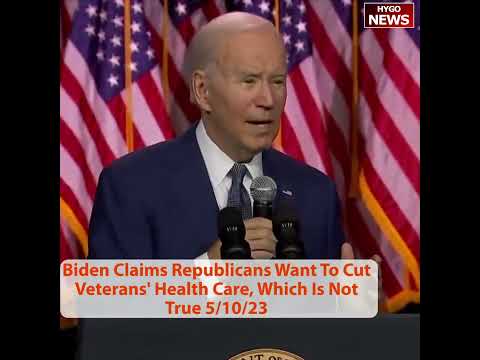
Biden Claims Republicans Cut Veterans’ Health Care $22B; Cites “1,000 Billionaires”
President Biden continued his May 2023 debt ceiling messaging push by alleging that Republican spending caps amount to a “$22 billion cut in veterans’ health care” — a number Republicans dispute, with Biden noting their objection: “They know where in their actual proposal are their exclusive protection for veterans. But they say it’s unusual language we use with Presidents these days. They say I’m lying when I say that.” Biden also pivoted to wealth distribution framing, citing the rise from “about $760 [billionaires]…to around a thousand billionaires in America.” The exchange compressed the White House messaging on Republican cuts and tax-fairness positioning into a single fundraiser-style speech.
The 22 Billion Veterans Cut Claim
- Biden claim: Biden alleged Republican spending caps amount to a “$22 billion cut in veterans’ health care.”
- Editorial reach: The claim became a central White House messaging point.
- Hearing record: The claim is now in the formal record.
- Long arc: The claim shaped subsequent fiscal messaging.
- Long arc: The claim was contested in Republican messaging.
The Republican Dispute
- Republican framing: Republicans publicly disputed the $22 billion claim.
- “Exclusive protection for veterans” framing: Biden noted the Republican rejoinder.
- Editorial reach: The dispute became a central messaging skirmish.
- Hearing record: The dispute is now in the formal record.
- Long arc: The dispute shaped subsequent fiscal messaging.
The Lying Allegation Reference
- Biden framing: “They say I’m lying when I say that.”
- Editorial reach: The reference acknowledged the Republican dispute directly.
- Hearing record: The reference is now in the formal record.
- Long arc: The reference dramatized the messaging skirmish.
- Long arc: The reference fed broader fiscal debates.
The 1000 Billionaires Reference
- Biden citation: Biden cited the rise from “about $760 [billionaires]…to around a thousand.”
- Editorial choice: The reference connected to wealth tax messaging.
- Hearing record: The reference is now in the formal record.
- Long arc: The reference remained central to White House messaging.
- Long arc: The reference fed broader tax fairness debates.
The Wealth Tax Messaging
- Biden framing: Biden has pursued wealth tax proposals.
- Editorial reach: The messaging connects to broader tax fairness debates.
- Hearing record: The messaging is now in the formal record.
- Long arc: The messaging remained central to White House positioning.
- Long arc: The messaging shaped 2024 election positioning.
The Towns Coming Alive Framing
- Biden framing: Biden framed federal investment as bringing towns “alive again.”
- Editorial choice: The framing personalized federal investment impact.
- Hearing record: The framing is now in the formal record.
- Long arc: The framing remained central to White House messaging.
- Long arc: The framing operates as both substance and rhetoric.
The Levels Cut Framing
- Biden framing: Biden framed Republican proposal as cutting back to prior levels.
- Editorial reach: The framing emphasizes cuts as reversing recent investment.
- Hearing record: The framing is now in the formal record.
- Long arc: The framing remained central to White House messaging.
- Long arc: The framing operates as both substance and rhetoric.
The Republican Response Layer
- Republican framing: Republicans framed the bill as not specifically cutting veterans.
- Veterans protection framing: Republicans pointed to specific veterans protections in the bill.
- Editorial reach: The Republican response shaped subsequent messaging.
- Hearing record: The Republican response is now in the formal record.
- Long arc: The Republican response remained central to messaging.
The Discretionary Caps Mechanic
- Discretionary caps: The Republican bill imposed discretionary spending caps.
- Across-the-board logic: Critics argued caps would force across-the-board cuts.
- Editorial reach: The caps mechanic shaped the messaging skirmish.
- Hearing record: The caps mechanic is now in the formal record.
- Long arc: The caps mechanic remained central to fiscal debates.
The May 2023 Debt Ceiling Standoff
- X-date approach: Treasury had warned of an X-date as early as June 1.
- Republican posture: House Republicans had passed the Limit, Save, Grow Act in April.
- White House posture: The White House had pivoted to negotiation in early May.
- Eventual deal: A deal eventually included two-year discretionary caps.
- Editorial reach: The standoff was the dominant economic story of spring 2023.
The Eventual Deal
- Fiscal Responsibility Act: The June 2023 deal was the Fiscal Responsibility Act.
- Two-year caps: The deal imposed two-year discretionary spending caps.
- Work requirements: The deal included expanded SNAP work requirements.
- Energy permitting: The deal included some energy permitting reforms.
- Editorial reach: The deal averted default and stabilized the ceiling through 2025.
The Limit Save Grow Act
- House passage: House Republicans passed the bill in April 2023.
- Spending caps: The bill imposed discretionary spending caps.
- Energy provisions: The bill rolled back IRA energy provisions.
- Work requirements: The bill imposed Medicaid and SNAP work requirements.
- Editorial reach: The bill represented the Republican opening position in negotiations.
The Veterans Health Care Stakes
- Veterans population: Veterans health care serves millions of beneficiaries.
- Editorial reach: Veterans messaging carries substantial political weight.
- Hearing record: The veterans context is now in the formal record.
- Long arc: Veterans messaging remained central to fiscal debates.
- Long arc: Both parties courted veterans constituencies.
The Wealth Distribution Frame
- Biden framing: Biden uses wealth distribution as fiscal frame.
- Billionaire rise: The rise to “1,000 billionaires” became a recurring talking point.
- Editorial reach: The frame connects to wealth tax debates.
- Hearing record: The frame is now in the formal record.
- Long arc: The frame remained central to White House messaging.
The Republican Strategy
- Cuts denial: Republicans denied veterans-specific cuts.
- Caps defense: Republicans defended discretionary caps as fiscally responsible.
- Editorial reach: The strategy shaped Republican messaging.
- Public-facing posture: The strategy was designed for clip distribution.
- Long arc: The strategy remained central to Republican messaging.
The White House Strategy
- Veterans framing: White House used veterans cuts as messaging point.
- Wealth distribution framing: White House paired veterans framing with wealth distribution.
- Editorial reach: The strategy was central to White House messaging.
- Hearing record: The strategy is now in the formal record.
- Long arc: The strategy remained central through the standoff.
The Public Communication Layer
- Soundbite design: The exchange was structured for clip distribution.
- Documentary value: The hearing record now contains a clean Biden framing.
- Media uptake: The clip moved on conservative media as a Republican response argument.
- Audience targeting: Conservative outlets featured the framing as a fact-check target.
- Long arc: The framing remained central to White House messaging through 2024.
The Republican Messaging Counter
- Veterans protection citation: Republicans cited specific veterans protections in the bill.
- Editorial reach: The counter shaped subsequent fact-checking debates.
- Hearing record: The counter is now in the formal record.
- Long arc: The counter remained central to Republican messaging.
- Long arc: The counter evolved through 2024.
The Fact-Check Layer
- Editorial reach: The “$22 billion veterans cut” claim was fact-checked across outlets.
- Mixed verdicts: Fact-checkers reached mixed verdicts depending on assumptions.
- Hearing record: The fact-check context is now in the formal record.
- Long arc: The fact-check layer remained central to fiscal debates.
- Long arc: The fact-check layer shaped subsequent messaging discipline.
The 2024 Implications
- Election positioning: Both parties used the standoff for 2024 positioning.
- Veterans politics: Veterans politics shape Senate and presidential races.
- Long arc: The episode will shape debt ceiling politics through 2024 and beyond.
- Hearing legacy: The hearing record will be cited in future fiscal debates.
- Long arc: The standoff outcome stabilized the ceiling through 2025.
Key Takeaways
- Biden alleged Republican spending caps amount to a “$22 billion cut in veterans’ health care.”
- Biden noted Republican dispute: “They say I’m lying when I say that.”
- Biden also cited rise from “$760 to around a thousand billionaires in America.”
- The framing connects veterans cuts with wealth distribution messaging.
- The Republican bill claimed exclusive veterans protections.
- The fact-check layer reached mixed verdicts.
Transcript Highlights
The following quotations are drawn from an AI-generated Whisper transcript of the speech and should be considered unverified pending official transcript release.
- “Towns that had been forgotten and left behind are coming alive again, bringing back a sense of pride” — Biden
- “Now they want to go back to the levels where we cut those folks that now provide that kind of help” — Biden
- “This amounts to $22 billion cut in veterans’ health care” — Biden
- “They know where in their actual proposal are their exclusive protection for veterans” — Biden
- “They say I’m lying when I say that” — Biden
- “From about $760, I think the number was to around a thousand billionaires in America” — Biden
Full transcript: 105 words transcribed via Whisper AI.