 HYGO News
 Ending Strategic Petroleum Reserve, Biden take credit for gas prices rising?
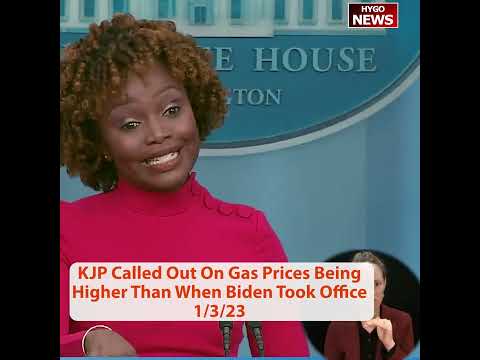
Reporter: Biden Took Credit When Gas Prices Fell — Now Taking Credit for Them Rising? KJP: “Cold Weather Shut Down Refineries”
On 1/4/2023, a reporter caught White House Press Secretary Karine Jean-Pierre with a clever question about credit for gas prices. “The president took credit when gas prices were coming down. Now the barrels leaving the strategic petroleum reserve, well that’s ending. The president has not changed anything with energy policy. Is the president’s policies then taking credit for the gas prices rising over the past seven days?” the reporter asked. KJP deflected to a longer timeframe: “We’ve made significant progress in lowering the prices. Gas prices specifically. Prices are down nearly $2 per gallon, and are lower today than they were one year ago today, this very day.” She attributed the recent rise to external factors: “We’ve seen a slight increase, yes, over the past week due to cold weather that shut down some refineries.”
The Logical Trap
The reporter set a clever trap. The logic:
Biden claimed credit — When gas prices fell.
Same policies continue — No changes.
Gas prices now rising — Reversed trend.
Logic requires — Biden take credit for rise.
Or admit — Credit claims inconsistent.
This was:
Political trap — Well-set.
Logical challenge — Valid.
Accountability test — For administration.
Reporter skill — On display.
Expected deflection — From KJP.
The reporter was testing the administration’s consistency:
Credit claimed when favorable — For politics.
Blame externalized when unfavorable — Predictably.
Logical inconsistency — Exposed.
Pattern of selective attribution — Highlighted.
Administration vulnerability — To this challenge.
The SPR Context
The Strategic Petroleum Reserve context:
SPR releases — Throughout 2022.
Major administration initiative — To lower prices.
Credit claimed — For price reductions.
Releases ending — By January 2023.
Policy shift — From release to refill.
The SPR strategy:
Released oil — Over 12 months.
Reduced prices — Some effect.
Administration credit — Claimed.
Political success — Declared.
Finite capacity — Couldn’t continue forever.
By January 2023:
Releases ending — As planned.
Refill phase beginning — New strategy.
No new policy tools — Beyond normal.
Market factors dominant — Again.
Political vulnerability — If prices rose.
”The President Has Not Changed Anything”
The reporter noted policy consistency. “The president has not changed anything with energy policy,” the reporter said.
The policy consistency was:
Factually accurate — No major changes.
Politically inconvenient — For credit claims.
Market factors dominant — Over policy.
Administration static — In approach.
Variables external — Now rising.
If the policy hadn’t changed:
Credit for changes — Should be consistent.
External factors — Had affected both directions.
Administration role — Limited throughout.
Pattern inconsistent — In credit claims.
Political vulnerability — For 2024.
The Seven-Day Framing
The reporter used seven days specifically. “The gas prices rising over the past seven days,” the reporter said.
The seven-day timeframe:
Recent enough — To be current.
Short enough — For specific data.
Pattern clear — Rising trend.
Administration couldn’t deny — Recent rise.
Specific measurement — For accountability.
This framing:
Made specific claim — About recent period.
Couldn’t be dismissed — Through longer comparisons.
Required response — On recent performance.
Test of accountability — Within short window.
Pattern recognition — Of rises.
The Year-Over-Year Deflection
KJP pivoted to longer timeframe. “Gas prices specifically. Prices are down nearly $2 per gallon, and are lower today than they were one year ago today, this very day,” KJP said.
The year-over-year comparison:
Different timeframe — Than reporter’s seven days.
More favorable — To administration.
Peak-to-current — Comparison.
Political framing — For positive story.
Avoided recent trend — Deliberately.
The reporter had been asking about:
Seven-day rising trend — Recent.
Credit consistency — For rising prices.
Policy stability — Without changes.
Recent accountability — For current direction.
KJP responded with:
Year-over-year data — Different question.
Longer-term framing — Different analysis.
Favorable comparison — Politically.
Avoided direct question — Entirely.
Standard deflection — Timeframe shift.
”$2 Per Gallon” Decline
KJP’s specific claim:
Prices down nearly $2 — Peak to current.
Substantial reduction — Real.
Administration credit — Claimed.
Peak was summer 2022 — Extraordinary.
Current prices — Moderate.
The decline was:
Factually accurate — Prices had fallen.
Partially administration — Attributable.
Mostly market factors — Driving.
Global forces — Dominant.
Credit claims — Politically motivated.
Whether Biden’s policies:
Caused the decline — Partially.
Were dominant factor — Debatable.
Entitled administration — To credit.
Match current situation — Consistently.
The Cold Weather Explanation
KJP attributed recent rises to cold weather. “We’ve seen a slight increase, yes, over the past week due to cold weather that shut down some refineries. Once these refineries come back online, you expect the gas prices to come back down,” KJP said.
The cold weather explanation:
External factor — Not administration fault.
Refinery disruption — Technical issue.
Temporary expected — Not permanent.
Market recovery — Anticipated.
Administration absolved — From blame.
The explanation pattern:
Favorable trends — Credited to administration.
Unfavorable trends — Attributed to external factors.
Weather blame — Classic deflection.
Temporary framing — For problems.
Permanent framing — For improvements.
This attribution pattern was:
Politically convenient — For administration.
Logically inconsistent — With prior claims.
Media-tested framing — Often.
Voter skepticism — Potential.
Accountability avoidance — Systematic.
The Refinery Issue
Cold weather had affected refineries:
Late December storm — Various impacts.
Texas refineries — Particularly affected.
Production reductions — Real.
Recovery underway — Ongoing.
Legitimate factor — In prices.
But:
Cold weather — Happens every winter.
Refinery preparation — Should account.
Administration role — In oversight.
Infrastructure policy — Long-term.
Pattern of external blame — Questionable.
”$2.39 When He Came Into Office”
KJP cited inauguration baseline. “The price of gas when the president came into office was $2.39 a gallon,” KJP said.
The inauguration baseline:
January 2021 — $2.39 average.
Specific data point — Accurate.
Political framing — Useful.
Comparison question — To current.
Implications — For credit claims.
Current prices vs. inauguration:
$3.20+ in January 2023 — Higher than start.
80+ cents increase — Overall.
Biden era high — Above baseline.
Political vulnerability — From data.
Cherry-picked comparisons — Often used.
The Reporter’s Sharp Follow-Up
The reporter called out the timeframe shift. “I know, but I’m talking about one year ago, and that was one year ago was not when he came into office, right?” the reporter said.
The reporter was noting:
KJP’s timeframe shift — To year-over-year.
Not consistent — With reporter’s question.
Different baseline — Than inauguration.
Accountability specificity — Demanded.
Pattern recognition — Of shifts.
This follow-up was:
Skilled journalism — Catching shifts.
Specific accountability — Demand.
Logical consistency — Required.
Not letting KJP — Change topic.
Professional pressure — Maintained.
The Accountability Gap
The exchange revealed accountability gaps:
Selective attribution — Credit vs. blame.
Timeframe manipulation — For framing.
External factor blame — When convenient.
Credit claims — When favorable.
Administrative responsibility — Inconsistent.
This pattern was:
Political routine — Across administrations.
Particularly notable — With Biden framing.
Media attention — Increasing.
Voter recognition — Possible.
Credibility cost — Cumulative.
The Energy Policy Context
Biden’s energy policy was:
Mixed signals — On fossil fuels.
SPR releases — Short-term.
Renewable emphasis — Long-term.
Pipeline cancellations — Restrictive.
Production regulation — Various.
Critics argued:
Policies reduced — Domestic production.
Pipeline restrictions — Hurt supply.
Regulatory pressure — On producers.
Long-term damage — To capacity.
Current prices — Partly consequence.
Supporters argued:
Global factors dominant — Over policy.
Russia invasion — Major factor.
Post-pandemic demand — Recovery.
Specific policies — Less impactful.
Market forces — Dominant.
The Political Stakes
Gas prices were politically sensitive:
Voter concern — Top economic issue.
Daily visibility — Unlike many prices.
Political salience — High.
Administration vulnerability — From prices.
Media attention — Extensive.
Each direction:
Prices down — Administration credit.
Prices up — Political vulnerability.
Stable — Limited attention.
Volatile — Constant topic.
Election timing — Crucial.
The Reporter’s Strategic Question
The reporter’s approach was:
Sophisticated framing — Logical trap.
Specific timeframe — Seven days.
Policy consistency — Noted.
Credit logic — Tested.
Accountability pressure — Applied.
This kind of questioning:
Served journalism purposes — Accountability.
Revealed administration — Messaging patterns.
Exposed logical gaps — In framing.
Demonstrated skill — Of reporter.
Public service — Through inquiry.
The Broader Pattern
The exchange fit broader patterns:
Administration credit — For favorable trends.
External blame — For unfavorable.
Timeframe manipulation — For framing.
Deflection techniques — Standard.
Logical inconsistency — Accepted.
Every administration did this:
Republican and Democratic — Alike.
Cross-era practice — Historical.
Political necessity — For messaging.
Media response — Varies.
Voter acceptance — Partial.
Key Takeaways
- A reporter set a logical trap: Biden took credit when gas prices fell — does the administration take credit for prices rising over past seven days?
- KJP deflected to year-over-year comparison: prices down nearly $2 per gallon from peak.
- She attributed the recent rise to “cold weather that shut down some refineries” — external factor.
- The reporter called out the timeframe shift: “one year ago was not when he came into office.”
- The exchange exposed the pattern of selective attribution — credit for favorable trends, external blame for unfavorable.
- The SPR releases were ending as planned, raising questions about future administration price-influencing tools.
- The exchange reflected broader patterns of political messaging across administrations.
Transcript Highlights
The following is transcribed from the video audio (unverified — AI-generated from audio).
- The president took credit when gas prices were coming down. Now the barrels leaving the strategic petroleum reserve, well that’s ending.
- The president has not changed anything with energy policy.
- Is the president’s policies then taking credit for the gas prices rising over the past seven days?
- Prices are down nearly $2 per gallon, and are lower today than they were one year ago today, this very day.
- We’ve seen a slight increase, yes, over the past week due to cold weather that shut down some refineries.
- I know, but I’m talking about one year ago, and that was one year ago was not when he came into office, right?
Full transcript: 165 words transcribed via Whisper AI.