 HYGO News
 Musk: 'Best Cabinet Ever Assembled'; Leavitt on 130-Day Limit: 'Ask Me in Another 100 Days'
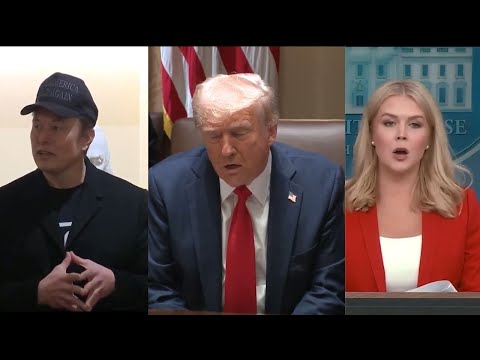
Musk: “Best Cabinet Ever Assembled”; Leavitt on 130-Day Limit: “Ask Me in Another 100 Days”
Elon Musk praised Trump’s cabinet as “the best cabinet ever — literally” at the February 2025 cabinet meeting, saying “I do not give false praise. This is an incredible group of people. I don’t think such a talented team has actually ever been assembled.” Press Secretary Karoline Leavitt deflected a question about Musk’s 130-day limit as a special government employee with the quip “ask me in another 100 days.” Trump described the DOGE email as asking federal employees “simple questions like, ‘What have you done lately?’” and noted that non-responses could mean “maybe that person doesn’t exist or they’re working for another company while being paid by the United States government."
"The Best Cabinet the Country Has Ever Had”
Musk opened his remarks at the cabinet meeting with an assessment that carried unusual weight given his reputation for blunt honesty rather than political flattery.
“President Trump has put together, I think, the best cabinet ever. Literally,” Musk said. “And I do not give false praise. This is an incredible group of people.”
He doubled down on the assessment: “I don’t think that such a talented team has actually ever been assembled. I think it’s literally the best cabinet that the country has ever had. And I think the country should be incredibly appreciative of the people in this room.”
The “I do not give false praise” qualifier was important because it distinguished Musk’s statement from the kind of obligatory compliments that typically characterize cabinet meetings. Musk’s public persona was built on directness — he had publicly criticized everything from government regulations to his own companies’ products. For someone who had said “I do not give false praise” to then call this cabinet the best in history meant he was making a genuine assessment, not performing political courtesy.
The claim was notable given the caliber of historic cabinets. Trump’s cabinet included Wall Street CEOs (Lutnick, Bessent), combat veterans (Hegseth, Driscoll, Waltz), former governors (Noem, Burgum), a former Democratic congresswoman turned intelligence chief (Gabbard), and the world’s richest person serving as an efficiency adviser. Whether it was objectively the “best ever” was debatable, but the diversity of achievement represented in the room was undeniable.
The 130-Day Question
A reporter raised the legal constraint on Musk’s government service. “He is designated as a special government employee, which means that he can only work 130 days per year,” the reporter said. “Is the White House expecting him to limit his work to 130 days? Or are you going to work around those rules? Do you want to see him extend beyond the 130 days?”
Leavitt’s response was characteristically sharp: “So today is February 25th. So I think we’ve been here about 35 days, roughly. So ask me in another 100 days.”
The answer accomplished several things simultaneously. It avoided making a legal commitment about whether Musk would comply with the 130-day limit. It implied that the question was premature since Musk had only used 35 of his 130 days. And it suggested that the administration was not worried about the constraint — that 130 days was plenty of time to accomplish what needed to be done, or that a solution would be found before the limit became relevant.
The 130-day rule applied to special government employees (SGEs), a designation that allowed individuals to serve the government on a temporary or intermittent basis without the full disclosure and conflict-of-interest requirements that applied to regular government employees. The designation had been the legal framework through which Musk operated within the government, but critics argued it was being stretched beyond its intended purpose.
Trump: “Do the People Exist?”
Trump provided the most detailed explanation yet of what the DOGE email was designed to accomplish, framing it as a basic accountability measure rather than a punitive action.
“DOGE is very important. And Elon is here to give you a summary of what’s happening,” Trump said. “Some of the things they found, some of the horrible things they found, some of the theft and fraud. And we call it waste and abuse, but a lot of fraud.”
He described the email’s purpose: “Letters were sent out to people just to find out if the people exist. Do they work? Who do they work for? Where are they? Where have they been working? Have they been working for other companies or other entities at all — being paid by the government?”
Trump explained the dual-employment concern: “So they have two jobs, but they’re supposed to have one.”
He described the questions as “simple”: “The letter asks some simple questions like, ‘What have you done lately?’ If they can answer that — because I can. I can tell you everything I’ve done for the last long period of time. A lot more than a week.”
Trump then addressed the non-responses: “In many cases, we haven’t gotten responses. Usually that means that maybe that person doesn’t exist, or that person doesn’t want to say they’re working for another company while being paid by the United States government.”
Leavitt Rejects “Caught Off Guard” Narrative
CNN’s Jeff Zeleny asked whether cabinet members had been “caught off guard” by the DOGE email, referencing reports that the FBI and DOJ had told employees not to respond.
Leavitt’s response directly challenged the reporting. “Did anonymous sources say that, or did the cabinet secretary say that?” she asked. “The cabinet secretaries have not said that. I know anonymous sources — probably career bureaucrats — have leaked that to many of you in this room.”
She reinforced the team unity message: “Everybody is working as one team. And the President respects the decisions of his cabinet secretaries to tell their staff not to respond to that email, because they did so out of interest of national security. And they don’t want to obviously risk confidential information. It’s pretty common sense.”
The exchange illustrated the administration’s media strategy on DOGE: reject anonymous-source narratives, reaffirm team unity, and reframe any resistance as national security prudence rather than opposition. Leavitt’s direct challenge — “did the cabinet secretary say that?” — forced the reporter to acknowledge that the “caught off guard” narrative came from unnamed sources rather than the officials themselves.
Musk Attending the Cabinet Meeting
Zeleny had also asked whether Musk would attend the following day’s cabinet meeting — the first formal cabinet meeting of the second term. Leavitt confirmed.
“He is, as a matter of fact,” Leavitt said. “I spoke to the President about that before coming down here. Elon, considering he is working alongside the President and our cabinet secretaries, this entire administration, will be in attendance tomorrow just to talk about DOGE’s efforts and how all of the cabinet secretaries are identifying waste, fraud, and abuse at their respective agencies.”
Musk’s attendance at a formal cabinet meeting — despite not being a cabinet member — underscored his unique position within the administration. He was not a secretary, not a confirmed official, and not a traditional government employee. But his influence on the administration’s most visible domestic initiative made his presence at the cabinet table logical, if unprecedented.
Key Takeaways
- Musk called Trump’s cabinet “the best ever — literally,” adding “I do not give false praise. I don’t think such a talented team has actually ever been assembled.”
- Leavitt deflected the 130-day SGE limit question with “ask me in another 100 days,” noting Musk had used only 35 of his 130 days.
- Trump described the DOGE email as asking “simple questions like, ‘What have you done lately?’” and said non-responses could mean employees “don’t exist” or are “working for another company while being paid by the government.”
- Leavitt challenged CNN’s “caught off guard” narrative, asking “did the cabinet secretary say that, or did anonymous sources?” and insisting “everybody is working as one team.”
- Musk was confirmed to attend Trump’s first formal cabinet meeting to discuss DOGE findings across all agencies.