 HYGO News
 DOJ independence contradicts Biden said Musk/Twitter "worth being looked at"
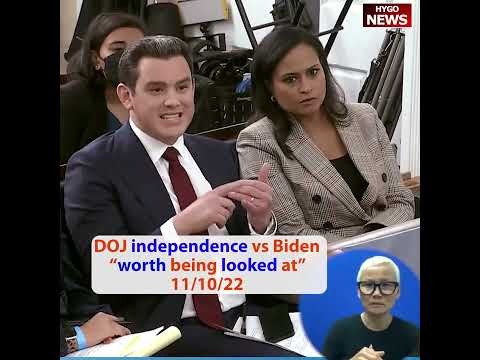
DOJ Reporter: White House Claims to Stay Independent From DOJ — So What Did Biden Mean Saying Musk’s Business Was “Worthy of Being Looked Into”?
On 11/11/2022, a reporter who covered the Department of Justice confronted White House Press Secretary Karine Jean-Pierre with a devastating contradiction: the White House had repeatedly claimed it remained independent from DOJ decision-making, yet Biden had publicly said Elon Musk’s business relationships were “worthy of being looked into” — using language that sounded like presidential direction of investigative priorities. The reporter noted that CFIUS, which KJP had cited in the previous day’s briefing, was made up of Treasury and DOJ officials. “What did he mean? What does that mean when the President says worthy of being looked into? That’s raising some questions,” the reporter asked. KJP deflected to Jake Sullivan and refused to elaborate.
The DOJ Independence Question
The reporter’s framing was precise and pointed. “You’ve said several times from this perch right here that the White House wants to remain independent from the Justice Department,” the reporter noted. “I cover the Justice Department at DOJ. Those folks will say we want to stay totally independent.”
The premise was factually accurate. The Biden White House had repeatedly claimed to respect DOJ independence — particularly on politically sensitive cases involving Trump, Hunter Biden, and other high-profile matters. The administration had made a point of distinguishing itself from the Trump White House, which had been criticized for attempting to direct DOJ investigations. Biden had promised a return to traditional norms of prosecutorial independence.
Those norms required that the White House not suggest investigative targets, comment on ongoing cases, or signal to the Justice Department whom to prosecute. Attorney General Merrick Garland had frequently emphasized his department’s independence from political pressure. The entire Biden approach to DOJ was built on the claim that the White House stayed out of investigative decisions.
The Contradiction
Biden’s “worthy of being looked at” comment directly contradicted this claim. The reporter identified the specific conflict: “KJP was asked earlier about this comment with Elon Musk and having people — it’s worthy of looking into Elon Musk’s relationship with other businesses. He talked about CFIUS. CFIUS is made up of the Treasury Department and DOJ officials. What did he mean? What does that mean when the President says worthy of being looked into? That’s raising some questions.”
The contradiction was elegantly laid out. The White House couldn’t have it both ways. Either:
-
Biden was expressing a personal opinion about Musk that had nothing to do with official policy — in which case the president was publicly encouraging investigation of a private citizen, which was itself problematic; or
-
Biden was signaling to DOJ and CFIUS that they should investigate — in which case the White House was directing investigative priorities, contradicting its claim of DOJ independence.
There was no third option that avoided the contradiction. A president either was or wasn’t telling the Justice Department whom to examine. Biden’s public statement that Musk’s business was “worthy of being looked into” was, by any reasonable interpretation, presidential input on investigative priorities.
”Jake Sullivan Just Answered That”
KJP’s response was to defer to another official. “So the National Security Advisor, Jake Sullivan, just answered that question. I’m just not going to go beyond that. He is, as you know, the advisor to the National Security Council. I’m just not going to go beyond that,” KJP said.
The deferral was a common KJP technique, but it didn’t address the reporter’s substantive point. The question wasn’t about national security specifics — it was about the broader principle of White House interference in DOJ decision-making. Whatever Jake Sullivan had said at an earlier briefing about CFIUS didn’t resolve the contradiction between Biden’s comments and the White House’s stated commitment to DOJ independence.
“And as the President said and as I have said many times, I’m just going to go beyond that,” KJP added — producing what appeared to be a garbled sentence. The apparent intent was “I’m not going to go beyond that,” meaning she would not elaborate further. The verbal slip added to the impression that KJP was uncomfortable with the line of questioning.
The “Coincidence” Problem
The Biden-Musk situation highlighted a broader problem with the administration’s approach to investigation politics. When the White House claimed DOJ independence while simultaneously making public comments about specific individuals or cases, it was essentially trying to influence investigative outcomes while maintaining plausible deniability about direct interference.
Biden had made similar statements throughout his presidency — publicly commenting on specific individuals or cases while formally maintaining that he didn’t interfere with DOJ decisions. Each individual statement could be defended as expression of presidential opinion rather than direction. But collectively, they suggested a pattern of the president publicly weighing in on investigative priorities while formally maintaining that he didn’t interfere with DOJ decisions.
The Musk-Specific Concerns
The Musk situation was particularly concerning because it involved speech, not alleged criminal conduct. Musk had exercised his First Amendment rights to purchase a communications platform, express political opinions, and operate the platform according to his content moderation preferences. Biden’s suggestion that these activities were “worth being looked into” as national security matters raised alarm bells about government retaliation for protected speech.
CFIUS review, as KJP had noted the previous day, was “the normal process” for examining foreign investment concerns. But applying it to Musk required arguing that foreign investors in the Twitter deal created national security risks — a stretch that required treating routine business investment as a vehicle for foreign influence over American discourse.
Critics from across the political spectrum worried that the administration was repurposing national security tools to target political opponents. The precedent was troubling: if CFIUS could be used against a U.S. citizen acquiring a U.S. company because of concerns about his political speech, the same logic could be applied to any future business leader who criticized any future administration.
Key Takeaways
- A DOJ reporter confronted KJP with the contradiction between White House claims of DOJ independence and Biden saying Musk’s business was “worthy of being looked into.”
- The reporter noted CFIUS was made up of Treasury and DOJ officials — meaning Biden’s comment was direct presidential input on investigative priorities.
- KJP deferred to National Security Advisor Jake Sullivan rather than addressing the contradiction directly.
- The Biden-Musk situation raised First Amendment concerns about government retaliation for protected political speech.
- KJP’s response included an apparent verbal slip: “I’m just going to go beyond that” when she meant “I’m not going to go beyond that.”
Transcript Highlights
The following is transcribed from the video audio (unverified — AI-generated from audio).
- You’ve said several times that the White House wants to remain independent from the Justice Department.
- CFIUS is made up of the Treasury Department and DOJ officials. What did he mean?
- What does that mean when the President says worthy of being looked into? That’s raising some questions.
- The National Security Advisor, Jake Sullivan, just answered that question. I’m just not going to go beyond that.
- He is, as you know, the advisor to the National Security Council.
- As the President said and as I have said many times, I’m just going to go beyond that.
Full transcript: 160 words transcribed via Whisper AI.