 HYGO News
 Dem comment before watch news; Trump on Bitcoin: if we didn't have it, China would; Press Sec: MAGA
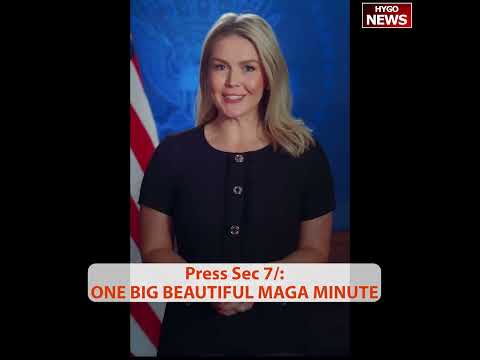
Dem comment before watch news; Trump on Bitcoin: if we didn’t have it, China would; Press Sec: MAGA
A panel discussion on cable news produced one of the more embarrassing moments of political commentary when a panelist, unaware that the Rwanda-Congo peace agreement had actually been signed in the Oval Office the previous day, attempted to argue that the agreement had not been finalized. Trump, in a separate press availability, offered his analysis of Bitcoin and cryptocurrency as a strategic industry the United States must dominate or cede to China. Press Secretary Karoline Leavitt closed the week with her “MAGA Minute” summary of accomplishments — Iran strikes, Israel-Iran ceasefire, NATO 5% commitment, S&P and NASDAQ record highs, low gas prices, Supreme Court ending nationwide injunctions, and the One Big Beautiful Bill heading to July 4 signing.
The Rwanda Foreign Minister
The panel discussion opened with the citation that would become the panelist’s embarrassment. “A foreign minister from Rwanda told CNN he said he’s committed to supporting this ongoing negotiation but warned that ending the conflict will depend on political will and the good faith and he doesn’t know if that is true referring to the DRC’s government.”
The Rwandan foreign minister’s statement, as described, expressed skepticism about DRC political will to implement the peace agreement. That skepticism is a realistic diplomatic observation. Peace agreements routinely fail during implementation. The parties who sign them may sign in good faith but fail in execution.
”It’s Not Done”
The panelist then escalated. “It’s not done. It’s not done.”
The repetition was emphatic. The panelist was arguing that the peace agreement was not final, that it was still being negotiated, that skepticism about its durability was warranted.
The problem with the argument was that the agreement had, in fact, been signed in the Oval Office the previous day. Rubio had presided. The parties had signed. The agreement had entered into force. The panelist’s assertion that “it’s not done” was factually wrong.
”You Didn’t Watch The News Yesterday”
A second panelist corrected her. “You didn’t watch the news yesterday. They literally announced it in the Oval Office. It’s the signing of a peace agreement between Congo and Rwanda to end a conflict that has been going on for 30 years.”
The exchange captures what the administration identified as a pattern. Critics of the administration respond to their preconceived view of what is happening rather than to what is actually happening. The first panelist had assumed the peace agreement had not been signed. The second panelist had watched the actual Oval Office signing. The contrast revealed the first panelist’s preparation gap.
”He Does Announce Things Before It’s Too Soon”
The first panelist attempted to recover. “I also think that to our point that we have it established he does announce things before it’s too soon. They literally hand the countries in there. I feel like you should let the news come out here. I think that’s the point.”
The recovery attempt pivots to a different argument — that Trump announces things prematurely. Even if the agreement was signed, the argument goes, the signing may have been premature.
This argument also has problems. The parties who signed the agreement are the parties who would know whether the agreement was premature. If the Congolese and Rwandan governments were willing to sign, their signatures are the definitive indication that they considered the agreement appropriate.
”I Think The President Is In A Very Good Position”
The second panelist pushed back. “I think the President of the United States of America is in a very good position. He’s very good at talking about the fact that he’s in a very good position. He’s very good at talking about the fact that he’s in a very good position.”
The tripled repetition captures what the second panelist is observing. Trump is skilled at presenting himself as being in a favorable position. That skill is a political asset. Opponents who dismiss the skill as mere self-promotion underestimate its effect.
”I Feel Like You Should Stop Trying To Defend Him”
The first panelist’s response. “I feel like you should stop trying to defend him. Hang on. You should watch the news.”
The exchange captures the dynamic that the administration finds strategically useful. The first panelist, having been corrected on her factual claim, reframes the situation as though her opponent is “defending” Trump rather than correcting factual errors. That reframing absolves her of having to acknowledge the error. It also provides a template for Democratic panelists on cable news — if you are factually wrong, accuse the person correcting you of being politically partisan.
Trump On Bitcoin
The video then pivoted to Trump’s remarks on cryptocurrency. “I became a fan of crypto and to me it’s an industry. I view it as an industry and I’m President. And if we didn’t have it China would or somebody else would but most likely China China would love to.”
Trump’s framing is strategic rather than ideological. Cryptocurrency is an industry. Industries produce jobs, technology, and economic activity. If the United States abandons the industry, other countries — China most notably — will dominate it. American dominance in the industry is therefore, in Trump’s framing, a matter of national economic interest.
”We’ve Dominated That Industry”
Trump continued. “And we’ve dominated that industry. It’s a big industry by the way.”
American dominance in cryptocurrency is not universally acknowledged. Various Asian countries have been major centers of crypto activity. European regulatory frameworks have shaped parts of the industry. But the United States does have substantial crypto industry activity — major exchanges, major institutional involvement, significant retail participation.
Trump’s framing is that American dominance is real and that administration policy should protect and extend it.
”Crypto Went Down Much Less”
Trump offered a specific observation about crypto’s recent market performance. “In fact when the stock market went down recently crypto and Bitcoin and all of that went down much less than anybody else as a group.”
The observation is about crypto’s behavior as a relative safe haven during recent market volatility. Traditional asset classes have experienced volatility. Crypto, in Trump’s reading, has performed relatively well compared to that volatility.
Whether crypto truly functions as a safe haven is a debated question in financial analysis. Crypto has historically been more volatile than traditional assets, not less. Recent performance during specific periods may have shown different dynamics. Trump’s specific observation is consistent with some interpretations but not with the longer-term pattern.
Trump’s Crypto History
Trump then disclosed his personal involvement. “But really that was an industry that wasn’t doing particularly well. I got involved with it a couple of years ago. Before this whole before the second term I got involved before I decided to run.”
Trump’s personal involvement in crypto predates his second presidential run. He has accepted crypto contributions. He has launched a personal crypto token. His administration has been substantially more favorable to crypto interests than prior administrations.
“I only decided to run because I saw what was happening and Biden was incompetent and the administration was crooked and incompetent” is the political framing of his re-run. Biden’s failures, in Trump’s telling, forced his return to politics. Whether that framing is accurate depends on one’s view of what motivated Trump’s 2024 candidacy.
”It’s Become Amazing”
Trump’s assessment of the industry’s trajectory. “I mean it’s the jobs that are produces and I notice more and more you pay in Bitcoin. I mean people say it takes a lot of pressure off the dollar. It’s a great thing for our country.”
The observation about Bitcoin payments is correct. Bitcoin payment acceptance has increased across retail, service, and business-to-business transactions. The volume is still small compared to traditional payment methods, but the trajectory is toward broader adoption.
“Takes a lot of pressure off the dollar” is the monetary analysis. When Americans transact in Bitcoin rather than dollars, dollar demand is marginally reduced. That reduction has various implications for dollar valuation, monetary policy, and international finance.
“A great thing for our country” is Trump’s aggregate verdict. Whether Bitcoin’s broader adoption is a great thing or a problematic thing depends on one’s view of the relationship between government-issued currency and cryptocurrency. Critics argue cryptocurrency threatens financial stability and enables illicit activity. Advocates argue cryptocurrency promotes economic freedom and technological innovation.
The MAGA Minute Recap
Press Secretary Leavitt closed the week with her “MAGA Minute” summary. “It’s another week in the books here at the White House and let’s break it all down in this week’s Maga Minute.”
The summary format is a structured recap of the week’s accomplishments. Each item is one line. The goal is to communicate multiple accomplishments in a quickly digestible format.
”Obliterating Iran’s Nuclear Program”
Leavitt’s first item. “President Trump started the week by completely and totally obliterating Iran’s nuclear program and securing a peace deal between Israel and Iran.”
The Iran operation and the ceasefire that followed are the week’s foreign policy headline. Both are genuine achievements regardless of the disputes about damage assessment. The program was struck. The ceasefire was secured. Both are unusual diplomatic outcomes.
”The Annual NATO Summit”
Leavitt’s second item. “President Trump then traveled to the Netherlands to attend the annual NATO Summit where he secured a historic agreement for its members to raise defense spending to 5% of GDP.”
The NATO commitment — the “Hague defense commitment” in Trump’s naming — is the alliance-level achievement. Whether implementation matches the commitment will be tested over subsequent years, but the commitment itself is historically significant.
”The S&P And The NASDAQ”
Leavitt’s third item. “The S&P and the NASDAQ both hit all-time record highs on Friday morning and summer gas prices have reached their lowest points since 2000 and 21.”
The stock market’s performance is the financial indicator. Both major indices reaching all-time record highs during the same week captures a specific moment of market confidence.
Gas prices at their lowest points since 2020 and 2021 is the consumer indicator. Lower gas prices directly affect household budgets. Americans filling their cars pay less. The political benefit flows to the administration.
”The Supreme Court”
Leavitt’s fourth item. “The Supreme Court also issued a landmark ruling ending nationwide injunctions by lower district court judges, putting a stop to activist judges who have stood between this administration and the safety and prosperity of the American people.”
The nationwide injunctions ruling is the week’s institutional achievement. It reshapes the judicial framework for all future presidencies.
”The One Big Beautiful Bill”
Leavitt’s fifth item. “President Trump also held an event here at the White House to showcase the one big beautiful bill and this bill delivers on no tax on tips, no tax on overtime, and many other key campaign promises the president made on the trail. And we expect to see this bill on the president’s desk by July 4th.”
The legislative track is the week’s domestic policy focus. The bill’s passage by July 4 would produce the signature legislative accomplishment of the administration’s first year.
”See You Next Week”
Leavitt closed with the weekly sign-off. “Thanks for tuning in and we’ll see you next week for one big beautiful Maga Minute.”
The weekly format is consistent. Each week produces its own accomplishments. The administration’s operating mode is to compile the weekly record and present it to voters as cumulative evidence of effective governance.
Why The Weekly Format Works
The administration’s choice to produce weekly recaps captures something about political communications in the current environment. Voters do not watch every press briefing. They do not follow every policy development. They absorb political information in fragments, often through social media, sometimes through cable news.
A weekly recap provides an accessible summary. Voters who consumed other content during the week can catch up on the administration’s perspective in a few minutes. The format is shareable — the MAGA Minute can be posted, forwarded, and discussed as a single unit of political content.
That accessibility is what makes the format strategically useful. The administration is meeting voters where they actually consume political information rather than requiring them to follow every news cycle in detail.
The Contrast With Democratic Communications
Democratic communications during the same period have been fragmented. Schumer’s Senate floor speeches. Jeffries’s press statements. Various senators’ individual interviews. There has been no equivalent weekly summary or coherent single message.
That asymmetry — administration with unified weekly summary, Democrats with fragmented individual statements — is part of what produces the administration’s current political advantage. Voters can easily summarize what the administration is doing. They cannot as easily summarize what Democrats are offering as an alternative.
Key Takeaways
- The cable news embarrassment: A panelist claimed the DRC-Rwanda peace agreement was “not done” the day after it was signed in the Oval Office, prompting the correction “You didn’t watch the news yesterday.”
- Trump on Bitcoin: “To me, it’s an industry…if we didn’t have it, China would. China would love to.”
- Trump on Bitcoin’s economic impact: “It takes a lot of pressure off the dollar — and it’s a great thing for our country.”
- The MAGA Minute summary: Iran strikes, Israel-Iran ceasefire, NATO 5% GDP commitment, S&P/NASDAQ record highs, lowest gas prices since 2020-2021, Supreme Court ending nationwide injunctions, One Big Beautiful Bill heading to July 4 signing.
- The communications pattern: weekly summaries that consolidate multiple policy outcomes into single shareable units, contrasted with fragmented Democratic messaging.