 HYGO News
 Dem: Cheri Beasley: Might Not Be "Available" When Asked If She'll Campaign With Biden
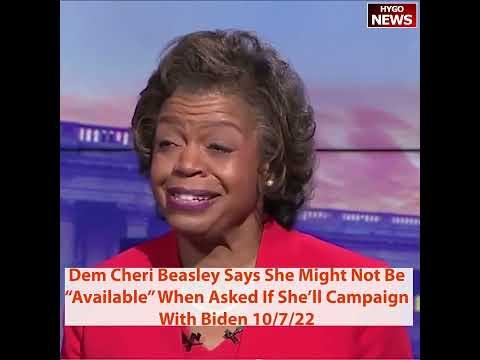
Democrat Cheri Beasley Says She Might Not Be “Available” to Campaign With Biden — Won’t Say Whether She’d Stand on Stage With the President
On 10/7/2022, during a North Carolina Senate debate, Democrat Cheri Beasley was asked directly whether she would campaign with President Biden if he came to the state. The moderator posed the hypothetical: “President Biden called tonight and said he wanted to come campaign here next week. Would you stand on stage with him?” Beasley dodged the question repeatedly, saying Biden was “certainly welcome to be here” and that “he should know what’s happening here in North Carolina” — but when pressed on whether she would actually appear alongside him, she said “we’ll just have to see if that’s something that’s — if we’re available.” The non-answer captured the dilemma facing Democrats nationwide in 2022: running on Biden’s legislative record while running away from Biden himself.
”Would You Stand on Stage With Him?”
The moderator framed the question as a simple yes-or-no scenario. “President Biden called tonight and said he wanted to come campaign here next week. Would you stand on stage with him?” the moderator asked.
Beasley’s response was carefully crafted to avoid either embracing or rejecting the president. “President Biden is certainly welcome to be here,” Beasley said. “He is our president and he should know what’s happening here in North Carolina. We want him to know and meet folks and hear from folks here in the state.”
The answer was notable for what it omitted. Beasley never said “yes.” She reframed Biden’s potential visit as a fact-finding mission — “he should know what’s happening” — rather than a campaign event. The distinction was deliberate: appearing alongside Biden at an official presidential visit was politically safer than sharing a campaign stage with an unpopular president.
”We’ll Just Have to See If We’re Available”
The moderator wasn’t satisfied with the pivot and pressed directly. “But would you want to be with him for that visit?” the moderator asked.
Beasley’s answer revealed the tension. “You know, if it’s an official visit, we’ll just have to see if that’s something that’s — if we’re available,” Beasley said.
The “available” dodge was transparent. A candidate for U.S. Senate saying she might not be “available” to appear with the president of her own party was an admission that Biden’s brand was toxic in North Carolina. No candidate who believed the president would help them win votes would suggest they might be busy that day.
Beasley then attempted to soften the dodge. “But I’m telling you that, you know, we want him here in the state listening to folks and hearing from the same folks I’m talking to about what we really need here in the state,” Beasley said — again framing a Biden visit as listening, not campaigning.
The 2022 Democrat Dilemma
Beasley’s awkward dance illustrated a problem that plagued Democratic candidates across the country in the 2022 midterm cycle. Biden’s approval rating had sunk to the low 40s nationally and was worse in competitive swing states. Inflation at 8.3%, rising crime, record border crossings, and widespread economic anxiety had made the president a political liability.
Yet Democratic candidates could not openly repudiate Biden without alienating the party’s base voters — particularly Black voters, who were Biden’s most loyal constituency and essential in states like North Carolina. Beasley, a Black woman and former Chief Justice of the North Carolina Supreme Court, needed maximum Black turnout to have any chance of winning the seat. Distancing herself from Biden risked depressing the very voters she needed most.
The result was the verbal gymnastics viewers witnessed in the debate: simultaneously expressing approval of Biden’s presence while suggesting she might not actually be there when he arrived.
The North Carolina Senate Race
Beasley was running against Republican Ted Budd for the open Senate seat being vacated by retiring Republican Richard Burr. The race was considered one of the most competitive Senate contests in the country, with polls showing a tight margin throughout the fall.
North Carolina had trended narrowly Republican in recent cycles — Trump won the state by 1.3 points in 2020, and Republican Thom Tillis held his Senate seat by 1.8 points. Democrats believed the state was within reach, particularly with Beasley’s profile as a history-making jurist.
But the national environment — driven by Biden’s unpopularity, inflation, and voter dissatisfaction with the direction of the country — created powerful headwinds. Budd ultimately won the race by 3.2 percentage points, 51.0% to 47.8%, in a result that suggested Biden’s drag on the ticket was real.
Biden’s Toxicity Across the Map
Beasley was far from alone in dodging the Biden question. Across competitive races in 2022, Democratic candidates employed variations of the same strategy:
In Georgia, Senator Raphael Warnock declined to say whether he wanted Biden campaigning for him. In Arizona, Senator Mark Kelly kept his distance from the president. In Pennsylvania, John Fetterman — running for an open Senate seat — skipped Biden’s Labor Day rally in his own state. In Nevada, Senator Catherine Cortez Masto avoided joint appearances.
The pattern was remarkable: the sitting president of the United States was being treated as a liability by his own party’s candidates in virtually every competitive race in the country. Some candidates refused to say whether they had voted for Biden. Others declined to say whether he should run again in 2024.
”He Should Know What’s Happening”
Beasley’s most telling rhetorical move was reframing Biden’s hypothetical visit from a campaign event into an educational experience. Rather than saying “I’d be proud to stand with the president,” she positioned Biden as someone who needed to “know what’s happening here in North Carolina” and “hear from folks.”
The framing subtly suggested Biden was out of touch — that he needed to come to North Carolina to learn what voters were going through, not to celebrate achievements. It was a criticism disguised as an invitation, allowing Beasley to acknowledge voter frustration with the administration while maintaining nominal party loyalty.
The approach satisfied neither audience fully. Biden supporters could hear the lack of enthusiasm. Swing voters could see the dodge for what it was. And Republicans had a clean clip showing a Democrat unwilling to campaign with her own president — which is exactly what the moderator’s question was designed to produce.
The Broader Pattern of Avoidance
The question “Would you campaign with Biden?” became one of the most effective debate questions of the 2022 cycle precisely because there was no good answer for Democrats in competitive states. Saying “yes” tied the candidate to an unpopular president. Saying “no” made headlines and alienated the base. Every variation of “maybe” or “it depends” looked evasive — because it was.
Beasley’s “we’ll just have to see if we’re available” entered the collection of memorable non-answers that defined the 2022 Democratic candidate experience with their own president.
Key Takeaways
- Beasley was asked directly if she’d stand on stage with Biden; she said he was “welcome” but that she’d have to see if she was “available.”
- She reframed a potential Biden visit as a fact-finding mission rather than a campaign event, suggesting the president needed to “know what’s happening” in North Carolina.
- The dodge reflected Biden’s toxicity across the 2022 midterm map, with Democratic candidates nationwide avoiding joint appearances with the president.
- Beasley ultimately lost to Republican Ted Budd by 3.2 points in a race where Biden’s unpopularity contributed to Democratic headwinds.
- The “Would you campaign with Biden?” question became one of the most effective debate tools of the 2022 cycle because no answer worked for Democrats in swing states.
Transcript Highlights
The following is transcribed from the video audio (unverified — AI-generated from audio).
- President Biden called tonight and said he wanted to come campaign here next week. Would you stand on stage with him?
- President Biden is certainly welcome to be here. He is our president and he should know what’s happening here in North Carolina.
- We want him to know and meet folks and hear from folks here in the state.
- But would you want to be with him for that visit?
- We’ll just have to see if that’s something that’s — if we’re available.
- We want him here in the state listening to folks and hearing from the same folks I’m talking to about what we really need here in the state.
Full transcript: 125 words transcribed via Whisper AI.