 HYGO News
 Two Democrats Who Became Republicans
Two Democrats Who Became Republicans
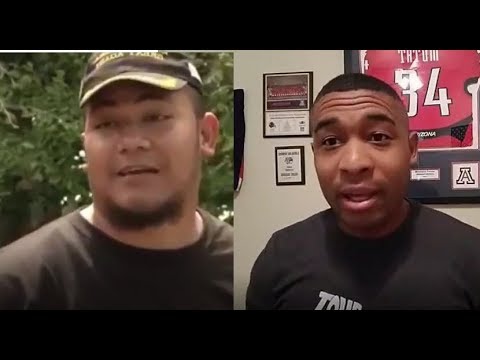
This video features two people who switched from the Democratic Party to the Republican Party and explain, in their own words, what drove the change. The first is a 21-year-old former anti-Trump activist who describes how he went from physically assaulting Trump supporters to defending free speech. The second is Tucson Police Officer Brandon Tatum, a Black man who recounts growing up being told “the white people don’t like you” and how his life experiences gradually dismantled that narrative.
”I Used to Beat Up Trump Supporters”
The video opens with a young man, visibly emotional after a rally he was scheduled to speak at was canceled by protesters. He described his frustration: “Emotions are just flowing wild right now because just don’t understand anymore. When did our country ever get to this kind of point where standing up for free speech makes you a racist, makes you a white supremacist? Fighting for freedom makes you a neo-nazi?”
He then made a striking confession about his past: “I used to be one of these people, well not in Antifa, but I used to be an anti-Trump, hardcore anti-Trump. And if I was still the old me, I would beat up all these people because that’s what I used to do.” As the video description put it: “I used to beat up Trump supporters.”
He described specifically targeting Trump supporters: “I’d drive around when he announced that he was running for president. I drove around looking for Trump supporter. You got a Trump sticker on you? I’ll be waiting at your car once you get there. I’ll beat your ass up if you talk back to me when I talk shit to you.”
What changed his mind was recognizing the role media played in shaping his views: “Every single news, they announced Trump as a racist. They cut out most of the speech that Trump did and brought only some of it just to make people think he was racist. I really believed that. I really believed that. So I was out. I was filled with anger.”
Officer Brandon Tatum’s Journey
The second half of the video features Officer Brandon Tatum delivering a lengthy, personal account of how he went from believing he was oppressed to rejecting that narrative entirely. He described what he was told growing up: “Society would tell me that I’m a victim. The white man don’t like you. You ain’t never gonna be nothing. The white man is gonna hold you down. You gotta work five, six times harder than anybody else to be somebody in life.”
He described how cultural influences reinforced these messages: “Rap music was cool. I love listening to Tupac. They got me all riled up. It reinforced some of these things that people would say.” He even described his appearance in college: “I used to sag my pants, underwear hanging out. I had gold teeth in my mouth. I got young savage tattooed on my stomach. I know what it’s about.”
The turning point came through direct experience. When he got to college, he began to question the narrative: “I started realizing when I got to college, like I don’t really think they hate me like they say they do.” Becoming a police officer accelerated the shift: “Police officers ain’t nothing like they said they was. And then I started realizing the laws and how all this stuff works. And I’m like, well, so that dude didn’t pull me over because I was black. He pulled me over because I literally was breaking the law. He didn’t even give me a ticket.”
Challenging the Democratic Party’s Record
Tatum’s critique extended to the political establishment: “Democratic people run most of the black communities that I’ve lived in. Still, I go back home today and the community still looks similar. So what are the Democrats doing for black people? I have been lied to. I’m not oppressed.”
He pushed back on the idea that white people were the enemy: “There’s so many white men and women, I could say, that have helped me become successful in my life. The elements are telling me that white people hate me. Your skin alone was causing them to not like you. And I’ve had white people do more for me than black people have done.”
On the culture he grew up in, he said: “I started realizing where rap music is poison, exacerbating and amplifying and glorifying, being promiscuous, hating other black people, calling us the n-word, talking about shooting people up, drive by, selling dope. And y’all told me that was okay. And you lied to me.”
Additional Context from Full Remarks
Tatum also addressed the protest culture he saw as unproductive: “What are you accomplishing? Nothing. What is changing in the community? Nothing. Black people are still getting murdered by other black people. We’re still going to be talking about education system. We’re still going to be talking about underage pregnancies. We’re still going to be talking about single parent homes. What has changed since Michael Brown and Hands Up Don’t Shoot? Nothing.”
He rejected the victim mentality outright: “I ain’t no victim. I can do whatever anybody else in this country can do. I can be the president of United States if I wanted to. If I put in the work, I bust my tail, I can be the president. I can own my own business. I already own my own house.”
On dealing with racism, Tatum was pragmatic: “I’ve been called an n-word I don’t know how many times. You can get a noose and hang it somewhere. You’re going to hurt me? No, you’re an idiot. We learned this. We were kids. Sticks and stones may break my bones. Words won’t hurt me.”
Key Takeaways
- Two former Democrats described their journeys to the Republican Party, with one confessing he used to physically assault Trump supporters before media manipulation opened his eyes, and the other — a police officer — recounting how life experience contradicted the narrative of systemic oppression he had been taught.
- Officer Brandon Tatum challenged the Democratic Party’s record in Black communities, arguing that decades of Democratic leadership had not improved conditions and that victimhood messaging kept people dependent rather than empowered.
- Both speakers emphasized personal responsibility and direct experience over media narratives, arguing that the stories they had been told about racism and oppression did not match what they encountered in their own lives.