 HYGO News
 Cruz criticized Biden's UN Ambassador nominee: "Can't Find A Single Word Of Criticism"
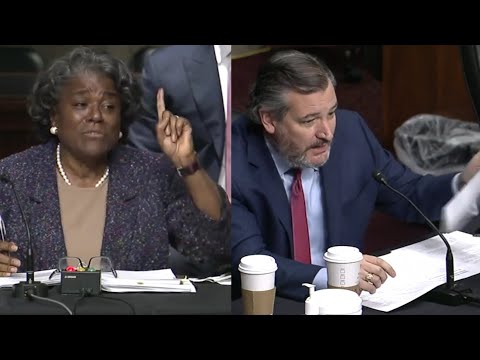
Cruz Criticized Biden’s UN Ambassador Nominee: “Can’t Find a Single Word of Criticism”
On January 27, 2021, Senator Ted Cruz (R-TX) sharply questioned Linda Thomas-Greenfield, President Biden’s nominee for United States Ambassador to the United Nations, during her Senate confirmation hearing. Cruz focused his questioning on a paid speech Thomas-Greenfield had delivered at a Confucius Institute at Savannah State University in October 2019, in which he said she had praised the Chinese Communist Party’s Belt and Road Initiative without including any criticism of China’s human rights record.
“I can tell you I’m holding the speech you gave at the Confucius Institute, and I can’t find a single word of criticism in this speech,” Cruz said. “This speech is cheerleading for the Chinese Communist Party.”
The Confucius Institute Speech
The confrontation centered on a Washington Post report that had broken the morning of the hearing, describing a speech Thomas-Greenfield gave in October 2019 at a Chinese government-funded Confucius Institute on the campus of Savannah State University, a historically Black college in Georgia.
Cruz framed the issue in the broader context of his concerns about Chinese government influence operations in the United States. He noted that Congress had passed bipartisan legislation — which he authored — cracking down on Confucius Institutes due to “repeated problems of espionage and propaganda.”
“At the same time that the United States Congress and the United States government is acting to combat the spying, the espionage, the propaganda coming from Confucius Institutes run and controlled by the Chinese Communist government, according to the Washington Post, you were apparently going to a Confucius Institute giving a paid speech and praising China,” Cruz said.
He pressed Thomas-Greenfield on the specific content of the speech, citing her praise for the Belt and Road Initiative and for what he characterized as China’s “entrapping developing countries in debt bondage.” He asked: “Is it the role of America’s UN Ambassador to be cheering on the Chinese Communist Party at the expense of the developing world and at the expense of America?”
Thomas-Greenfield’s Response
Thomas-Greenfield acknowledged the speech but pushed back against Cruz’s characterization of its content. “It was not my intention, nor do I think that I cheered on the Chinese Communist Party,” she said. “What I recommended in that speech is that Africans need to open their eyes on how they deal with the Chinese.”
She explained that she had been invited by Savannah State University, with which she had a long-standing relationship, and had received a $1,500 honorarium for spending several days engaging with students about careers in the Foreign Service and issues related to Africa.
Thomas-Greenfield said she was “appalled” by what she saw the Confucius Institute doing in Georgia, describing Chinese government engagement with “poor black communities with the poorest of people” — similar patterns she had observed during her decades of work across Africa.
“I’ve expressed my strong regret for having given that particular speech at Savannah University,” she said. “And if I had it to do all over again, I would not have accepted.”
The Money Question
Cruz pressed Thomas-Greenfield on whether she had returned the $1,500 honorarium from the Confucius Institute-linked speech. When she said she could tell him what she did with the money and that she gives her “very meager resources to humanitarian efforts,” Cruz noted: “So you did keep the money though. You didn’t give it back.”
The exchange highlighted a recurring theme in the hearing about the extent to which Thomas-Greenfield had benefited from her relationship with a Chinese government-funded institution.
Broader China Concerns
Cruz framed his questioning within what he described as a “pattern among Biden administration nominees of consistently moving towards and embracing the Chinese Communist Party.” He said China represented “the single greatest geopolitical threat facing the United States.”
His final line of questioning focused on whether Thomas-Greenfield had included any criticism of China’s human rights abuses in her Confucius Institute speech. “Did you have even a word of criticism about the Chinese Communist Party, about its murders, about its tortures, about its concentration camps, about its genocide?” Cruz asked. “Did you have even a word of criticism in the speech you gave at the Confucius Institute?”
Thomas-Greenfield said she had spoken about human rights and that her discussions with students included frank answers about China’s record. “But I appreciate what you’re saying. I’m not denying this. As I said, I regret this,” she said. “This is one speech in my 35-year career. And I do regret that speech.”
She pledged to work “aggressively against Chinese malign efforts” at the United Nations if confirmed, pointing to her 35-year career in which she said she had consistently raised concerns about Chinese influence in Africa.
Thomas-Greenfield was ultimately confirmed by the Senate on February 23, 2021, by a vote of 78-20.
Key Takeaways
- Ted Cruz confronted Biden’s UN Ambassador nominee Linda Thomas-Greenfield over a paid speech she gave at a Chinese government-funded Confucius Institute in 2019, saying the speech contained “cheerleading for the Chinese Communist Party” without “a single word of criticism.”
- Thomas-Greenfield acknowledged regretting the speech and said she would not have accepted the invitation if she could do it over, but defended her 35-year record of calling out Chinese influence in Africa.
- Cruz pressed her on keeping the $1,500 honorarium and framed her nomination as part of a broader pattern of Biden nominees being too accommodating toward Beijing.
- Thomas-Greenfield pledged to work “aggressively against Chinese malign efforts” at the United Nations and was ultimately confirmed 78-20.
Full Transcript
So you’ve said you were horrified by seeing firsthand what the Confucius Institute was doing. Did you keep the money? I can tell you what I did with the money. I give a tremendous amount of my very meager resources to humanitarian efforts. So you did keep the money though. You didn’t give it back. You also describe, you said you’ve spoken out against China’s abusive practices. Perhaps you have elsewhere, but I can tell you I’m holding the speech you gave at the Confucius Institute, and I can’t find a single word of criticism in this speech. This speech is cheerleading for the Chinese Communist Party. You praised the Belt and Road Initiative. You praised their entrapping developing countries in debt bondage. And you say the United States should follow China’s model. Is it the role of America’s UN Ambassador to be cheering on the Chinese Communist Party at the expense of the developing world and at the expense of America? Senator, it was not my intention, nor do I think that I cheered on the Chinese Communist Party. What I recommended in that speech is that Africans need to open their eyes on how they deal with the Chinese. And I would like to see the United States government do more in Africa to compete with the…
My final question, did you have even a word of criticism about the Chinese Communist Party, about its murders, about its tortures, about its concentration camps, about its genocide? Did you have even a word of criticism in the speech you gave at the Confucius Institute? I spoke about human rights there. That’s the speech, but you don’t see my other engagements with students who ask questions that I answered frankly. And I don’t ignore human rights. I talk about the fact that Africans like our values. But in the speech, did you address human rights? I did. Human rights is referred to as something that we promote in the United States. What did you say about human rights? That are our values. What did you say? I mean, in my discussions with Africans. But the speech didn’t have any… But I appreciate what you’re saying. I’m not denying this. As I said, I regret this. You know, this is one speech in my 35-year career. And I do regret that speech. But if you look at what I have done prior to that, there is no question that I understand I am not at all naive about what the Chinese are doing. And I have called them out on a regular basis, including today. Thank you. Thank you.