 HYGO News
 Consumer Confidence SURGES in May: 98.0 vs 87 Expected; Warren Lies on OBBB -- Facts: 15% Tax Cut for $30K-$80K, $11,600 Wage Increase, No Tax on Tips/Overtime; Rep. Ivey 'Cut the Crap' in El Salvador for Kilmar Abrego Garcia; Trump Calls Savannah Chrisley on Parents' Pardons
Consumer Confidence SURGES in May: 98.0 vs 87 Expected; Warren Lies on OBBB — Facts: 15% Tax Cut for $30K-$80K, $11,600 Wage Increase, No Tax on Tips/Overtime; Rep. Ivey “Cut the Crap” in El Salvador for Kilmar Abrego Garcia; Trump Calls Savannah Chrisley on Parents’ Pardons
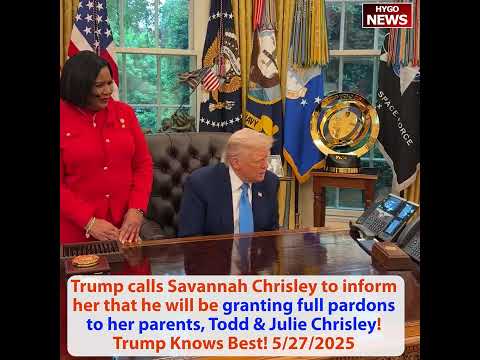
May 2025 delivered multiple converging stories. Consumer confidence surged to 98.0 from the Conference Board — “the best number since February of this year” and far above the expected 87+. Senator Elizabeth Warren attacked the OBBB: “These guys are actually out there making history by taking away from hardworking families, from people down on their luck, from seniors, from little babies, so that a handful of billionaires and corporate CEOs can get more giveaways from the government.” The administration rebutted with facts: 15% tax cut for those earning $30K-$80K, $11,600 wage increase per worker, $13,300 take-home pay increase per family, no tax on tips, no tax on overtime. Rep. Glenn Ivey (D-MD) spent Memorial Day weekend in El Salvador trying to visit MS-13 gang member Kilmar Abrego Garcia: “Let us get in there and have a chance to see him. They need to just cut the crap.” Separately, Trump called Savannah Chrisley: “Your parents are going to be free and clean, and I hope we can do it by tomorrow. Is that okay?”
Consumer Confidence Surprise
The May Conference Board consumer confidence report was a significant positive surprise.
The report: “Yes, and there are some surprises here. This is our May read on consumer confidence from the conference board.”
The expectation: “On the headline number, we’re expecting a number somewhere north of 87.”
The actual result: “Comes in strong, 98.0. That is the best number since February of this year.”
The 98.0 reading was significantly above expectations:
- Expected: ~87
- Actual: 98.0
- Difference: ~11 points above expectations
- Best since: February 2025
- Direction: Strong positive surprise
Consumer confidence was a key leading indicator of economic activity. When consumers felt confident about their financial situation and the economy’s direction, they tended to:
- Increase spending on discretionary goods
- Take on appropriate levels of debt for major purchases
- Invest in financial markets
- Start new businesses
- Move jobs or advance careers
Declining consumer confidence typically preceded recessions. Rising consumer confidence typically preceded expansions. The May 2025 surge suggested that American consumers were becoming more optimistic about the direction of the economy.
The timing was significant. Throughout much of 2024 and early 2025, various indicators had been mixed. Some metrics suggested economic stress (declining manufacturing employment, shrinking labor force participation). Other metrics suggested strength (strong stock market, low unemployment, rising wages).
The consumer confidence surge suggested that the positive forces were becoming dominant in consumer perception. Americans were beginning to feel that:
- Their personal financial situation was improving
- Job prospects were good
- Inflation was being controlled
- Economic direction was positive
Warren’s OBBB Attack
Senator Elizabeth Warren delivered her characteristic attack on the OBBB.
“These guys are actually out there making history by taking away from hardworking families, from people down on their luck, from seniors, from little babies,” Warren said.
She described the alleged beneficiaries: “So that a handful of billionaires and corporate CEOs can get more giveaways from the government.”
She summarized: “That is the Republican plan. Billionaires win. Everyone else loses.”
Warren’s framing was politically calculated. The emotional triggers were:
- “Hardworking families”: Sympathetic constituency
- “People down on their luck”: Vulnerable populations
- “Seniors”: Elderly voters
- “Little babies”: Children
- “Billionaires”: Unpopular wealthy elite
- “Corporate CEOs”: Disliked executive class
By positioning the OBBB as taking from sympathetic groups and giving to unsympathetic groups, Warren was maximizing emotional impact. Whether the characterization was factually accurate was a different question.
The Administration Rebuttal
The administration’s response provided specific numbers:
15% tax cut for $30K-$80K earners: Middle-income working Americans would see their federal tax burden reduced by 15% under OBBB’s provisions. This directly contradicted Warren’s claim that the bill was “taking away from hardworking families.”
$11,600 wage increase per worker: OBBB’s growth provisions (tax cuts for businesses, regulatory relief, energy policy) were projected to increase wages by this amount per worker over time. This directly benefited workers across the income spectrum.
$13,300 take-home pay increase per family: Beyond wage increases, the tax cuts meant families would keep more of their earnings, with specific provisions (child tax credit, no tax on tips, no tax on overtime) benefiting specific demographics.
No tax on tips: Service workers (restaurant staff, hairdressers, delivery workers) would not pay federal income tax on tip income. This specifically benefited lower-income workers in tip-dependent industries.
No tax on overtime: Workers who worked overtime hours would not pay federal tax on overtime earnings. This benefited hourly workers who put in extra hours to make ends meet.
The specific provisions benefited the very groups Warren claimed would be harmed:
- Tipped service workers making $30K-$80K: Benefited substantially
- Hourly workers earning overtime: Benefited substantially
- Middle-income families: Benefited substantially
- Seniors: Protected programs and received various benefits
- Parents of young children: Expanded child tax credit
The factual accuracy of these claims mattered for political debate. Warren was making emotional claims that were contradicted by the actual bill provisions. Whether voters would notice the contradiction depended on information environment.
Rep. Ivey in El Salvador
The Kilmar Abrego Garcia saga continued with Rep. Glenn Ivey’s (D-MD) pilgrimage.
“I’m the congressman that represents Tomar,” Ivey said.
He described his efforts: “I came all the way down from the United States after we contacted their ambassador, after we made formal requests to our ambassador to the El Salvadoran government. And we came here to visit him today.”
He expressed frustration: “Another tell us we got to go all the way back to El Salvador to San Salvador to get a permit. That’s ridiculous. We ought to have a chance to come in and visit.”
He demanded access: “They knew we were coming. They knew why we were coming. And they know we have the right to do this. So they need to just cut the crap.”
He stated his purpose: “Let us get in there and have a chance to see him and talk with him. We got his lawyer here. Got somebody from the unions here to talk with him. Let us in. Stop playing games. Let us have a chance to talk with him.”
The Abrego Garcia case had become a recurring issue. Relevant facts:
- Kilmar Abrego Garcia was a Salvadoran illegal immigrant
- An immigration judge had ordered him deported
- An immigration appellate court had upheld the deportation order
- He had documented MS-13 gang affiliations
- He had history of domestic violence
- He had been deported to El Salvador’s CECOT facility
Despite these facts, Democratic officials had embraced Abrego Garcia’s cause. Sen. Van Hollen had traveled to El Salvador and been photographed in what appeared to be cordial circumstances with him. Rep. Ivey was continuing the pattern by traveling to El Salvador himself.
The “cut the crap” language was politically provocative. Ivey was characterizing legitimate procedural requirements (permits to visit high-security facilities) as bureaucratic obstruction. The implication was that his status as a congressman should override normal security protocols.
The Salvadoran government’s position was defensible:
- CECOT was a high-security facility for dangerous criminals
- Visits required specific security permits
- American congressmen had no automatic visitation rights
- The process required proper authorization
- Political stunts could not override security requirements
Ivey’s frustration reflected the political reality that defending illegal immigrants convicted of criminal conduct was politically difficult. Van Hollen’s earlier trip had produced the infamous “margarita with a human trafficker” moment. Ivey was attempting a more hostile approach, possibly seeking to generate political content that emphasized Salvadoran obstruction rather than the underlying Abrego Garcia case.
Trump Calls Savannah Chrisley
Trump’s call to Savannah Chrisley was captured.
“That’s a terrible thing. It’s a terrible thing,” Trump said, referring to the situation of Savannah’s parents.
He announced the pardon intent: “But it’s a great thing because your parents are going to be free and clean and I hope we can do it by tomorrow. Is that okay?”
He committed: “We’ll try getting it done tomorrow. It’s wonderful.”
He sent regards: “So give them, I don’t know them, but give them my regards and wish them a good life.”
Savannah’s response: “Thank you so much Mr. President.”
She continued: “I was going to say thank you for bringing my parents back.”
Trump responded: “Yeah. Well, they were giving a pretty harsh treatment based on what I’m hearing. Pretty harsh treatment.”
Savannah: “Yes, sir.”
Trump asked about her brother: “Was your brother fighting also for this release, right?”
The conversation continued with brother Chase contributing.
The Chrisley Pardons Context
Todd and Julie Chrisley had been reality TV stars (“Chrisley Knows Best”) who had been convicted in federal court in 2022 on bank fraud and tax evasion charges:
The charges: Federal prosecutors alleged that the Chrisleys had misrepresented their financial position to obtain bank loans, then hidden income to evade taxes on their reality TV earnings.
The trial: They had been found guilty after trial. Todd was sentenced to 12 years in federal prison; Julie to 7 years.
Family separation: Their children (Savannah, Chase, and others) had been left without their parents’ presence.
Appeals: Various appeals had been filed but had not been successful in overturning convictions.
Political claims: The Chrisley family had publicly claimed they had been targeted for political reasons due to their conservative support.
Conservative advocacy: Alice Johnson (whose own pardon had been a major Trump first-term story) had advocated for the Chrisleys, along with other conservative figures.
Trump’s pardon would:
- Release Todd and Julie from federal prison
- Remove the federal convictions
- Restore their civil rights
- Allow them to return to public life
- Continue Trump’s pattern of pardoning politically-targeted conservatives
The pardon was controversial because:
- The Chrisleys had been convicted of actual federal crimes
- Tax evasion and bank fraud were not political speech issues
- Jury had found them guilty
- Appellate courts had upheld convictions
- Pardon would override the judicial process
Supporters argued:
- Sentences were excessive relative to the offenses
- Prosecution was politically motivated
- Family separation was disproportionate punishment
- Alice Johnson’s advocacy was legitimate
- Presidential pardon authority was broad
The “90% Trump” Exchange
The conversation took an interesting turn when Chase Chrisley mentioned the University of Alabama.
“Hey, I go to the University of Alabama and I don’t know where you speak,” Chase said. “And that’s the greatest presidential speech I’ve ever heard in my life.”
Trump was pleased: “Oh, that’s good. I was just there. I gave the commencement. What a great group of people. If you were in the audience, you have to be good. What a good school it was. I love Alabama. You know, I love Alabama.”
Chase added: “That’s perfect.”
Trump continued: “That school is really, that was very impressive when I was there.”
He gave self-appraisal: “Yeah, I think I did a good job. I got a lot of good comments on that one. So that’s good. I love doing that with great young people.”
Chase mentioned an incident: “I absolutely got kicked out of class.”
Someone clarified: “Yeah, he got kicked out of class for defending you. It was pretty interesting.”
Trump’s response was classic: “Gee, I’m surprised because the University of Alabama, if we took a vote, I’d get 90% of the vote.”
Chase agreed: “Exactly.”
Trump pushed: “Maybe more actually.”
The University of Alabama reference was to Trump’s May 2025 commencement speech at the school. Unlike many elite universities where Trump appearances generated protests, Alabama was a conservative-leaning institution in a deep red state. Trump’s commencement reception had been warm rather than hostile.
Trump’s “90% of the vote” claim was probably accurate for student sentiment. Alabama was among the most conservative states in the country, and University of Alabama student demographics reflected this.
Chase’s “kicked out of class for defending you” story suggested that even at conservative Alabama, some faculty members were hostile to Trump to the point of disciplining students for pro-Trump comments. This would be a significant First Amendment issue if true.
The Alice Johnson Connection
Trump mentioned Alice Johnson specifically.
“And Alice had a lot to do with this,” Trump said. “And just congratulate your parents.”
Alice Johnson had been:
- Serving a life sentence for a non-violent drug offense
- Pardoned by Trump in his first term after Kim Kardashian’s advocacy
- Become a prison reform advocate
- Continued advocacy for other inmates
- Served as unofficial adviser to Trump on pardon matters
Her involvement in the Chrisley case meant:
- She had personally vetted their case
- She believed their sentences were excessive
- She had advocated directly to Trump
- Her credibility with the administration had supported the pardon
The Alice Johnson advocacy pathway had become a significant feature of Trump’s pardon decisions. Rather than processing pardons through the Department of Justice Office of the Pardon Attorney (which was slow and politically aligned), Trump had often relied on trusted advocates like Johnson.
Key Takeaways
- Consumer confidence: 98.0 vs 87 expected — “best number since February.” Consumer optimism rising.
- Warren attacks OBBB: “Billionaires win. Everyone else loses.” Facts: 15% tax cut for $30K-$80K earners.
- Rep. Glenn Ivey in El Salvador for MS-13 member Kilmar Abrego Garcia: “Cut the crap. Let us get in.”
- Trump calls Savannah Chrisley: “Your parents are going to be free and clean. Hope we can do it by tomorrow.”
- Trump on Alabama speech: “90% of the vote” at University of Alabama.