 HYGO News
 Comer: telework created massive backlogs to veterans, taxes & Social Security, unable access records
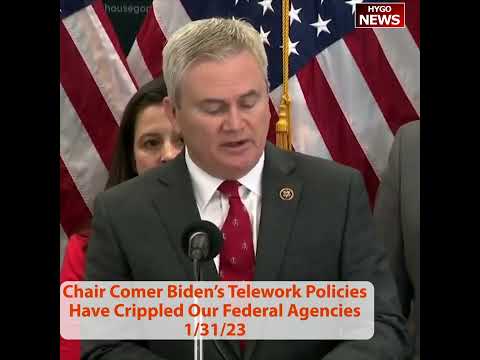
Comer: Biden Telework “Crippled” Federal Agencies — Massive Backlogs for Veterans, Taxpayers, Seniors
In February 2023, House Oversight Chairman James Comer delivered attack on Biden administration’s federal telework policies and their impact on citizen services. “This week we’re also sending a strong message to the Biden administration. It’s time to get back to work in person for the American people. Tomorrow the House will consider the show-up act. President Biden’s unnecessary expansion of telework has crippled the ability of agencies to get their jobs done and created massive backlogs. Seniors have experienced delays with the Social Security Administration. American taxpayers have struggled to get help from the IRS during tax filing season and veterans have been unable to access their records. The show-up act ensures our government shows up for the people we are here to serve because American workers across the country show up every day. Federal employees should follow their example.”
The Strong Message
The message:
Biden administration — Target.
“Time to get back” — Urgency.
In person work — Demanded.
American people — Served.
Legislative vehicle — SHOW UP Act.
The message framing was strong and direct. Biden administration was target. Urgency about in-person work. American people framing invoked. Legislative vehicle available.
”It’s Time to Get Back to Work in Person”
The demand:
Direct — Clear.
In-person — Required.
Work — For Americans.
Not remote — Preferred.
Action needed — Now.
The clear demand for in-person federal work positioned GOP as pro-citizen-service. Not anti-worker but pro-citizen. This framing appealed broadly.
”Unnecessary Expansion of Telework”
The characterization:
“Unnecessary” — Judgment.
Expansion — Biden’s.
Telework — Target.
Implied overreach — Administrative.
Political attack — Framed.
Calling telework expansion “unnecessary” was political judgment. COVID-era expansion had had public health rationale. Continued expansion post-COVID was different discussion.
”Crippled the Ability of Agencies”
Strong characterization:
“Crippled” — Strong word.
Agencies — Multiple.
Ability affected — Service delivery.
Jobs not done — Characterized.
Dramatic — Framing.
“Crippled” was strong characterization. Federal agencies were still operating but service delivery had varied. “Crippled” was political framing rather than factual description.
”Massive Backlogs”
The result:
Massive — Scale.
Backlogs — Documented partially.
Service failures — Result.
Voter impact — Real.
Political vulnerability — For Biden.
The massive backlogs characterization had some factual basis. Various agencies had backlogs. Whether specifically caused by telework was debatable, but backlogs existed.
Social Security Delays
SSA delays:
Senior impact — Direct.
Service delays — Documented.
Application processing — Slow.
Disability reviews — Backlogged.
Real problems — Across constituents.
Social Security delays had been documented and widely reported. Seniors experiencing delays was real problem. Whether telework was cause or one factor among many was debatable.
IRS Tax Filing Problems
IRS problems:
Tax filing season — Critical.
Help limited — Reported.
Phone lines — Overwhelmed.
Processing slow — Backlogs.
Taxpayer frustration — High.
IRS during tax filing seasons had been problematic for years. Help availability limited. Processing backlogs. Taxpayer frustration had been bipartisan concern.
Veterans Records Access
Veterans:
Records needed — For benefits.
Access limited — Claimed.
Service disruption — Real.
Political potency — Veterans.
Bipartisan support — For veterans.
Veterans access to records was particularly politically potent. Both parties supported veterans. Any veteran service failures had strong political resonance across party lines.
”The SHOW UP Act”
SHOW UP Act:
Legislative vehicle — GOP.
Return to office — Mandate.
Federal workers — Target.
Political messaging — Primary.
Substantive provisions — Included.
The SHOW UP Act was GOP legislative vehicle to mandate federal worker return to office. Primary purpose was political messaging but substantive provisions were included.
”Government Shows Up for the People”
The framing:
Government service — Framed.
People first — Emphasis.
Service mission — Invoked.
Reciprocal obligation — Argued.
Populist appeal — Strong.
The populist framing positioned government as fundamentally owing service to people. Reciprocal obligation from taxpayers. Populist appeal strong across partisan lines.
”American Workers Show Up Every Day”
The comparison:
American workers — General.
Show up daily — Reality for many.
Federal employees — Different.
Double standard — Implied.
Fairness argument — Made.
The comparison between general American workers and federal employees made fairness argument. Americans who showed up to their jobs might feel federal workers should too.
”Federal Employees Should Follow Their Example”
The conclusion:
Federal employees — Named.
Follow example — Of Americans.
Implicit criticism — Of current practice.
Example mindset — Used.
Accountability call — Direct.
The conclusion was direct accountability call. Federal employees should follow American workers’ example. Current practice was implicitly criticized. Accountability was demanded.
The Telework Reality
Reality:
COVID expansion — Dramatic.
Continued after — Variably.
Hybrid models — Common.
Service impact — Varied.
Policy continuing — Evolving.
The actual telework reality was complex. COVID had driven dramatic expansion. Continued variably after. Hybrid models became common. Service impact varied by agency and role. Policy continued evolving.
The Causal Question
Causation:
Multiple factors — Causing backlogs.
Telework — One factor.
Staffing — Also.
Technology — Factor.
Workload — Increased.
Whether telework was primary cause of agency backlogs was debatable. Multiple factors — staffing shortages, technology limitations, increased workload, pandemic effects — all contributed. Isolating telework impact was difficult.
The Agency Variations
Variations:
IRS — Major issues.
SSA — Some backlogs.
VA — Specific problems.
Others — Varied impacts.
Pattern unclear — Across agencies.
Different agencies had different experiences. IRS had major documented issues. SSA had some backlogs. VA had specific problems. Pattern across agencies was complex rather than uniform.
The Service Delivery Crisis
Service crisis:
Real — Partially.
Documented — Variously.
Multiple causes — Complex.
Voter impact — Felt.
Political vulnerability — Created.
There was real service delivery crisis across various federal agencies. Documented variously. Multiple causes contributing. Voters experienced impact. Political vulnerability created for administration.
The Resources Question
Resources:
Agency funding — Various.
Staffing levels — Often inadequate.
Technology investment — Limited.
Congressional role — Significant.
Multi-year issue — Not new.
Federal agency resources had been inadequate for years across multiple administrations. Staffing, technology, modernization had been underfunded. Congress bore some responsibility for situation it now criticized.
The Pandemic Legacy
Pandemic legacy:
Dramatic shifts — In operations.
Technology adoption — Accelerated.
Cultural change — Substantial.
Permanent shifts — Some.
Adjustment ongoing — Continuously.
Pandemic had created lasting shifts in federal operations. Technology adoption was accelerated. Cultural changes substantial. Some shifts appeared permanent. Continuous adjustment ongoing.
The Biden Administration Position
Administration position:
Return policies — Developing.
Agency flexibility — Maintained.
Service focus — Claimed.
Resource requests — Congress.
Defense of workforce — Mostly.
Biden administration was developing return-to-office policies with agency flexibility. Service focus claimed. Resource requests to Congress for modernization. Defense of federal workforce generally.
The Congressional Role
Congress:
Funding — Responsibility.
Oversight — Role.
Staffing — Insufficient authorization.
Modernization — Underfunded.
Complaints — After failure.
Congress had significant role in federal agency performance. Had underfunded staffing and modernization. Now complaining about backlogs that resulted. Responsibility was shared.
The Voter Experience
Voter experience:
Real delays — Experienced.
Frustration — Documented.
Cross-partisan — Concern.
Political material — Available.
Receptive audience — For messages.
Voters had experienced real service delays. Frustration was documented. Cross-partisan concern about government service. Political material available. Receptive audience for critique.
The Service vs. Flexibility Trade-off
Trade-off:
Citizen service — One priority.
Worker flexibility — Another.
Balance — Needed.
Both legitimate — Views.
Simple framing — Misleading.
The underlying trade-off between citizen service and worker flexibility was real but oversimplified in political rhetoric. Both were legitimate considerations. Simple “show up” framing obscured complexity.
The Political Effectiveness
Effectiveness:
Voter experience — Connected.
Simple message — Clear.
Populist appeal — Strong.
Coalition — Possible.
Media coverage — Ensured.
The political effectiveness of “show up” messaging was real. Connected with voter experiences. Simple clear message. Strong populist appeal. Bipartisan coalition possible on fraud/service issues.
The Legislative Prospects
Prospects:
House passage — Likely.
Senate consideration — Uncertain.
Biden veto — Threat.
Override — Unlikely.
Political messaging — Main value.
The SHOW UP Act’s prospects were limited for enactment but significant for political messaging. House passage likely. Senate uncertain. Biden veto threat. Override unlikely. Political messaging was main value.
The Private Sector Comparison
Private comparison:
Mixed return — Across companies.
Hybrid common — Widely.
Flexibility preferred — By workers.
Competitive pressure — Factor.
No single model — Dominant.
Private sector return to office had been varied. Hybrid was common. Worker flexibility valued. Competitive pressure for talent affected decisions. No single model dominated private sector.
The Federal Employee Perspective
Employee perspective:
Flexibility valued — Highly.
Productivity claimed — Remote.
Commute relief — Substantial.
Family benefits — Real.
Resistance — To return.
Federal employees valued flexibility highly. Many claimed higher productivity remote. Commute relief substantial. Family benefits real. Resistance to mandatory return was widespread.
The Management Challenges
Management:
Remote oversight — Difficult.
Collaboration — Changed.
Training — Complicated.
Evaluation — Different.
Adaptation required — By managers.
Managing remote federal workforces presented challenges. Oversight different. Collaboration changed. Training complicated. Evaluation required new approaches. Adaptation required by managers.
The Security Considerations
Security:
Classified work — Requires offices.
Sensitive data — Location concerns.
Technology security — Important.
Access controls — Varied.
Complex — For federal.
Federal work had security considerations private sector didn’t face. Classified work required offices. Sensitive data had location concerns. Technology security important. Complex considerations for return policies.
The Union Role
Unions:
Federal unions — Defended workers.
Collective bargaining — On policies.
Negotiations — Continuing.
Flexibility — Argued.
Management — Pushed.
Federal employee unions defended worker flexibility. Collective bargaining on telework policies. Negotiations continuing. Unions pushed management toward flexible arrangements.
The Productivity Studies
Studies:
Mixed results — Across types.
Role dependent — Clearly.
Remote productive — Often.
Collaboration — Sometimes harder.
Conclusions varied — By study.
Productivity studies on remote work had mixed results. Role dependent. Remote often productive for individual tasks. Collaboration sometimes harder. Conclusions varied by study methodology.
The Customer Service Specifics
Customer service:
Phone support — Can be remote.
In-person services — Cannot.
Processing work — Varies.
Response times — Affected.
Direct interaction — Office-based.
Different customer service types had different telework compatibility. Phone support could be remote. In-person services couldn’t. Processing work varied. Direct interaction required offices.
The IRS Specifically
IRS:
Paper returns — Office-required.
Phone support — Can be remote.
Processing — Mixed.
Backlog — Multi-year.
Technology — Outdated.
IRS had specific challenges. Paper returns required office work. Phone support could be remote. Processing mixed. Multi-year backlog. Outdated technology all contributed.
The VA Complexity
VA:
Medical services — In-person.
Benefits processing — Paper heavy.
Records access — Mixed.
Veterans concerns — Real.
Political potency — Strong.
VA had particular complexity. Medical services obviously in-person. Benefits processing paper-heavy. Records access mixed. Veterans concerns real. Political potency strong across parties.
The Political Strategy Overall
Strategy:
Multiple fronts — Federal workforce.
Service failures — Highlighted.
Coalition — Populist.
2024 setup — Continuing.
Biden vulnerability — Exploited.
The overall political strategy used multiple fronts on federal workforce issues. Service failures highlighted. Populist coalition possible. 2024 campaign setup continuing. Biden vulnerability exploited.
The Administrative Response Options
Response options:
Policy adjustments — Possible.
Data defense — Limited.
Counter messaging — Weak.
Strategic retreat — Partial.
Pattern continuing — So far.
Administration had limited good response options. Policy adjustments were possible. Data defense was limited. Counter messaging weak. Strategic retreat on some fronts. Pattern of defensive response continuing.
The Veteran Services Focus
Veterans:
Cross-partisan — Appeal.
Real problems — Documented.
Service failures — Impact.
Political weight — Heavy.
Attack vulnerability — Strong.
Veterans issues had cross-partisan appeal. Real documented problems. Service failures had real impact. Political weight heavy in any veteran-related critique. Attack vulnerability strong.
The Senior Citizen Focus
Seniors:
Social Security — Universal.
Electoral weight — Heavy.
Service expectations — Strong.
Attack effectiveness — High.
Voter impact — Direct.
Senior citizen issues around Social Security had electoral weight. Strong service expectations. Attack effectiveness high. Direct voter impact real. Political vulnerability for Biden administration.
The Tax Season Timing
Tax timing:
February — Season starting.
Relevant timing — For IRS attack.
Voter experience — Imminent.
Political messaging — Time-sensitive.
Coverage natural — During season.
The February timing was strategic. Tax season starting. IRS attacks relevant. Voter experience imminent through April. Political messaging time-sensitive. Coverage natural during season.
Key Takeaways
- House Oversight Chairman James Comer attacked Biden administration’s federal telework policies.
- Core message: “It’s time to get back to work in person for the American people.”
- Strong characterization: “President Biden’s unnecessary expansion of telework has crippled the ability of agencies to get their jobs done and created massive backlogs.”
- Specific impacts: “Seniors have experienced delays with the Social Security Administration. American taxpayers have struggled to get help from the IRS during tax filing season and veterans have been unable to access their records.”
- Populist framing: “American workers across the country show up every day. Federal employees should follow their example.”
- The SHOW UP Act was vehicle for mandating return: “Ensures our government shows up for the people we are here to serve.”
Transcript Highlights
The following is transcribed from the video audio (unverified — AI-generated from audio).
- This week we’re also sending a strong message to the Biden administration. It’s time to get back to work in person for the American people.
- Tomorrow the House will consider the show-up act.
- President Biden’s unnecessary expansion of telework has crippled the ability of agencies to get their jobs done and created massive backlogs.
- Seniors have experienced delays with the Social Security Administration. American taxpayers have struggled to get help from the IRS during tax filing season and veterans have been unable to access their records.
- The show-up act ensures our government shows up for the people we are here to serve because American workers across the country show up every day.
- Federal employees should follow their example.
Full transcript: 118 words transcribed via Whisper AI.