 HYGO News
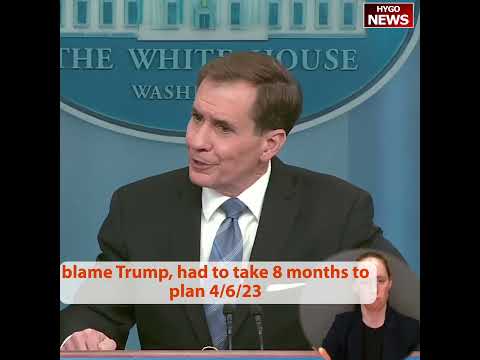
 Blame Trump, Had To Take 8 Months To Plan
By HYGO News
Published
· Updated
Blame Trump, Had To Take 8 Months To Plan
A reporter challenged NSC spokesman John Kirby during an April 2023 White House briefing about the Biden administration’s Afghanistan withdrawal review document, which began by placing the blame on the previous Trump administration. After Kirby defended Biden as dealing with conditions “he inherited,” the reporter pointed out Biden “had eight months to plan” the withdrawal himself — leaving Kirby to stammer that the administration “took some time to work through that” and couldn’t be blamed for the delay.
The Report’s Framing
- Page one blame: Page one Trump blame.
- “Severely constrained”: Biden options “severely constrained.”
- Predecessor conditions: Conditions created by predecessor.
- Document tone: Document’s defensive tone.
- Opening statement: Opening statement positioning.
The Responsibility Question
- Direct question: Direct responsibility question.
- Biden ownership: Biden ownership of decisions.
- Post-withdrawal events: Events after withdrawal.
- Consequential responsibility: Consequential responsibility.
- Policy ownership: Policy ownership.
Kirby’s Deflection
- Right decision framing: Right decision framing.
- Strategic benefits: Strategic benefits emphasis.
- Post-withdrawal military: Post-withdrawal military capabilities.
- Only one conclusion: Only one conclusion framing.
- Decision reinforcement: Decision reinforcement.
The Inherited Framework
- “Had to deal”: Kirby’s “had to deal” framing.
- Inheritance emphasis: Inheritance emphasis.
- Prior constraints: Prior administration constraints.
- Doha Agreement: Doha Agreement inheritance.
- Limited options: Limited options claim.
The 8-Month Factor
- Reporter’s pointed question: Reporter’s pointed question.
- Timeline reality: Timeline reality.
- January 2021 start: January 2021 inauguration.
- August 2021 execution: August 2021 execution.
- Planning duration: Planning duration.
Kirby’s Embarrassed Response
- “Took some time”: “Took some time” framing.
- Planning defense: Planning defense.
- “Not blamed”: “Not blamed” framing.
- Stumbling response: Stumbling response.
- Credibility challenge: Credibility challenge.
The Doha Agreement Context
- Trump signing: Trump administration signing.
- May 2021 deadline: May 2021 deadline.
- Taliban terms: Taliban terms acceptance.
- Prisoner releases: Prisoner releases.
- Framework constraints: Framework constraints.
The Post-Withdrawal Actions
- Afghanistan freeze: Afghan central bank freeze.
- Taliban recognition: Non-recognition position.
- Counterterrorism strikes: Counterterrorism strikes.
- Aid provision: Humanitarian aid provision.
- Regional diplomacy: Regional diplomacy.
The Inheritance vs. Planning Gap
- Inherited framework: Inherited framework argument.
- Planning time: Substantial planning time.
- Execution timing: Execution timing choice.
- Independent decisions: Independent decision points.
- Responsibility boundaries: Responsibility boundaries.
The Political Defense
- Trump blame: Default Trump blame.
- Defensive narrative: Defensive narrative.
- Accountability deflection: Accountability deflection.
- Historical framing: Historical framing.
- Present focus: Present focus emphasis.
The Strategic Argument
- Ending forever war: Ending “forever war” framing.
- Resource reallocation: Resource reallocation claim.
- Strategic priorities: Strategic priority shift.
- Future focus: Future focus.
- Counterterrorism capacity: Counterterrorism capacity.
The Tactical Reality
- Execution challenges: Execution challenges.
- Safety concerns: Safety concerns.
- Evacuee treatment: Evacuee treatment.
- Operational quality: Operational quality.
- Visual impacts: Visual impact of events.
The Biden Responsibility
- Commander-in-Chief: Commander-in-Chief role.
- Decision authority: Ultimate decision authority.
- Execution supervision: Execution supervision.
- Strategic direction: Strategic direction.
- Political responsibility: Political responsibility.
The Reporter’s Challenge
- Direct questioning: Direct question style.
- Timeline focus: Timeline focus.
- Responsibility demands: Responsibility demands.
- Specific details: Specific detail focus.
- Accountability pursuit: Accountability pursuit.
The Congressional Response
- Investigation continuation: Continued investigations.
- Bipartisan concerns: Bipartisan concerns.
- Document demands: Document demands.
- Witness interviews: Witness interview requirements.
- Testimony requirements: Testimony requirements.
The Public Perception
- Trump blame skepticism: Trump blame skepticism.
- Administrative responsibility: Administrative responsibility.
- Policy ownership: Policy ownership expectations.
- Time considerations: Time for preparation considerations.
- Accountability norms: Accountability norms.
The Historical Judgment
- Future assessment: Future historical assessment.
- Academic review: Academic review.
- Policy analysis: Policy analysis.
- Precedent implications: Precedent implications.
- Institutional learning: Institutional learning.
Key Takeaways
- Reporter challenged Kirby on Afghanistan report’s blame on Trump administration.
- Kirby defended Biden as dealing with conditions “he inherited.”
- Reporter pointed out Biden had eight months to plan the withdrawal.
- Kirby stammered that administration “took some time” and couldn’t be blamed.
- The exchange highlighted limitations of Trump blame strategy given Biden’s 8 months.
- Document’s opening blame set defensive tone rather than accountability focus.
Transcript Highlights
The following quotations are drawn from an AI-generated Whisper transcript of the briefing and should be considered unverified pending official transcript release.
- “Page after page, this places the blame on the previous administration.” — Reporter framing
- “Starting with page one, President Biden’s choices for how to execute a withdrawal from Afghanistan were severely constrained by conditions created by his predecessor.” — Reporter quoting report
- “He had to deal with it based on what he inherited. And yet he had eight months to plan, did he not?” — Reporter question
- “He took some time to work through that. I don’t think he could be blamed for that.” — John Kirby
- “Does the President take responsibility for the withdrawal and everything that happened thereafter?” — Reporter question
- “If you just look, Kristen, at what’s happened since we pulled out of Afghanistan and see what the United States military has been better able to do on behalf of the American people, I think there’s only one conclusion you can come to, in that it was the right decision.” — John Kirby
Full transcript: 174 words transcribed via Whisper AI.