 HYGO News
 Blame Politics Rising Prices, Build Back Better Ease Inflation, No Short Term Solution, Psaki Brief
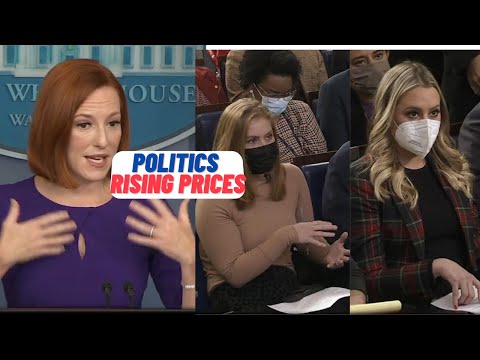
Psaki Says Inflation Talk Has Become a “Political Cudgel,” Insists Build Back Better Will “Ease Inflationary Pressure” — But Has No Short-Term Solution
On 5/3/2022, Psaki accused critics of using inflation as a “political cudgel” and insisted the Build Back Better bill would “ease inflationary pressure” — even as Americans headed into Thanksgiving with surging gas prices and no short-term relief in sight. When pressed on immediate actions, Psaki repeatedly said she had “nothing to preview.” A reporter exposed that 20-30% of middle-class households would actually pay more in taxes under the plan that Biden called a “middle-class tax cut.” Psaki also argued the “real risk is inaction” and cited 17 Nobel laureates for the sixth time.
”Political Cudgel”
A reporter noted that four in five Americans had experienced income loss from higher prices. Psaki’s response was to blame the discussion itself. “A lot of the talk about inflation — I’m not saying from you, but in general — has become a political cudgel, and it shouldn’t be,” Psaki said. “It’s impacting millions of Americans, no matter their political party.”
She then pivoted to the standard argument. “Everyone from the Federal Reserve to Wall Street agrees with our assessment that inflation is already expected to substantially decelerate next year, and the Build Back Better bill will not add to inflationary pressure and will ease inflationary pressure,” Psaki said.
No Short-Term Solutions
Reporters pressed repeatedly on immediate relief. “So far this week we haven’t seen any action from the administration on gas prices. Is the message to Americans headed into Thanksgiving that you think current prices are acceptable?” a reporter asked.
“We certainly don’t think that,” Psaki said. “We’re looking at every tool in our arsenal. But I don’t have anything to preview for you.”
Another reporter pushed harder. “It would be somewhat of an immediate action to mitigate these high gas prices as opposed to waiting for Build Back Better to be passed. Why has the President not done that? Does he plan to soon?”
“I don’t have anything to preview for you,” Psaki repeated.
A reporter challenged the premise. “The White House is making a lot of promises on inflation. But there are some concerns that a president doesn’t have a lot of power over inflation. You’re talking about FTC investigations — a common tactic that usually doesn’t turn up much. Tapping the SPR — short-term, not long-term. How do you actually deliver?”
Psaki pointed to childcare, housing, and healthcare costs in Build Back Better. “Those are big, big costs on people’s households,” she said.
”The Real Risk Is Inaction”
Psaki framed the choice starkly. “Our view is that the real risk here is inaction. If we don’t act on Build Back Better, we won’t be able to cut childcare costs. We won’t be able to make preschool free for many families, saving $8,600. We won’t be able to get ahead of skyrocketing housing costs,” Psaki said.
She cited the 17 Nobel laureates again, along with Larry Summers and Moody’s analyst Mark Zandi, as supporting the claim that Build Back Better would not add to inflation.
Middle Class Pays More
A reporter caught a critical detail in a Tax Policy Center analysis. “Under the Build Back Better plan, most millionaires would get a tax cut, mostly because of SALT. Separately, it finds that 20 to 30 percent of middle-class households are paying more in taxes,” the reporter said. “How does the White House frame this as a tax cut for the middle class, paid for by the rich, when this analysis shows the opposite?”
Psaki cherry-picked a different finding. “It also showed that the average family with children making $75,000 to $100,000 will get an income tax cut of about $2,230,” she said.
”Long Term” for Clean Energy — Again
When asked about Republican criticism of canceling Keystone and halting federal drilling leases, Psaki pivoted to the long game. “The rise in gas prices over the long term makes an even stronger case for doubling down our investment and our focus on clean energy options,” Psaki said.
”Great Resignation” Dismissed
The Bureau of Labor Statistics had reported 4.4 million people quitting their jobs in September alone, following 4.3 million in August. A reporter asked whether this trend was concerning.
“Many people across the country feel this is a good time to change jobs — to look for a more competitive job. Ultimately that’s a good thing,” Psaki said.
Key Takeaways
- Psaki accused inflation critics of using it as a “political cudgel” while offering no short-term solutions — “I don’t have anything to preview” was her repeated answer.
- She insisted Build Back Better would “ease inflationary pressure,” citing 17 Nobel laureates, while a Tax Policy Center analysis showed 20-30% of middle-class households would pay more in taxes.
- The “real risk is inaction” was the framing — arguing that not passing the stalled spending bill was worse than current inflation.
- Rising gas prices were characterized as “an even stronger case for doubling down on clean energy” rather than increasing domestic production.
- Nearly 9 million Americans quit their jobs in two months; Psaki called job-switching “ultimately a good thing.”
Transcript Highlights
The following is transcribed from the video audio (unverified — AI-generated from audio).
- A lot of the talk about inflation has become a political cudgel and it shouldn’t be.
- We expect inflation to substantially decelerate next year. Build Back Better will ease inflationary pressure.
- Is there anything the administration will do immediately? I don’t have anything to preview for you.
- 20 to 30 percent of middle-class households are paying more in taxes. How is this a middle-class tax cut?
- The rise in gas prices makes an even stronger case for doubling down on clean energy.
- The real risk here is inaction. If we don’t act on Build Back Better, we won’t be able to cut costs.
Full transcript: 1722 words transcribed via Whisper AI.