 HYGO News
 Big deal: zero $ payment but balance doesn't grow; cut in half loan payments; runaway education cost
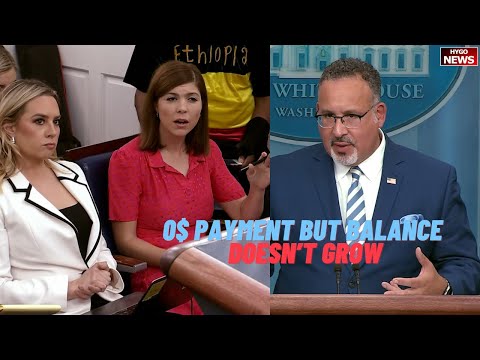
Big Deal: Zero Dollar Payment but Balance Doesn’t Grow, Cut in Half Loan Payments, and Runaway Education Cost
On June 30, 2023, hours after the Supreme Court struck down President Biden’s broad student loan forgiveness program, White House officials unveiled the administration’s alternative strategy: a revamped income-driven repayment plan called SAVE that would prevent loan balances from growing during periods of low or zero-dollar payments and cut undergraduate loan payments in half. The White House press briefing also featured a pointed exchange with reporters about whether either political party was doing anything meaningful to address the runaway cost of higher education.
New Income-Driven Repayment Plan Prevents Balance Growth
Deputy Director of the National Economic Council Bharat Ramamurti explained one of the key reforms embedded in the new SAVE plan. He addressed a longstanding concern among borrowers that making smaller income-based payments caused their loan balances to balloon over time due to accumulating interest.
Ramamurti stated: “By the way, one concern that people have had about the income-based repayment program in the past is that if you were making these smaller payments, your balance would keep growing over time. One of the reforms we’re putting in place is making sure that that balance doesn’t grow over time, even as you are making potentially a zero-dollar payment each month. It is a big deal for both current borrowers and for all the future borrowers who are out there.”
Ramamurti was careful to draw a distinction between this reform and the broader debt cancellation program the Supreme Court had just invalidated. “Now, I want to be clear: That’s not a substitute for debt relief, but it is a huge benefit for borrowers that is going to be available coming this summer. And we encourage people to sign up for it,” he said.
The zero-balance-growth provision addressed one of the most frustrating aspects of the federal student loan system. Under previous income-driven repayment plans, borrowers who qualified for reduced payments often watched their loan balances increase because their monthly payments did not cover the accruing interest. This phenomenon, known as negative amortization, left many borrowers owing more than they originally borrowed even after years of payments.
Education Secretary Announces Undergraduate Payments Cut in Half
Secretary of Education Miguel Cardona emphasized the practical impact of the SAVE plan on undergraduate borrowers. He framed the reform as directly addressing the financial barrier that prevented many Americans from pursuing higher education in the first place.
Cardona said: “I want to make it very clear to the folks who are paying attention to this that maybe don’t know the details of it: The income-driven repayment plan that we talked about today, SAVE — we’re calling it ‘SAVE’ — will cut in half loan payments for undergraduate students. So think about the students that said, ‘I can’t go to college because I can’t afford the 600-, 700-dollar…’ — those are going to be cut in half.”
The announcement positioned the SAVE plan as the administration’s immediate response to the Supreme Court ruling, offering tangible relief through regulatory channels rather than the sweeping executive action the Court had rejected.
Reporter Challenges Both Parties on Runaway Education Costs
In one of the sharpest exchanges of the briefing, a reporter pressed Ramamurti on whether either political party was genuinely addressing the underlying problem of skyrocketing higher education costs. The reporter argued that the student loan debate was merely treating symptoms while the disease of runaway tuition went unchecked.
The reporter asked: “Really, neither side is doing anything about the runaway cost of higher education. Nobody is really doing anything. I mean, this relief doesn’t do anything for future students. So, is either party really any different? Are you — are Democrats not just, essentially, as dishonest in their approach as they accuse the other side of being in terms of the impact that they would have on students going forward? Both parties are really beholden to the Wall Street beneficiaries of these runaway interest rates and these runaway debts. What are Democrats willing to do about the runaway cost of education?”
The reporter added pointedly: “That really is at the heart of the matter.”
Ramamurti acknowledged the concern, saying: “No, I think it’s a real problem. That’s one of the reasons why when the President announced his plan last August, when he announced his debt relief plan, there was another key provision in there, which was a set of policy ideas about holding colleges accountable for raising prices.”
Administration Defends Accountability Efforts Still in Progress
A follow-up question pressed on whether the administration blamed universities for the affordability crisis and whether proposed accountability rules were actually working.
Ramamurti responded: “Well, the rule is still in progress. It’s going to be proposed and then ultimately put in place. But I think when it is in place, it’s definitely going to go after the worst performers in this space, the colleges and universities that are charging the most and delivering the worst results.”
The admission that the accountability rule was still being developed underscored the gap between the administration’s ambitions on education affordability and its actual policy achievements. While the SAVE plan offered immediate relief on loan payments, the broader structural reforms to rein in tuition costs remained works in progress.
White House Vows to Continue Fighting After Supreme Court Setback
A reporter asked about the administration’s level of surprise at the Supreme Court ruling, noting that White House officials had publicly expressed confidence in their legal position while simultaneously preparing contingency plans.
Secretary Cardona responded: “I want to remind folks is we got a decision from SCOTUS. I thought — I think it’s the wrong decision. Forty-three million people were waiting for some relief. We recognize that this decision today, we had to read it very carefully to make sure we know which path we’re going to go forward. But the bottom line is: The President is going to continue to fight; we’re going to continue to fight.”
The defiant tone reflected the administration’s determination to pursue student loan relief through alternative legal and regulatory avenues despite the Supreme Court loss. The SAVE plan represented the first concrete step in that continued effort.
Key Takeaways
- The Biden administration unveiled the SAVE income-driven repayment plan on June 30, 2023, the same day the Supreme Court struck down the broader student loan forgiveness program, as an alternative path to borrower relief.
- A key reform in the SAVE plan prevents loan balances from growing during periods of reduced or zero-dollar payments, addressing the longstanding problem of negative amortization in income-driven repayment.
- Education Secretary Cardona announced that the SAVE plan would cut undergraduate loan payments in half, directly targeting the financial barrier that discourages many students from pursuing higher education.
- A reporter challenged both parties for failing to address the root cause of the student debt crisis — runaway higher education costs — with the administration acknowledging that proposed college accountability rules were still in progress.
- Despite the Supreme Court setback, the White House vowed to continue pursuing student loan relief through regulatory and alternative legal channels.