 HYGO News
 Biden's Lesson From Obama's Compromise: "President Biden Should Listen To Vice President Biden"
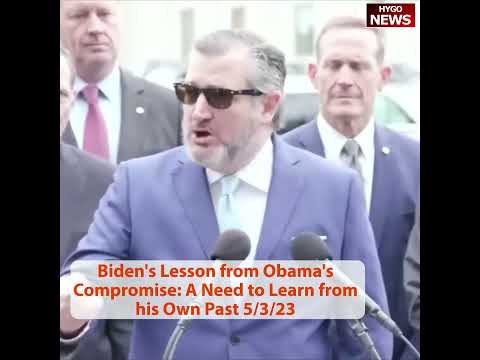
Biden’s Lesson From Obama’s Compromise: “President Biden Should Listen To Vice President Biden”
A senator gave President Biden a sharply Republican-flavored history lesson on the May 2023 debt ceiling standoff. Biden, the senator argued, should “listen to Vice President Joe Biden” — the same Joe Biden who in 2011 negotiated the Budget Control Act with House Republicans, designed to cut $2.3 trillion in federal spending. The senator framed the 2011 deal as “the most significant federal spending reform in modern times” and credited it to Barack Obama having “blinked” under Republican pressure on the ceiling. The exchange operated as both political messaging and historical positioning, designed to nudge Biden toward a similar 2023 compromise.
The Vice President Biden Reference
- 2011 negotiator: VP Joe Biden was a principal negotiator of the 2011 Budget Control Act.
- Bipartisan history: The 2011 deal followed extended House Republican pressure on the debt ceiling.
- McConnell partnership: VP Biden’s 2011 negotiating partner was Senate Minority Leader Mitch McConnell.
- Editorial value: The reference invokes Biden’s own track record on debt ceiling deals.
- Hearing record: The reference is now in the formal record.
The Listen To Vice President Biden Frame
- Self-referential framing: “President Joe Biden should listen to Vice President Joe Biden.”
- Editorial choice: The framing personalizes the policy advice.
- Rhetorical force: The framing implies a self-contradiction in Biden’s posture.
- Public-facing posture: The framing is built for clip distribution.
- Hearing record: The framing is now in the formal record.
The 2011 Debt Ceiling Standoff
- House Republican majority: Republicans had taken the House in the 2010 midterms.
- Standoff: The 2011 standoff lasted into the late summer.
- S&P downgrade: S&P downgraded U.S. credit in August 2011 after the standoff.
- Editorial reach: The 2011 episode remains the most consequential debt ceiling standoff.
- Hearing record: The 2011 context is now in the formal record.
The Budget Control Act
- August 2011: The Budget Control Act passed in August 2011.
- $2.3 trillion target: The Act targeted $2.3 trillion in spending cuts over a decade.
- Sequester mechanism: The Act included a sequester mechanism for cuts.
- Discretionary caps: The Act imposed multi-year discretionary caps.
- Editorial reach: The Act remains the most significant fiscal reform in modern times.
The “Most Significant” Framing
- Senator framing: The senator framed the 2011 deal as “the most significant federal spending reform in modern times.”
- Editorial choice: The framing positions Republican leverage as effective.
- Hearing record: The framing is now in the formal record.
- Long arc: The framing remains central to Republican fiscal messaging.
- Long arc: The framing operates as both history and political playbook.
The “Obama Blinked” Framing
- Senator framing: The senator framed the 2011 outcome as “Barack Obama blinked.”
- Editorial choice: The framing positions Republican pressure as decisive.
- Historical accuracy: The framing reflects standard Republican memory of the 2011 episode.
- Democratic memory: Democratic memory frames the 2011 deal differently.
- Hearing record: The framing is now in the formal record.
The Sequester Mechanism
- Trigger function: The sequester triggered automatic cuts after super-committee failure.
- Bipartisan cuts: The sequester applied to defense and non-defense discretionary spending.
- Long arc: The sequester shaped budget politics for the next decade.
- Editorial reach: The sequester became a major political constraint.
- Hearing record: The sequester context sits in the formal record.
The Super-Committee
- Joint Select Committee: The 2011 deal created a Joint Select Committee on Deficit Reduction.
- Failed mandate: The committee failed to reach the required deficit reduction.
- Sequester trigger: Failure triggered the sequester mechanism.
- Editorial reach: The super-committee failure shaped subsequent fiscal politics.
- Hearing record: The super-committee context sits in the formal record.
The S&P Downgrade
- August 2011: S&P downgraded U.S. credit from AAA to AA+ in August 2011.
- Editorial reach: The downgrade was a watershed in U.S. credit politics.
- 2023 echo: The 2023 standoff occurred against this historical backdrop.
- Hearing record: The 2011 downgrade shapes the 2023 framing.
- Long arc: Fitch would also downgrade in August 2023 after the 2023 deal.
The Debt Ceiling Lever
- Procedural lever: The debt ceiling vote functions as a procedural lever for fiscal negotiation.
- Norm question: Whether using the lever for negotiation is appropriate is contested.
- 2011 precedent: The 2011 deal established the modern playbook for ceiling-driven negotiations.
- Editorial reach: The lever’s strategic use shapes fiscal politics.
- Hearing record: The lever context is now in the formal record.
The McConnell Reference
- 2011 partnership: VP Biden and Senator McConnell were the principal 2011 negotiators.
- Editorial reach: The Biden-McConnell partnership shaped the 2011 deal.
- 2023 absence: McConnell was less active in 2023 negotiations.
- Hearing record: The 2011 partnership context sits in the formal record.
- Long arc: The partnership shaped the modern playbook.
The 2023 Debt Ceiling Standoff
- X-date approach: Treasury had warned of an X-date as early as June 1.
- Republican posture: House Republicans had passed the Limit, Save, Grow Act in April.
- White House posture: The White House initially refused to negotiate spending alongside the ceiling.
- Eventual deal: A deal eventually included two-year discretionary caps.
- Editorial reach: The standoff was the dominant economic story of spring 2023.
The 2023 Outcome
- Fiscal Responsibility Act: The June 2023 deal was the Fiscal Responsibility Act.
- Two-year caps: The deal imposed two-year discretionary spending caps.
- Work requirements: The deal included expanded SNAP work requirements.
- Energy permitting: The deal included some energy permitting reforms.
- Editorial reach: The deal averted default and stabilized the ceiling through 2025.
The 2011 vs. 2023 Comparison
- Cap scope: 2011 caps were broader and longer than 2023 caps.
- Editorial reach: The comparison favors the senator’s framing of 2011 as more consequential.
- Hearing record: The comparison sits in the formal record.
- Long arc: The 2023 deal extended the 2011 playbook in a more limited form.
- Long arc: The 2011 deal remains the more consequential fiscal achievement.
The McCarthy Posture
- Speaker role: Kevin McCarthy led House Republican negotiations in 2023.
- Editorial reach: McCarthy’s role mirrored Boehner’s 2011 role.
- Hearing record: The McCarthy role sits in the formal record.
- Long arc: The Speaker role shapes the negotiation pace.
- Long arc: McCarthy was later removed as Speaker in October 2023.
The Republican Strategy
- Historical positioning: Republicans use 2011 history to position 2023 demands.
- Self-reference framing: The framing puts Biden in dialogue with his own record.
- Public-facing posture: The strategy was designed for clip distribution.
- Long arc: The strategy remained central to Republican messaging.
- Hearing impact: The exchange placed the historical positioning on the formal record.
The Democratic Response
- Default risk reality: Democrats argued default risk was real and unavoidable without ceiling action.
- Constitutional debate: Some Democrats argued for 14th Amendment-based unilateral action.
- Spending negotiations: Democrats accepted spending caps as part of the eventual deal.
- Editorial reach: The Democratic framing centered on default risk being categorical.
- Hearing posture: Democratic senators offered alternative framings during the same hearings.
The 14th Amendment Question
- Constitutional argument: Some scholars argued the 14th Amendment prohibits debt default.
- Biden response: Biden expressed openness but did not act on this argument.
- Operational question: Whether Treasury could act on this basis was contested.
- Editorial reach: The argument remained academic through the standoff.
- Long arc: The argument may resurface in future debt ceiling debates.
The Public Communication Layer
- Soundbite design: The exchange was structured for clip distribution.
- Documentary value: The hearing record now contains a clean Republican historical framing.
- Media uptake: The clip moved on conservative media as a Republican fiscal messaging argument.
- Audience targeting: The senator’s style is built for retail political distribution.
- Long arc: The framing remained central to Republican messaging through 2024.
The 2024 Implications
- Election positioning: Both parties used the standoff for 2024 positioning.
- Fiscal politics: Fiscal politics shape Senate and presidential races.
- Long arc: The episode will shape debt ceiling politics through 2024 and beyond.
- Hearing legacy: The hearing record will be cited in future debt ceiling debates.
- Long arc: The standoff outcome stabilized the ceiling through 2025.
Key Takeaways
- A senator argued Biden should “listen to Vice President Biden” — his 2011 self.
- The 2011 Budget Control Act was framed as the model for 2023 negotiations.
- The senator credited the 2011 outcome to “Barack Obama blinked” under Republican pressure.
- The framing operates as both political messaging and historical positioning.
- The 2011 Act targeted $2.3 trillion in spending cuts over a decade.
- The exchange placed the historical positioning on the formal record.
Transcript Highlights
The following quotations are drawn from an AI-generated Whisper transcript of the floor speech and should be considered unverified pending official transcript release.
- “President Joe Biden should listen to Vice President Joe Biden” — senator
- “In 2011, when Republicans in the House stood strong on the debt ceiling” — senator
- “Republicans stood strong and said we will not raise the debt ceiling without serious fiscal reform” — senator
- “Vice President Joe Biden came and negotiated a deal, a deal called the Budget Control Act” — senator
- “It was the most significant federal spending reform in modern times” — senator
- “That happened because Barack Obama blinked” — senator
Full transcript: 130 words transcribed via Whisper AI.