 HYGO News
 Biden veto? Maybe the calculator's broken at White House, gas prices not lowered, increased 50%
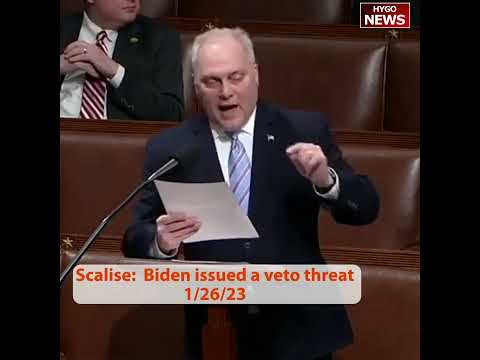
Scalise: Biden’s Own Veto Statement Claims SPR Lowered Gas — “Maybe the Calculator Is Broken at the White House”
In late January 2023, House Majority Leader Steve Scalise used Biden’s own veto threat language against him in critique of SPR policy. “The president actually issued a veto threat on this bill. Now, a veto threat should be a rare exercise that you reserve for policy that might hurt the country. Well, let’s read why the president issued the veto threat. In his veto threat, he said, the administration’s use of the Strategic Petroleum Reserve has been essential to protecting our energy security and to lowering gas prices for Americans. I hope I’m not the one that breaks this news to the White House. But Mr. President, your policies have not lowered gas prices for Americans,” Scalise said. The key phrase: “Maybe the calculator is broken at the White House, but we did the math. Let’s do some fact checking. Since Joe Biden took the oath of office, gas prices have not lowered. They’ve increased 50%.”
The Veto Threat Structure
Veto threat context:
Rare tool — Claim made.
Significant policy — Required.
Administrative commitment — Formal.
Political statement — Also.
Congressional relationship — Shaped.
Presidential veto threats were significant administrative communications. Scalise was right that they should be used carefully. Overuse could diminish their impact.
”Should Be a Rare Exercise”
Scalise’s framing. “A veto threat should be a rare exercise that you reserve for policy that might hurt the country,” Scalise said.
The framing:
Rare — Traditional norm.
Significant harm — Threshold.
Serious deliberation — Expected.
Weight of exercise — Implied.
Overuse criticism — Possible.
The framing set standard against which to measure Biden’s veto threat. If threshold was “might hurt country,” SPR bill should meet that standard. Scalise’s argument was it didn’t.
”Read Why the President Issued”
The evidence approach. “Well, let’s read why the president issued the veto threat,” Scalise said.
The approach:
Biden’s own words — Used.
Direct quotation — Available.
Against himself — Used.
Unassailable source — Administration’s statement.
Strong technique — Politically.
Using opponent’s own words against them was classic effective political technique. Biden’s formal veto statement was authoritative administrative document.
The Biden Veto Statement
Biden statement quoted. “The administration’s use of the Strategic Petroleum Reserve has been essential to protecting our energy security and to lowering gas prices for Americans,” Scalise quoted.
The claims:
Essential — Characterization.
Energy security — Protected.
Gas prices lowered — Claimed.
For Americans — Beneficiaries.
Positive framing — Throughout.
The Biden statement had administrative claims Scalise was about to challenge. Each claim had been administrative messaging line for months.
”I Hope I’m Not the One That Breaks This News”
Rhetorical device. “I hope I’m not the one that breaks this news to the White House,” Scalise said.
The device:
Mock concern — Rhetorical.
Setting up attack — Humorously.
Audience engagement — Effective.
Memorable phrasing — Likely.
Attack delivered — Humorously.
The rhetorical setup was effective political communication. Scalise was positioning to deliver devastating fact check while appearing reluctant to do so.
”Your Policies Have Not Lowered Gas Prices”
The direct accusation. “But Mr. President, your policies have not lowered gas prices for Americans,” Scalise said.
The accusation:
Direct address — To President.
Flat denial — Of claim.
Americans affected — Cited.
Policy failure — Characterized.
Evidence coming — Signaled.
The direct rebuttal of Biden’s central claim was about to be supported with evidence. This was standard prosecutorial structure: state counter-claim, then provide evidence.
”Maybe the Calculator Is Broken”
The key phrase. “Maybe the calculator is broken at the White House, but we did the math,” Scalise said.
The phrase:
Mockery — Of administration.
“Calculator broken” — Memorable.
“We did math” — Contrast.
Basic competence — Questioned.
Viral potential — High.
The “calculator broken” phrase was designed for viral sharing. Simple, memorable, dismissive of administration competence. Political messaging at its sharpest.
The Repetition from Earlier
Repeated phrase:
Used before — By Scalise.
Consistency — Across speeches.
Message discipline — High.
Memorable — Intentionally.
Spreading — Through repetition.
Scalise used “calculator broken at White House” in multiple speeches. This messaging discipline ensured the phrase spread widely through repeated use across contexts.
”Let’s Do Some Fact Checking”
Fact-check framing:
Objectivity suggested — By framing.
Independent verification — Implied.
Data authority — Invoked.
Not partisan opinion — Claimed.
Reader empowered — To verify.
The “fact checking” framing gave critique additional credibility. It suggested objective analysis rather than partisan attack. Even if motivated politically, the specific claims could be verified.
”Gas Prices Have Not Lowered. They’ve Increased 50%”
The specific data. “Since Joe Biden took the oath of office, gas prices have not lowered. They’ve increased 50%,” Scalise said.
The specific:
50% increase — Specific number.
Since inauguration — Timeframe.
“Not lowered” — Direct negation.
Verifiable — Claim.
Strong attack — Evidence-based.
The 50% figure was roughly accurate. Gas prices on Inauguration Day 2021 had been around $2.40 national average. By late January 2023, they were around $3.40+ depending on area. Roughly 40-50% higher.
The Time Frame Issue
Time frame:
Scalise — Since inauguration.
Biden — From peak.
Both accurate — Different comparisons.
Selective — Both.
Political framing — Critical.
Each side selected different time frames for favorable comparison. Scalise used full Biden term. Biden used June peak. Both were accurate but misleading through selection.
The Political Context Strategy
Strategy:
Maximum damage — Sought.
Biden’s own words — Used.
Specific data — Deployed.
Rhetoric powerful — Delivered.
Memorable phrases — Created.
Scalise’s strategy was maximum political damage to administration. Using Biden’s own words against him. Deploying specific verifiable data. Creating memorable phrases. All executed effectively.
”He Might Reverse the Veto Threat”
Hopeful suggestion. “Maybe the president, when he realizes that gas prices have gone up 50%, they’ve not lowered for families, he might reverse the veto threat,” Scalise said.
The suggestion:
Hopeful framing — Disingenuous.
Possible reversal — Implied.
Reality acknowledgment — Awaited.
Mockery continued — Subtle.
Probability low — Reality.
Suggesting Biden might reverse veto was unrealistic but served political purpose of highlighting position. If Biden didn’t reverse, it suggested he was stubbornly wrong.
The Rhetorical Effectiveness
Rhetorical effectiveness:
Data-based — Critique.
Self-referential — Biden’s words.
Memorable — Phrases.
Viral — Potential.
Coverage-generating — Material.
Scalise’s speech was effective rhetoric by multiple measures. It used data well. It turned opponent’s words against them. It created memorable content. It was likely to generate coverage.
The Administrative Response
Administrative response options:
Dispute data — Difficult.
Context provide — Peak vs. baseline.
Other factors — Cite.
Continue assertions — Despite data.
Attack Scalise — Deflect.
Administration had limited good responses. The data was accurate. Context about peak vs. baseline was legitimate but weak. Other factors existed but didn’t excuse full term increase.
The Gas Price History
Gas price history:
January 2021 — $2.40ish.
Summer 2022 peak — $5.01.
January 2023 — ~$3.40.
Trend up — From January 2023.
Volatility — Throughout.
The actual gas price history was more complex than either side admitted. Prices had indeed increased since Biden took office. They had also come down from peak. Current trend was upward again.
The SPR Impact Debate
SPR impact:
Some effect — Probably.
Amount debated — Significantly.
Academic studies — Varied.
Peak reduction — Claimed.
Overall impact — Unclear.
Whether SPR drawdown meaningfully reduced gas prices was actively debated among economists. Some studies showed modest impact. Others showed minimal. Administration’s claims of significant impact were contested.
The Market Factors
Market factors:
Russia war — Major impact.
OPEC+ decisions — Significant.
Refining capacity — Limited.
Demand recovery — Post-COVID.
Global dynamics — Complex.
Gas prices reflected complex global market dynamics beyond SPR policy. Russia’s war, OPEC decisions, refining capacity, demand patterns all mattered more than domestic reserve policy.
The Political Calculation
Political calculation:
Biden claim credit — When prices fall.
Avoid blame — When prices rise.
Strategic positioning — Continuous.
Scalise exploit — Contradictions.
Political game — Standard.
Biden’s administration claimed credit for falling prices while avoiding blame for high prices. Scalise was exploiting this by pointing to full Biden term increases. Political game both sides played.
The 2024 Campaign Setup
2024 setup:
Gas prices — Major issue.
Biden vulnerability — Real.
GOP attacks — Developing.
Narrative battle — Ongoing.
Voter impact — Real.
Gas prices would be major 2024 campaign issue. Current Republican attacks were establishing narrative for campaign. Scalise’s fact-checks would be referenced.
The Fact-Checking Value
Fact-checking value:
Accountability — Served.
Voter information — Provided.
Truth important — Regardless of party.
Substantive critique — Valuable.
Media pickup — Likely.
Even partisan fact-checking served accountability function. Voters learned something about actual gas price trajectory. Media could amplify substantive critiques. Political attacks could be truthful.
The Veto Politics
Veto politics:
First Biden veto — Upcoming possibly.
Historical rarity — Biden hadn’t vetoed.
Political significance — Of first.
SPR bill — Would be target.
Precedent — Setting.
Biden had not yet vetoed any bill as president. The SPR bill potentially would be first veto. This made political symbolism significant beyond policy.
The Strategy Preservation
Strategy preservation:
Veto threatened — Strongly.
Position maintained — Publicly.
Political cost — Risked.
Message discipline — Valued.
Consistency — Over adjustment.
Administration preserved veto threat despite political cost of doing so. The message consistency was valued over short-term flexibility. This was strategic choice.
The Messaging War
Messaging war:
Both sides — Framing selectively.
Data weaponized — By both.
Voter confusion — Likely.
Who wins — Perception battle.
Cumulative effect — Over time.
The messaging war had both sides selecting data favorably. Voters received conflicting claims. Perception battle was about which framing resonated. Cumulative effect would shape 2024.
The Scalise Stature
Scalise stature:
House Majority Leader — Second ranking.
Communication ability — Strong.
Floor speeches — Effective.
Political rising — Still.
Messaging platform — Major.
Scalise’s role gave him major platform. His effective communication used the platform well. His political future would be shaped by such performances.
The Press Coverage
Press coverage:
Conservative media — Amplifying.
Mainstream media — Mixed coverage.
Social media — Spreading clips.
Administration response — Minimal.
Story duration — Continuing.
The coverage patterns favored Scalise’s critique. Conservative media amplified eagerly. Mainstream covered respectfully. Social media spread memorable phrases. Administration couldn’t effectively counter.
The Cumulative Effect
Cumulative effect:
Many attacks — Over time.
Message consistency — GOP.
Public perception — Shifting.
Biden vulnerability — Growing.
Campaign ammunition — Built.
Each individual attack added to cumulative political effect. GOP message consistency built narrative over time. Biden’s political vulnerability on economic issues was growing through such sustained attacks.
The Specific Data Weight
Specific data weight:
50% increase — Claim.
Verifiable — Yes.
Powerful — Statistic.
Memorable — Yes.
Recurring — In attacks.
The 50% gas price increase figure would be recurring attack statistic. Its specificity and verifiability made it powerful. GOP would use it throughout 2024 campaign period.
The Administrative Choice
Administrative choice:
Veto threat — Maintained.
Counter-message — Attempted.
Political cost — Accepted.
Strategic consistency — Valued.
Flexibility — Limited.
Administration chose strategic consistency over political flexibility. Veto threat was maintained despite providing Scalise rhetorical ammunition. This was conscious political choice.
The Long-Term Assessment
Long-term assessment:
Short-term cost — Political.
Long-term strategy — Unclear.
Comprehensive defense — Needed eventually.
Adjustment — Possible.
Current pattern — Unsustainable.
The current administrative approach to energy policy messaging faced increasing strain. Short-term political costs were accumulating. Eventually adjustment would likely be needed.
Key Takeaways
- House Majority Leader Steve Scalise used Biden’s own veto threat language against him.
- Biden’s veto statement claimed SPR use was “essential to protecting our energy security and to lowering gas prices for Americans.”
- Scalise’s devastating rejoinder: “Maybe the calculator is broken at the White House, but we did the math.”
- Specific data: “Since Joe Biden took the oath of office, gas prices have not lowered. They’ve increased 50%.”
- Scalise offered rhetorical exit for Biden: “He might reverse the veto threat” after seeing data.
- The speech illustrated effective political communication combining opponent’s own words with specific verifiable data and memorable phrasing.
Transcript Highlights
The following is transcribed from the video audio (unverified — AI-generated from audio).
- The president actually issued a veto threat on this bill. Now, a veto threat should be a rare exercise that you reserve for policy that might hurt the country.
- In his veto threat, he said, the administration’s use of the Strategic Petroleum Reserve has been essential to protecting our energy security and to lowering gas prices for Americans.
- I hope I’m not the one that breaks this news to the White House. But Mr. President, your policies have not lowered gas prices for Americans.
- Maybe the calculator is broken at the White House, but we did the math. Let’s do some fact checking.
- Since Joe Biden took the oath of office, gas prices have not lowered. They’ve increased 50%.
- Maybe the president, when he realizes that gas prices have gone up 50%, they’ve not lowered for families, he might reverse the veto threat.
Full transcript: 171 words transcribed via Whisper AI.