 HYGO News
 Biden To Fund Critical Mining Projects In Congo While Denying Domestic Permits
Biden To Fund Critical Mining Projects In Congo While Denying Domestic Permits
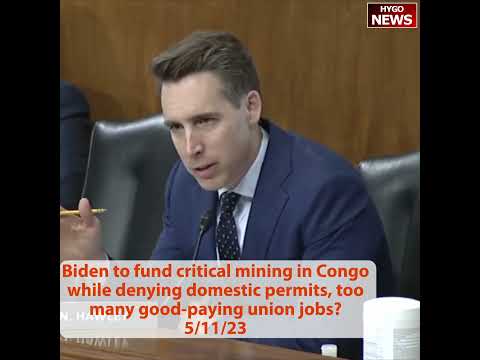
A senator continued an extended exchange with a critical minerals witness during a May 2023 hearing by laying down a sharp policy contradiction: that the Biden administration had signed an agreement “just last month to fund critical mining projects in the Congo while at the same time they are denying permits for domestic mining here in this country.” The senator referenced a recent conversation with the Secretary of the Interior on the issue. He then asked the witness a leading rhetorical question: do we have “too many good paying union jobs…too many good paying blue collar jobs?” The witness’s response: “Right. The federal Reserve’s tool is…” The exchange dramatized the Republican critique of the administration’s mining permit policy contradiction.
The Congo Funding Agreement
- Senator framing: The administration signed a critical minerals funding agreement for the Congo.
- “Just last month”: The senator cited recent timing.
- Editorial reach: The agreement became central to Republican messaging.
- Hearing record: The agreement is now in the formal record.
- Long arc: The agreement shaped subsequent industrial policy debates.
The Domestic Permits Denial
- Senator framing: Domestic mining permits are being denied.
- Editorial reach: The framing dramatized the contradiction.
- Hearing record: The framing is now in the formal record.
- Long arc: The framing remained central to Republican messaging.
- Long arc: The framing fed broader fiscal debates.
The Interior Secretary Reference
- Senator reference: Senator referenced conversation with Interior Secretary.
- Editorial reach: The reference dramatized direct policy engagement.
- Hearing record: The reference is now in the formal record.
- Long arc: The reference reflected senator engagement.
- Long arc: The reference fed broader oversight.
The Union Jobs Question
- Senator framing: Senator asked rhetorically about “too many good paying union jobs.”
- Editorial choice: The framing positioned domestic mining as job creation.
- Hearing record: The framing is now in the formal record.
- Long arc: The framing remained central to Republican messaging.
- Long arc: The framing fed broader labor debates.
The Blue Collar Jobs Framing
- Senator framing: “Too many good paying blue collar jobs.”
- Editorial reach: The framing connects to working class messaging.
- Hearing record: The framing is now in the formal record.
- Long arc: The framing remained central to Republican messaging.
- Long arc: The framing operates as both substance and rhetoric.
The Witness Response
- Witness response: “I would hope so. I would hope so. I never have enough too many.”
- Editorial reach: The response confirmed the implicit answer.
- Hearing record: The response is now in the formal record.
- Long arc: The response remained central to messaging.
- Long arc: The response fed broader policy debates.
The DRC Critical Minerals
- DRC supply: The Democratic Republic of Congo supplies much of the world’s cobalt and copper.
- Chinese investment: Chinese companies own substantial DRC mining operations.
- Editorial reach: DRC supply became central to critical minerals debates.
- Hearing record: The DRC context is now in the formal record.
- Long arc: DRC supply continued to be central through 2024.
The Critical Minerals Context
- Editorial reach: Critical minerals are central to clean energy transition.
- Battery requirement: Batteries require lithium, cobalt, nickel, and other minerals.
- Editorial reach: Supply chain became central to industrial policy.
- Hearing record: The critical minerals context is now in the formal record.
- Long arc: Critical minerals continued to be central through 2024.
The IRA Critical Minerals
- 2022 IRA: The Inflation Reduction Act included critical minerals sourcing provisions.
- Sourcing rules: The rules prefer U.S. or free trade partner sources.
- Editorial reach: The rules reshape the critical minerals supply chain.
- Hearing record: The IRA rules context is now in the formal record.
- Long arc: The IRA rules continued to evolve through 2024.
The Domestic Permitting Layer
- Editorial reach: Domestic mining permits face substantial regulatory hurdles.
- Editorial line: The permitting question is central to domestic supply.
- Hearing record: The permitting context is now in the formal record.
- Long arc: Permitting reform continued to be debated through 2024.
- Long arc: Permitting reform shaped industrial policy.
The Permitting Reform
- 2023 Fiscal Responsibility Act: The June 2023 deal included some permitting reform.
- Editorial reach: Permitting reform continued to be debated through 2024.
- Hearing record: The permitting reform context is now in the formal record.
- Long arc: Permitting reform shaped industrial policy.
- Long arc: Permitting reform continued to be central.
The Resolution Of Contradiction
- Editorial reach: The contradiction has been a central Republican messaging point.
- Hearing record: The contradiction is now in the formal record.
- Long arc: The contradiction continued through 2024.
- Long arc: The contradiction fed broader fiscal debates.
- Long arc: The contradiction shaped industrial policy debates.
The Republican Strategy
- Domestic mining framing: Republicans support domestic mining expansion.
- Editorial reach: The framing connects to broader fiscal and industrial debates.
- Hearing record: The Republican strategy is now in the formal record.
- Long arc: The strategy remained central to Republican messaging.
- Long arc: The strategy shaped 2024 election positioning.
The Democratic Response
- Investment framing: Democrats frame critical minerals as investment.
- Editorial reach: The framing shapes industrial policy debates.
- Hearing record: The Democratic response is now in the formal record.
- Long arc: The framing continued through 2024.
- Long arc: The framing shaped 2024 election positioning.
The Domestic Supply Chain Framing
- Editorial reach: Domestic supply chain became central to messaging.
- Hearing record: The framing is now in the formal record.
- Long arc: The framing continued through 2024.
- Long arc: The framing shaped industrial policy.
- Long arc: The framing fed Republican messaging.
The Chinese Mining Operations
- Editorial reach: Chinese companies own substantial DRC mining operations.
- Editorial line: Chinese ownership shapes critical minerals debates.
- Hearing record: The Chinese ownership context is now in the formal record.
- Long arc: Chinese ownership continued to be central through 2024.
- Long arc: Chinese ownership fed broader strategic debates.
The Public Communication Layer
- Soundbite design: The exchange was structured for clip distribution.
- Documentary value: The hearing record now contains a clean Republican framing.
- Media uptake: The clip moved on conservative media as a Republican response argument.
- Audience targeting: The senator’s style is built for retail political distribution.
- Long arc: The framing remained central to Republican messaging through 2024.
The Climate Policy Layer
- Editorial reach: Climate policy connects to critical minerals supply.
- Hearing record: The climate policy context is now in the formal record.
- Long arc: Climate policy continued through 2024.
- Long arc: Climate policy shaped industrial policy.
- Long arc: Climate policy fed Republican messaging.
The U.S. Mineral Resources
- Editorial reach: The U.S. has substantial domestic mineral resources.
- Editorial line: Mining of those resources faces regulatory and environmental hurdles.
- Hearing record: The U.S. resources context is now in the formal record.
- Long arc: U.S. mineral development continued through 2024.
- Long arc: U.S. mineral development shaped supply chain debates.
The 2024 Implications
- Election positioning: Both parties use critical minerals for 2024 positioning.
- Industrial state politics: Industrial state politics shape Senate races.
- Long arc: The episode will shape industrial policy through 2024 and beyond.
- Hearing legacy: The hearing record will be cited in future industrial debates.
- Long arc: The framing remains in circulation.
Key Takeaways
- A senator drew a sharp policy contradiction between Congo funding and domestic permit denials.
- The senator referenced a recent conversation with the Interior Secretary.
- The senator asked rhetorically about “too many good paying union jobs.”
- The witness agreed: “I never have enough too many.”
- The exchange dramatized the Republican critique of permit policy contradiction.
- The framing remained central to industrial policy messaging.
Transcript Highlights
The following quotations are drawn from an AI-generated Whisper transcript of the hearing and should be considered unverified pending official transcript release.
- “I don’t understand this administration’s decision to sign an agreement just last month to fund critical mining projects in the Congo” — senator
- “While at the same time they are denying permits for domestic mining here in this country” — senator
- “I had the chance to talk with the Secretary of the Interior about this just the other day” — senator
- “Do you think that we have too many good paying union jobs in this country?” — senator
- “Too many good paying blue collar jobs. I think that’s rhetorical, right?” — senator
- “I would hope so. But I never have enough too many” — witness
Full transcript: 141 words transcribed via Whisper AI.