 HYGO News
 Biden Refuses To Answer Questions; Still not To East Palestine, Gallup Poll only 31% confidence
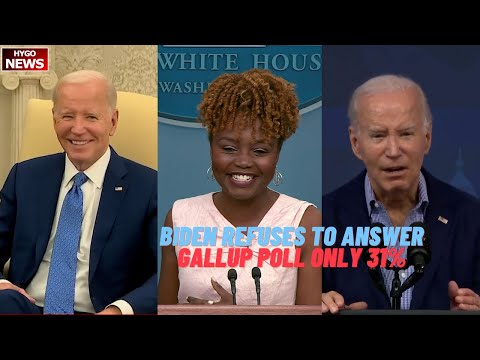
Biden Refuses to Answer Questions on Cocaine, Has Not Visited East Palestine, Gallup Poll Shows Only 31 Percent Confidence
The July 5, 2023 White House press briefing covered a wide range of politically uncomfortable topics for the Biden administration, from the President’s refusal to answer questions about cocaine found in the West Wing to his continued failure to visit East Palestine, Ohio, months after the devastating train derailment. Press Secretary Karine Jean-Pierre also fielded questions about a Gallup poll showing only 31 percent of Americans had confidence in the federal government, Biden’s refusal to acknowledge his seventh grandchild, and the administration’s continued promotion of “Bidenomics” despite falling middle-class wealth.
Biden Refuses Questions, Including on White House Cocaine
President Biden declined to take questions from reporters on multiple occasions during the day, including on the cocaine discovered in the West Wing. The President’s avoidance of the press on this topic was particularly notable given that the White House had spent the briefing insisting the administration took the matter seriously and that Biden considered getting to the bottom of it “incredibly important.”
Biden also appeared to forget the name of a website he was directing people to visit, a moment that added to ongoing concerns about the President’s mental acuity. These public appearances stood in contrast to the administration’s messaging about a dynamic and engaged President leading an economic recovery.
KJP Has “Nothing to Share” on Biden’s 7th Grandchild
One of the most personal and politically charged moments of the briefing came when a reporter asked about a New York Times story regarding Hunter Biden’s daughter in Arkansas — Navy Joan Roberts, born in 2018 to Lunden Roberts. Biden had publicly claimed to have six grandchildren, pointedly excluding this child.
A reporter asked: “There was a story in the New York Times over the weekend about Hunter Biden’s daughter in Arkansas. Does the President acknowledge this little girl as his granddaughter?”
Jean-Pierre’s response was terse: “I don’t have anything to share from here.”
The refusal to acknowledge Navy Joan was particularly jarring in context. Biden had been known for his emphasis on family and had frequently made public statements about the importance of children, including the quote captured in this same briefing: “They’re not somebody else’s children — they’re all our children.” The disconnect between that sentiment and his refusal to acknowledge his own granddaughter became a recurring point of criticism.
Biden would eventually acknowledge Navy Joan publicly in late July 2023, but only after sustained media pressure made the continued denial politically untenable.
Still No East Palestine Visit Five Months Later
The briefing also revisited Biden’s conspicuous failure to visit East Palestine, Ohio, where a Norfolk Southern train carrying hazardous chemicals derailed on February 3, 2023, releasing toxic substances and forcing evacuations. More than five months later, Biden had still not visited the community.
A reporter noted that Ohio Governor Mike DeWine had formally asked Biden to declare East Palestine a “major disaster area” and asked whether the President would fulfill the request.
Jean-Pierre said FEMA would “expeditiously review the request” but offered no commitment.
When pressed on why Biden had not visited despite extensive travel in recent weeks and months, Jean-Pierre fell back on a familiar formulation: “I’m just going to repeat what the President said. He — he will travel to the area, to East Palestine. Just don’t have anything to share on travel or upcoming dates that he’ll be there. But the President said it. He’s going to go. So he will go.”
The open-ended promise stood in contrast to former President Trump’s visit to East Palestine on February 22, 2023, just nineteen days after the derailment. Biden’s failure to visit a community affected by an environmental disaster while maintaining a busy travel schedule for political events and fundraisers became a symbol of what critics called the administration’s detachment from working-class concerns.
Gallup: Only 31 Percent Have Confidence in Government
A reporter confronted Jean-Pierre with a Gallup poll showing that only 31 percent of Americans had confidence in the federal government, asking whether the number concerned the administration.
Jean-Pierre’s response was to double down on the administration’s economic messaging: “You know, when people asked us why we’re talking about Bidenomics now, because we understand that people — the American people need to hear from us directly what we have been able to do the last two years, how historic it has been, how we’ve been able to create a historic… We understand that some people just don’t feel it quite yet, as you’re laying out a poll to me. But we’re going to make sure that we are very clear… we talk about Bidenomics.”
The “don’t feel it quite yet” framing became a recurring theme of the administration’s response to polling that showed widespread dissatisfaction with the economy. Rather than engaging with why Americans were unhappy, the administration’s position was that the good news simply had not reached them yet. Critics argued this approach was condescending, telling voters their lived experience was wrong because the administration’s preferred metrics looked positive.
Bidenomics Pitch Amid Falling Middle-Class Wealth
Jean-Pierre used the briefing to promote Biden’s upcoming economic speech and the broader “Bidenomics” messaging campaign the administration had launched the previous week.
She highlighted job creation numbers: “You look at the data, you look at the numbers, you look at the 13 million jobs that’s been created — again, the 800,000 manufacturing jobs. You look at what the Inflation Reduction Act has been able to do, the bipartisan infrastructure legislation has been able to do.”
Jean-Pierre also claimed that Biden’s agenda “helps all Americans,” saying: “He is a president for all Americans. It doesn’t matter if you’re in a red state or a blue state. And his agenda helps all Americans.”
The Bidenomics messaging was launched at a time when inflation had significantly eroded real wages and middle-class purchasing power. While headline job numbers were strong, many Americans were experiencing the economy through the lens of higher grocery prices, rising housing costs, and reduced savings. The gap between the administration’s economic narrative and public sentiment would persist throughout Biden’s remaining time in office.
Key Takeaways
- Biden refused to take questions from reporters on multiple occasions including on the cocaine discovered in the West Wing, despite his White House claiming he thought the investigation was “incredibly important.”
- KJP said she had “nothing to share” when asked if Biden acknowledged his seventh grandchild, Hunter Biden’s daughter Navy Joan in Arkansas, creating a striking contradiction with Biden’s public rhetoric about children.
- More than five months after the East Palestine train derailment, Biden still had not visited the community; KJP repeated that he “will go” without providing any date or timeline.
- A Gallup poll showing only 31 percent confidence in government was met with the claim that people “don’t feel it quite yet,” an approach critics called condescending toward voters’ lived economic experience.
- The administration continued pushing “Bidenomics” messaging amid falling middle-class real wealth, insisting that job creation numbers and legislative achievements demonstrated an economy that “helps all Americans.”