 HYGO News
 Biden On Hurricane Idalia Disaster Jokes, Doesn't Want To Answer, Gets Lost After Delivering Remarks
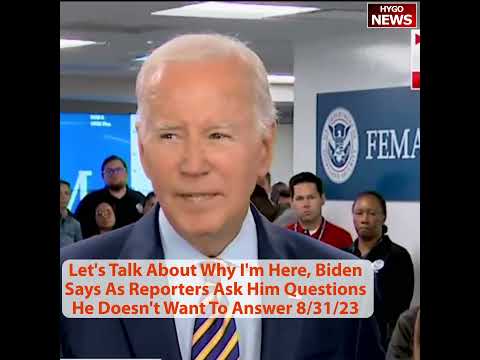
Biden Cracks Jokes at FEMA During Hurricane Idalia Disaster, Dodges Questions, Then Gets Lost Leaving
On August 31, 2023, President Joe Biden visited FEMA headquarters to deliver remarks about Hurricane Idalia, which had devastated parts of Florida’s Gulf Coast as a Category 3 storm just one day earlier. The visit produced a trifecta of embarrassing moments: Biden opened his remarks by cracking jokes rather than addressing the disaster with the gravity it demanded, he dodged reporters’ questions by saying “let’s talk about why I’m here” when asked about topics he did not want to address, and upon concluding his remarks, he appeared confused about where to go, asking “Where am I going?” before being directed off stage by staff.
The clip captured in miniature everything that had come to define Biden’s public appearances: inappropriate tone, evasion of accountability, and visible confusion about basic logistics.
Opening With Jokes
Biden’s arrival at FEMA headquarters was supposed to project presidential leadership during a natural disaster. Instead, he opened with off-topic banter that struck many as tone-deaf given the circumstances.
“I don’t know why I’m paying attention to these two guys up here,” Biden said, apparently referencing staffers or officials near his position. He then shifted into a familiar folksy mode: “So if everybody, all kidding aside, my mother would say, I apologize for my back. I apologize.”
The casual, joking tone was at odds with the purpose of the visit. Hurricane Idalia had made landfall just 24 hours earlier, and communities across Florida’s Big Bend region were still assessing the destruction. Over 500,000 customers had lost power, homes had been destroyed by storm surge, and residents were beginning the long process of surveying the damage to their properties and livelihoods.
Previous presidents had generally adopted a somber, focused tone when addressing natural disasters, recognizing that Americans affected by such events were looking to their leader for reassurance and serious engagement, not comedy. Biden’s decision to open with jokes, even as a brief icebreaker, reinforced the perception that he did not fully grasp or respect the gravity of the situation.
Dodging Reporter Questions
After his brief remarks, reporters attempted to ask Biden questions on a range of topics. Biden’s response was to shut down the questioning by redirecting to the ostensible purpose of his visit.
When reporters pressed with questions, including one who asked “Do you have any concerns about disabilities?” and another who attempted to raise the topic of Congress, Biden cut them off: “Let’s talk about why I’m here.”
The phrase was revealing in its irony. Biden was at FEMA headquarters to discuss the hurricane response, yet his own opening had been filled with jokes and off-topic remarks. When reporters attempted to engage him on substantive questions, he suddenly wanted to stay on topic, using the visit’s stated purpose as a shield against unwanted questions.
The pattern was familiar. Biden’s team frequently structured his public appearances in ways that minimized opportunities for press questions, and when questions did come, Biden often deflected, snapped at reporters, or simply turned away. The “let’s talk about why I’m here” response was a polished version of the same avoidance strategy: using the event’s framing to justify not answering any question that fell outside the administration’s preferred narrative.
Getting Lost Leaving
The most visually striking moment came at the conclusion of the event, when Biden finished his remarks and appeared uncertain about how to exit the space. After wrapping up, Biden looked around and asked: “Where am I going?”
Staff quickly stepped in to guide him: “There you go. Right this way. Secretary, right this way.”
The moment was brief but memorable. A sitting president of the United States, at the headquarters of the nation’s emergency management agency where he had presumably been briefed on the layout before his arrival, needed staff to tell him where to walk after his remarks concluded. The image of aides physically directing the president out of a room was one that had become distressingly common during Biden’s tenure.
Biden’s frequent confusion about where to go, which exit to use, or which direction to walk after events had generated a substantial collection of similar clips throughout his presidency. These moments fueled the ongoing national conversation about his cognitive fitness, as the ability to navigate basic physical logistics is one of the most fundamental indicators of spatial awareness and mental acuity.
The Forced Public Appearance
Context was crucial for understanding the FEMA visit. Biden had originally scheduled no public events for August 31. The visit was added to his calendar only after the administration faced a wave of criticism over his handling of multiple concurrent crises.
The backlash over Biden’s Maui wildfire response had been intense and sustained. His “no comment” from the Delaware beach, his Lake Tahoe vacation, his comparison of the Lahaina catastrophe to a kitchen fire at his own home, and the $700 FEMA payment had all generated damaging coverage. With Hurricane Idalia now creating a second concurrent disaster, the White House could not afford another cycle of criticism about presidential disengagement.
The result was a hastily arranged visit that appeared, by all indications, to be a photo opportunity rather than a substantive engagement with the disaster response. Biden’s jokes, his reluctance to answer questions, and his confusion about where to go upon leaving all suggested that the visit was performative rather than purposeful.
Hurricane Idalia’s Impact
Hurricane Idalia had made landfall near Keaton Beach, Florida on the morning of August 30, 2023, with maximum sustained winds of 125 mph, making it a high-end Category 3 storm. It was the strongest hurricane to hit the Big Bend region of Florida in over a century.
The storm produced devastating storm surge along the Gulf Coast, with communities like Cedar Key experiencing water levels more than seven feet above normal. Homes and businesses were inundated, roads were washed out, and the sheer force of the storm surge pushed boats, debris, and vehicles inland. As the storm moved northeast through Georgia and the Carolinas, it produced widespread flooding and wind damage across a broad area.
The human impact was significant, though the relatively low population density of the Big Bend region compared to other parts of the Florida coast limited the death toll. Still, the economic damage was estimated in the billions, and thousands of residents faced lengthy recovery processes.
The Triple-Gaffe Significance
The combination of three embarrassing moments in a single short clip, inappropriate jokes, question avoidance, and visible confusion, made the FEMA visit a particularly efficient encapsulation of the concerns surrounding Biden’s presidency.
Each element resonated with a different aspect of the criticism: the jokes suggested he was not taking the crisis seriously, the question dodging suggested the administration was avoiding accountability, and the confusion about where to go suggested cognitive decline. Together, they presented a president who seemed out of his depth, disengaged from the substance of his own events, and unable to navigate basic public interactions without staff assistance.
Additional Context
The FEMA visit was Biden’s second public engagement related to Hurricane Idalia, following his initial remarks the previous day. Despite the administration’s attempts to project engagement, the overall impression was of a president who was being managed through events rather than leading them. The contrast with how previous presidents had handled natural disasters, particularly George W. Bush’s hands-on engagement after Hurricane Katrina’s criticisms and Barack Obama’s visible presence during Superstorm Sandy, was unfavorable.
Key Takeaways
- Biden opened his FEMA visit during the Hurricane Idalia disaster by cracking jokes, striking a tone at odds with the gravity of a Category 3 hurricane that had just devastated Florida’s Gulf Coast.
- When reporters attempted to ask questions, Biden deflected with “Let’s talk about why I’m here,” using the event framing as a shield against accountability despite having opened the event with off-topic banter himself.
- After completing his remarks, Biden appeared confused about how to exit, asking “Where am I going?” before being physically directed by staff.
- The visit was not originally on Biden’s schedule and was added only after intense backlash over his handling of the Maui wildfires and his planned beach vacation during the hurricane.
- The three embarrassing moments in a single appearance captured the core criticisms of Biden’s presidency: inappropriate tone during crises, avoidance of substantive questions, and visible cognitive confusion.