 HYGO News
 Biden not regret to run for reelection, could win again; confuses 'Nevada' with 'Havana Syndrome'
Biden not regret to run for reelection, could win again; confuses “Nevada” with “Havana Syndrome”
In one of his final press interactions before leaving office in January 2025, President Biden fielded a range of questions from reporters, insisting he could have beaten Trump if he had stayed in the race, saying Kamala Harris was “competent” to run again in four years, confusing “Nevada” with “Havana Syndrome,” vowing he would not be “out of sight or out of mind” after leaving the White House, and flatly rejecting the idea of pardoning himself.
Biden: “I Would Have Beaten Trump”
The AP’s Zeke Miller asked Biden directly whether he regretted his decision to initially run for reelection and whether doing so made it easier for Trump to win. Biden’s response was a mix of defiance and revisionist framing.
“I don’t think so. I think I would have beaten Trump, could have beaten Trump, and I think that Kamala could have beaten Trump and would have beaten Trump,” Biden said. He then attempted to explain why he ultimately stepped aside, framing the decision as an act of party unity rather than a concession of weakness.
“It wasn’t about — I thought it was important to unify the party and when the party was worried about whether or not I was going to be able to move, I thought, even though I thought I could win again, I thought it was better to unify the party,” Biden said. He described the presidency as “the greatest honor in my life” but said he “didn’t want to be one who caused a party that wasn’t unified to lose an election.”
“That’s why I stepped aside, but I was confident she could win,” Biden concluded.
The claim that both he and Harris could have beaten Trump was difficult to reconcile with the actual election results. Trump won all seven swing states, the popular vote, and the largest Republican vote total in history. Biden’s insistence that he could have won suggested a disconnect between his self-assessment and the political reality that had led his own party to pressure him out of the race after his disastrous June 2024 debate performance.
The “Nevada” and “Havana Syndrome” Mix-Up
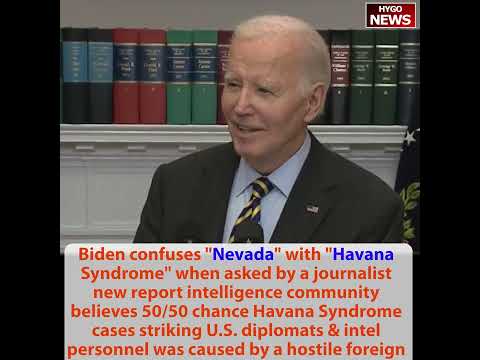
In another exchange, Biden confused “Nevada” with “Havana Syndrome” when a journalist asked him about new intelligence community reporting that suggested there was roughly a 50/50 chance that the mysterious Havana Syndrome cases affecting U.S. diplomats and intelligence personnel were caused by a hostile foreign actor.
The mix-up was notable because it occurred during a substantive national security discussion about one of the most sensitive intelligence matters of recent years. Havana Syndrome — the unexplained health incidents that had affected dozens of U.S. government personnel, primarily diplomats and intelligence officers, since 2016 — had been the subject of intense debate within the intelligence community about whether a foreign adversary was using some form of directed energy weapon against American officials.
Biden’s confusion of the two words added to the long list of verbal stumbles that had defined his presidency and that had contributed to the political pressure that ultimately led him to withdraw from the 2024 race.
Biden on Post-Presidency: “Not Out of Sight or Out of Mind”
When asked what kind of role he planned to have after leaving the White House, Biden rejected the suggestion that he would follow the George W. Bush model of largely withdrawing from public life.
A reporter asked: “Have you decided what kind of role will you have post-presidency, sir? Do you plan to speak out after you leave Washington, or are you going to follow kind of more of the Bush model where you’re kind of out of sight, out of mind?”
Biden’s response was definitive: “I’m not going to be out of sight or out of mind.”
The statement suggested Biden intended to maintain an active public presence after leaving office, potentially weighing in on policy debates and political matters during the Trump administration. However, at 82 years old and with the cognitive concerns that had dogged his presidency, the extent to which Biden would be able to maintain a meaningful public role remained uncertain.
Harris “Competent” to Run in 2028
When pressed on whether Harris should run for president again in four years, Biden offered qualified support. “I think that’s a decision she should make,” he said. “I think she’s competent to run again in four years. That will be a decision for her to make.”
The choice of the word “competent” was notable — it was a far cry from a ringing endorsement. Biden did not say Harris would make a great candidate, that she was the best choice for the party, or that he would actively support her. He described her as “competent,” a word that in political context reads as lukewarm at best.
The exchange also reflected the complicated relationship between Biden and Harris in the aftermath of the 2024 election. Biden had been pushed out of the race in part due to concerns about electability, only to see his replacement lose decisively to Trump. Whether Biden harbored resentment about the process that led to his departure, and whether he believed Harris had squandered the opportunity he created for her, remained subjects of speculation.
No Self-Pardon Under Consideration
The most pointed exchange came when a reporter asked Biden whether he had ruled out pardoning himself or additional family members. Biden’s initial reaction suggested he found the question surprising.
“For myself?” Biden asked when the reporter mentioned a self-pardon. “Yes, sir,” the reporter confirmed. Biden paused, then asked: “Well, why should I pardon myself?” The reporter responded simply: “That’s what I’m asking.”
Biden’s answer was unequivocal: “No, I have no contemplation of pardoning myself or anything. I didn’t do anything wrong.”
The self-pardon question was not entirely hypothetical. Biden had already pardoned his son Hunter Biden, breaking a previous promise not to do so. The pardon of Hunter, combined with KJP’s announcement that additional pardons were forthcoming, had created an atmosphere in which no use of the pardon power seemed off the table. Biden’s flat denial that he was considering a self-pardon was intended to close the discussion, though his use of the phrase “I didn’t do anything wrong” echoed language used by numerous politicians who later found themselves in legal jeopardy.
A President in His Final Days
The press exchange captured Biden in a characteristic mode: alternately defiant and confused, insistent on his own capabilities while demonstrating the very limitations that had led to his political downfall. His claim that he could have beaten Trump, his confusion over Havana Syndrome, and his simultaneously firm and defensive responses about pardons all painted a portrait of a president struggling to shape his legacy in his final days while the reality of his diminished standing was evident to everyone watching.
Key Takeaways
- Biden insisted he could have beaten Trump and that Kamala Harris also could have won, despite Trump’s sweeping victory across all seven swing states and the popular vote.
- He confused “Nevada” with “Havana Syndrome” during a question about intelligence community reporting on mysterious health incidents affecting U.S. diplomats.
- Biden declared he would not be “out of sight or out of mind” after leaving office, rejecting the George W. Bush model of post-presidential silence.
- He called Harris “competent” to run again in 2028, a notably lukewarm endorsement.
- Biden flatly rejected the idea of pardoning himself, saying “I didn’t do anything wrong.”