 HYGO News
 Biden "Not Gonna Vote, Not Gonna Pass" Republican Bill — Considering 14th Amendment
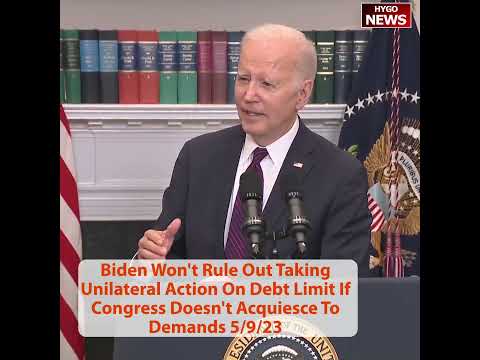
Biden “Not Gonna Vote, Not Gonna Pass” Republican Bill — Considering 14th Amendment
President Biden held the no-conditions debt ceiling line during a May 2023 exchange but acknowledged actively considering 14th Amendment-based unilateral action. Biden cited longtime advisor Larry Tribe — Harvard constitutional scholar — who Biden said “thinks that it would be legitimate” to use Section 4 of the 14th Amendment to address default risk without congressional ceiling action. Biden cautioned that the approach “would have to be litigated” and that without an extension “it would still end up in the same place.” He said he was “thinking about taking a look at months down the road” — after the immediate standoff — to test the constitutional question. The exchange placed 14th Amendment unilateral action on the formal record as a credible Biden administration consideration.
The 14th Amendment Section 4
- Constitutional text: Section 4: “The validity of the public debt of the United States…shall not be questioned.”
- Civil War origin: The provision originated in post-Civil War debt politics.
- Modern application: Modern application to debt ceiling has been theoretical until 2023.
- Editorial reach: The provision has been cited by scholars in past ceiling debates.
- Hearing record: The provision is now in the formal record.
The Larry Tribe Reference
- Constitutional scholar: Tribe is one of the most prominent U.S. constitutional scholars.
- Harvard role: Tribe is the Carl M. Loeb University Professor at Harvard.
- Biden advisor: Biden cited Tribe as having advised him “for a long time.”
- Editorial reach: Tribe’s endorsement gave the 14th Amendment argument scholarly weight.
- Hearing record: The Tribe reference is now in the formal record.
The Litigation Concern
- Biden framing: “It would have to be litigated.”
- Editorial reach: Litigation creates uncertainty even after invocation.
- Hearing record: The framing is now in the formal record.
- Long arc: The framing remained central to 14th Amendment debate.
- Long arc: The framing reflected practical concerns.
The Same Place Framing
- Biden framing: Without extension, “it would still end up in the same place.”
- Editorial reach: The framing acknowledged the practical limits of unilateral action.
- Hearing record: The framing is now in the formal record.
- Long arc: The framing remained central to 14th Amendment debate.
- Long arc: The framing reflected pragmatic Biden posture.
The Future Consideration Framing
- Biden framing: “I’m thinking about taking a look at months down the road.”
- Editorial choice: The framing positioned future consideration as ongoing.
- Hearing record: The framing is now in the formal record.
- Long arc: The framing remained central to subsequent debates.
- Long arc: The framing has not been fully tested in court.
The Court Question
- Biden framing: “To see whether what the court would say.”
- Editorial reach: The framing acknowledged court action as central.
- Hearing record: The framing is now in the formal record.
- Long arc: The framing remained central to 14th Amendment debate.
- Long arc: The framing reflected practical constitutional process.
The Republican Bill Rejection
- Biden framing: “I’m not going to vote, I’m not going to pass a budget that in fact caused massive cuts.”
- Editorial reach: The framing positioned Biden as opposed to the Republican bill.
- Hearing record: The framing is now in the formal record.
- Long arc: The framing remained central to White House messaging.
- Long arc: The framing operated as both substance and rhetoric.
The Massive Cuts Framing
- Biden framing: Biden framed the Republican bill as causing “massive cuts.”
- Editorial reach: The framing connected to the veterans cuts messaging.
- Hearing record: The framing is now in the formal record.
- Long arc: The framing remained central to White House messaging.
- Long arc: The framing operated as both substance and rhetoric.
The 14th Amendment Debate
- Constitutional argument: Some scholars argued the 14th Amendment prohibits debt default.
- Tribe position: Tribe publicly supported 14th Amendment-based action.
- Counter-positions: Other scholars argued against unilateral action.
- Editorial reach: The debate intensified through spring 2023.
- Hearing record: The debate is now in the formal record.
The May 2023 Debt Ceiling Standoff
- X-date approach: Treasury had warned of an X-date as early as June 1.
- Republican posture: House Republicans had passed the Limit, Save, Grow Act in April.
- White House posture: The White House had pivoted to negotiation in early May.
- Eventual deal: A deal eventually included two-year discretionary caps.
- Editorial reach: The standoff was the dominant economic story of spring 2023.
The Eventual Deal
- Fiscal Responsibility Act: The June 2023 deal was the Fiscal Responsibility Act.
- Two-year caps: The deal imposed two-year discretionary spending caps.
- Work requirements: The deal included expanded SNAP work requirements.
- Energy permitting: The deal included some energy permitting reforms.
- Editorial reach: The deal averted default and stabilized the ceiling through 2025.
The Treasury Position
- Yellen position: Treasury Secretary Yellen had rejected prioritization as a viable option.
- Operational concerns: Treasury cited operational concerns about prioritization.
- Constitutional concerns: Treasury cited constitutional concerns about prioritization.
- Editorial line: The Treasury position contradicts the Republican prioritization framing.
- Hearing record: The Treasury position sits opposite the Republican framing.
The Biden Administration Posture
- Public statements: Biden has consistently held the no-conditions ceiling line.
- 14th Amendment hedge: Biden has expressed openness to 14th Amendment action.
- Negotiation pivot: Biden pivoted to negotiation in early May 2023.
- Editorial reach: The posture reflects pragmatic political calculation.
- Hearing record: The posture is now in the formal record.
The Constitutional Stakes
- Constitutional text: Section 4 of the 14th Amendment provides a textual hook.
- Justiciability: Whether court action is available is contested.
- Standing: Standing questions complicate possible litigation.
- Editorial reach: The constitutional stakes are significant.
- Hearing record: The constitutional stakes are now in the formal record.
The Republican Strategy
- Spending caps demand: Republicans demanded spending caps as ceiling condition.
- Limit, Save, Grow Act: House Republicans passed the bill in April 2023.
- Public-facing posture: The strategy was designed for clip distribution.
- Long arc: The strategy remained central to Republican messaging.
- Hearing impact: The strategy placed the spending demand on the formal record.
The White House Strategy
- No-conditions framing: White House defended no-conditions ceiling action.
- 14th Amendment hedge: White House maintained 14th Amendment as hedge option.
- Constitutional duty framing: White House framed ceiling action as Congress’s duty.
- Editorial reach: The strategy was central to White House messaging.
- Long arc: The strategy remained central through the standoff.
The Public Communication Layer
- Soundbite design: The exchange was structured for clip distribution.
- Documentary value: The hearing record now contains a clean Biden 14th Amendment framing.
- Media uptake: The clip moved on conservative media as a Republican response argument.
- Audience targeting: The framing was designed for retail political distribution.
- Long arc: The framing remained central to White House messaging through 2024.
The Tribe Influence
- Editorial reach: Tribe has been one of the most influential U.S. constitutional scholars.
- Past advisory roles: Tribe has advised multiple Democratic administrations.
- 14th Amendment advocacy: Tribe became a prominent 14th Amendment advocate.
- Editorial reach: Tribe’s advocacy gave the argument scholarly weight.
- Hearing record: The Tribe context is now in the formal record.
The 14th Amendment Long Arc
- Past invocations: Past mentions occurred during 2011 and 2013 standoffs.
- 2023 intensification: 2023 saw the most serious public consideration.
- Future application: The argument may resurface in future debt ceiling debates.
- Editorial reach: The argument shapes the practical politics of ceiling negotiations.
- Hearing record: The long arc is now in the formal record.
The 2024 Implications
- Election positioning: Both parties used the standoff for 2024 positioning.
- Constitutional debate: The 14th Amendment debate may resurface in 2025 ceiling action.
- Long arc: The episode will shape debt ceiling politics through 2024 and beyond.
- Hearing legacy: The hearing record will be cited in future debt ceiling debates.
- Long arc: The standoff outcome stabilized the ceiling through 2025.
Key Takeaways
- Biden held the no-conditions debt ceiling line on the Republican bill.
- Biden acknowledged actively considering 14th Amendment Section 4 unilateral action.
- Biden cited Larry Tribe as supportive of the constitutional argument.
- Biden cautioned that the approach “would have to be litigated.”
- Biden said he was considering “months down the road” testing the constitutional question.
- The exchange placed 14th Amendment unilateral action on the formal record.
Transcript Highlights
The following quotations are drawn from an AI-generated Whisper transcript of the exchange and should be considered unverified pending official transcript release.
- “I’m not going to vote, I’m not going to pass a budget that in fact caused massive cuts” — Biden
- “The question I have been considering in the 14th Amendment” — Biden
- “Larry Tribe, who advised me for a long time, thinks that it would be legitimate” — Biden
- “But the problem is it would have to be litigated” — Biden
- “And in the meantime, without an extension, it would still end up in the same place” — Biden
- “I’m thinking about taking a look at months down the road…to see whether what the court would say” — Biden
Full transcript: 164 words transcribed via Whisper AI.