 HYGO News
 Biden: 'Meet Speaker Anytime If He Has Budget' McCarthy Now A Proposal, So Will There Be A Meeting?
By HYGO News
Published
· Updated
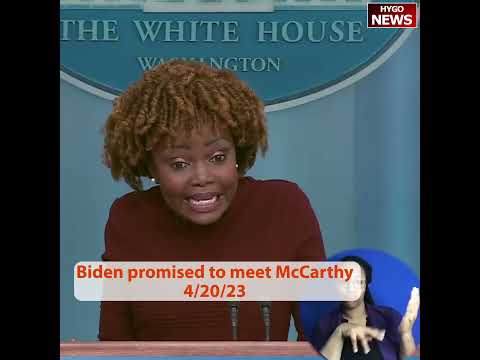
Biden: “Meet Speaker Anytime If He Has Budget” McCarthy Now A Proposal, So Will There Be A Meeting?
A reporter held White House Press Secretary Karine Jean-Pierre to President Biden’s own commitment during an April 2023 briefing — reminding her that Biden had said “I’m ready to meet with the speaker any time tomorrow if he has his budget,” and noting that Speaker McCarthy had now put forward a proposal. Jean-Pierre deflected to the administration’s need to “look at the impact of the plan” and pivoted to criticizing “22% spending cuts” rather than scheduling the promised meeting.
The Biden Commitment
- Clear public statement: Clear public statement.
- Conditional commitment: Conditional commitment.
- Budget trigger: Budget trigger.
- Meeting promise: Meeting promise.
- Timeline specific: “Tomorrow” timing.
The McCarthy Proposal
- Republican plan: Republican plan.
- Limit, Save, Grow Act: Limit, Save, Grow Act.
- House GOP proposal: House GOP proposal.
- Debt ceiling linkage: Debt ceiling linkage.
- Political commitment: Political commitment.
The Jean-Pierre Deflection
- “Look at the impact”: “Look at the impact.”
- Plan review: Plan review framing.
- No meeting commitment: No meeting commitment.
- Defensive posture: Defensive posture.
- Deflection pattern: Deflection pattern.
The 22% Spending Cuts
- Administration calculation: Administration calculation.
- Impact claims: Impact claims.
- Political messaging: Political messaging.
- Education impact: Education impact.
- Family impact: Family impact.
The MAGA Framing
- “MAGA extremist”: “MAGA extremist” language.
- Political characterization: Political characterization.
- Republican targeting: Republican targeting.
- Brand associations: Brand associations.
- Messaging discipline: Messaging discipline.
The Hostage Framing
- “Holding economy hostage”: “Holding our economy.”
- Economic threat: Economic threat framing.
- Political pressure: Political pressure characterization.
- Moral language: Moral language.
- Escalation messaging: Escalation messaging.
The Default Concern
- Default warnings: Default warnings.
- “Do not default”: “Do not default” emphasis.
- Economic catastrophe: Economic catastrophe.
- Responsibility attribution: Responsibility attribution.
- Shared stakes: Shared stakes framing.
The Meeting Question
- Direct question: Direct question.
- Promise enforcement: Promise enforcement.
- Accountability demand: Accountability demand.
- Specific commitment: Specific commitment.
- Professional pursuit: Professional pursuit.
The Biden Statement
- Budget conditionality: Budget conditionality.
- Clear terms: Clear terms.
- Public commitment: Public commitment.
- Specific venue: Specific venue reference.
- Political promise: Political promise.
The McCarthy Response
- Plan presentation: Plan presentation.
- Public delivery: Public delivery.
- Meeting precondition: Meeting precondition.
- Political pressure: Political pressure.
- Credibility test: Credibility test.
The Administration Strategy
- Negotiation avoidance: Negotiation avoidance.
- Public pressure: Public pressure tactics.
- Blame attribution: Blame attribution.
- Message discipline: Message discipline.
- Political positioning: Political positioning.
The Congressional Dynamics
- House Republican unity: House Republican unity.
- Senate Democratic: Senate Democratic position.
- Divided government: Divided government.
- Compromise requirements: Compromise requirements.
- Procedural complexity: Procedural complexity.
The Debt Ceiling Timeline
- Default approach: Default approach.
- Fiscal pressure: Fiscal pressure.
- Political decisions: Political decisions.
- Crisis management: Crisis management.
- Resolution urgency: Resolution urgency.
The Budget Framework
- Spending priorities: Spending priorities.
- Program funding: Program funding.
- Revenue considerations: Revenue considerations.
- Structural reforms: Structural reforms.
- Political positioning: Political positioning.
The Political Calculation
- Polling considerations: Polling considerations.
- Blame game: Blame game dynamics.
- Media coverage: Media coverage.
- Public perception: Public perception.
- Electoral implications: Electoral implications.
The “Impact” Review
- Evaluation framework: Evaluation framework.
- Delay mechanism: Delay mechanism.
- Political calculation: Political calculation.
- Professional analysis: Professional analysis.
- Strategic timing: Strategic timing.
The Education Impact
- Education cuts: Education cuts concerns.
- Teacher impact: Teacher impact.
- Student programs: Student programs.
- Federal programs: Federal programs.
- Political sensitivity: Political sensitivity.
The Communication Pattern
- Presidential commitments: Presidential commitments.
- Administration deflection: Administration deflection.
- Message inconsistency: Message inconsistency.
- Political dynamics: Political dynamics.
- Public credibility: Public credibility.
The Economic Stakes
- Default consequences: Default consequences.
- Global implications: Global implications.
- Market volatility: Market volatility.
- Interest rates: Interest rates.
- Credit rating: Credit rating.
The Republican Framework
- Spending cuts: Spending cuts framework.
- Budget reform: Budget reform.
- Deficit reduction: Deficit reduction.
- Program elimination: Program elimination.
- Political priorities: Political priorities.
Key Takeaways
- Reporter held Jean-Pierre to Biden’s promise to “meet with the speaker any time tomorrow if he has his budget.”
- McCarthy had put forward a proposal but no meeting was scheduled.
- Jean-Pierre deflected to needing to “look at the impact” of the Republican plan.
- She focused on criticizing the “22% spending cuts” rather than scheduling the promised meeting.
- The exchange highlighted administration’s continued no-negotiation posture.
- Jean-Pierre emphasized the need to “do not default” while avoiding specific negotiation commitments.
Transcript Highlights
The following quotations are drawn from an AI-generated Whisper transcript of the briefing and should be considered unverified pending official transcript release.
- “When the president announced his budget, he said, quote, I’m ready to meet with the speaker any time tomorrow if he has his budget.” — Reporter framing
- “He has now put forward a proposal, so will there be a meeting?” — Reporter question
- “We’re going to look at the impact of the plan that they put forward.” — Karine Jean-Pierre
- “Right now, what we see with the 22% spending cuts that they put forward, it’s going to hurt. Education is going to hurt.” — Karine Jean-Pierre
- “Congress, specifically Speaker McCarthy and the right wing, the MAGA extremist, should not be holding our economy to put forth programs that’s going to hurt American people.” — Karine Jean-Pierre
- “One thing that we know for sure is they need to make sure that we do not default.” — Karine Jean-Pierre
Full transcript: 143 words transcribed via Whisper AI.