 HYGO News
 Biden: I visited border this month, first time as President. GOPs to try to score political points
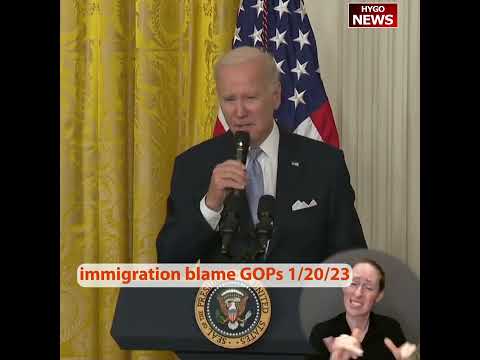
Biden on Border: “First Time as President” — Calls for Comprehensive Reform, Says GOP Prefers Issue for Campaigns
In January 2023, President Biden addressed his recent border visit and immigration reform. “I visited the border earlier this month, the first time as president, I’ve been before, but the first time as president,” Biden said, acknowledging the notable fact that the visit was his first as president. He emphasized his administrative actions: “I’m taking action where I have the legal capacity to do so. I’ll continue to call on Congress to act to pass comprehensive immigration reform to fix the system.” Biden referenced his first-day legislative proposal: “The first bill I introduced was a comprehensive reform legislation on immigration. But because of some in the Congress, they refused to consider it. They found it a better issue to campaign on than an issue to solve.” He concluded with contrast: “So we have a choice. They can keep using immigration to try to score political points, or we can help solve the problem.”
The Border Visit Acknowledgment
Biden acknowledged the milestone. “I visited the border earlier this month, the first time as president, I’ve been before, but the first time as president,” Biden said.
The framing:
El Paso visit — January 8, 2023.
First as president — Acknowledged.
Previous visits — As VP/Senator.
Belated timing — Implicit.
Political pressure result — Unspoken.
By acknowledging that it was his first visit as president, Biden was confronting what had been major political criticism. For two years, Republicans and some Democrats had criticized his absence from the border. Finally visiting — and then mentioning that visit — addressed the criticism head-on.
The Previous Visits Claim
Biden referenced earlier visits. “I’ve been before, but the first time as president,” Biden said.
The “I’ve been before”:
Senate career — Some visits.
Vice Presidency — Possible visits.
Personal background — Not specific.
Context setting — Biden familiarity.
Claim support — For engagement.
Biden’s pre-presidential visits to the border had been limited. His 2008 campaign noted he hadn’t been. His Senate and VP periods had included some border-adjacent activity but not extensive visits. The “I’ve been before” was technically accurate but stretched.
”Taking Action Where I Have Legal Capacity”
Biden emphasized administrative action. “I’m taking action where I have the legal capacity to do so,” Biden said.
The framing:
Executive power — Being used.
Legal constraints — Acknowledged.
Maximum effort — Claimed.
Authority limits — Real.
Congressional need — Implied.
Biden was positioning himself as using executive power maximally while explaining why executive action alone couldn’t solve border issues. This framing had been administration standard throughout 2021-2023.
The Comprehensive Reform Reference
Biden referenced his first-day proposal. “The first bill I introduced was a comprehensive reform legislation on immigration,” Biden said.
The legislation:
January 20, 2021 — Day one.
U.S. Citizenship Act — Title.
Comprehensive scope — Full reform.
Democratic introduction — With party members.
Never advanced — In Congress.
Biden had proposed comprehensive immigration reform on his first day in office. The legislation was comprehensive — pathway to citizenship for undocumented, visa reforms, border enforcement resources, root cause addressing. It never moved through Congress.
”Because of Some in the Congress, They Refused to Consider It”
Biden attributed inaction. “Because of some in the Congress, they refused to consider it,” Biden said.
The attribution:
“Some in the Congress” — Unspecified.
“Refused to consider” — Dismissed without review.
Blame distributed — Implicitly Republicans.
Standard framing — Democratic.
Reality more complex — Politically.
Biden’s attribution of blame wasn’t entirely accurate. During 2021-2022, Democrats controlled both chambers. Comprehensive reform had support challenges within Democratic caucus too, not just Republican opposition. The simple blame attribution was political framing.
”A Better Issue to Campaign On”
Biden characterized GOP motivation. “They found it a better issue to campaign on than an issue to solve,” Biden said.
The characterization:
Political calculation — Attributed to GOP.
Issue exploitation — Rather than solution.
Cynical motivation — Claimed.
Democratic framing — Standard.
GOP would dispute — Predictably.
The characterization was standard Democratic framing. Republicans would respond that they did want solutions but couldn’t accept Biden’s specific proposals. The “campaign issue” framing served to delegitimize opposition as cynical rather than principled.
”We Have a Choice”
Biden offered framing of political choice. “So we have a choice. They can keep using immigration to try to score political points, or we can help solve the problem,” Biden said.
The choice framing:
Binary options — Presented.
Score points — GOP choice.
Solve problems — Biden choice.
Moral clarity — Claimed.
Political messaging — Effective.
The binary framing was effective political messaging. It positioned Biden’s approach as substantive and Republican approach as political. Whether this framing was accurate depended on perspective and complex political realities.
The First-Day Proposal Context
The comprehensive reform proposal context:
Day one introduction — Political statement.
Limited follow-through — Effort.
No pressure campaign — Mounted.
Other priorities — COVID, infrastructure.
Administration focus — Elsewhere.
While Biden could legitimately claim proposing day-one reform, sustained administrative push for the legislation had been limited. The proposal existed but wasn’t prioritized for passage. Multiple administration priorities had competed for attention.
The Reform Challenge
Comprehensive immigration reform had been stalled for decades:
2007 attempt — Failed.
2013 attempt — Failed in House.
2017 attempt — No consensus.
2021 attempt — No movement.
Political coalitions — Insufficient.
Multiple previous attempts at comprehensive reform had failed. Political coalitions for passage had proven elusive. Blame could be distributed across both parties and multiple administrations. Biden’s situation wasn’t unique.
The Border Visit Significance
The January visit was political response:
Pressure accumulated — Over time.
Abbott letter — Adding pressure.
Media criticism — Constant.
Within Party concerns — Growing.
Pressure relief — Temporary.
Biden’s visit relieved some pressure temporarily. But the underlying issues remained. Republicans continued to criticize. Border conditions continued. The visit was political statement more than policy intervention.
The Political Positioning
Biden’s statement positioned him politically:
Responsive — Visited eventually.
Active — Using executive power.
Reformist — Proposed comprehensive reform.
Reasonable — Want solution.
GOP obstructing — Implicit blame.
This positioning served 2024 campaign needs. Biden needed to be seen as engaged on immigration. The visit plus this framing created narrative of engaged president blocked by opposition.
The GOP Response
Republican response was predictable:
Visit criticized — As belated and limited.
Policy disputed — As inadequate.
Blame rejected — As framing.
Counter-proposals — Offered.
Political narrative — Maintained.
Republicans continued criticizing Biden despite the visit. They pointed to actual border conditions, limited visit scope, and administration policy choices. The political battle continued regardless of visit.
The 2024 Campaign Implications
The statement had 2024 implications:
Immigration messaging — Being honed.
GOP attack position — Countered.
Base reassurance — Sought.
Moderate positioning — Attempted.
Narrative establishment — For campaign.
Biden was establishing his immigration narrative for 2024. The visit, executive actions, and reform advocacy were all being assembled into coherent story. Whether this would be politically effective would be tested.
The Administrative Action Context
Biden’s administrative actions on immigration:
Parole expansions — New program.
Removal priorities — Modified.
Court resources — Somewhat increased.
Sanctuary jurisdictions — Policies.
Various executive orders — Multiple.
These actions had produced mixed results. Border encounters remained high. Asylum processing remained backlogged. The new parole program showed early promise but was limited scope. Biden’s claim of maximum action was defensible but results remained modest.
The Legal Capacity Constraint
Biden’s reference to legal capacity was substantive:
Immigration statutes — Constrain executive.
Congressional authority — Exclusive.
Executive discretion — Limited.
Court challenges — Frequent.
Real limitations — On action.
Immigration law gave executive various powers but also had significant limits. Biden couldn’t by executive order create new visa categories or pathways to citizenship. Those required Congressional action. The legal constraints were real.
The Congressional Reality
Getting comprehensive reform through Congress:
Senate filibuster — 60 votes needed.
House politics — Different in each majority.
Business community — Divided.
Labor interests — Mixed.
Hispanic electorate — Variable.
The political coalition for comprehensive reform was difficult to assemble. Various interest groups had competing priorities. Neither party had consistently delivered reform when in position to do so.
The Rhetorical Strategy
Biden’s rhetoric on immigration was consistent:
Blame GOP — For obstruction.
Claim maximum action — Within law.
Demand reform — From Congress.
Position moderately — On enforcement.
Support pathway — For long-term residents.
This rhetorical package had served various Democrats for decades. Whether it moved votes or affected actual policy was debated. The messaging continued regardless of substantive outcomes.
The Border Conditions
Border conditions in January 2023:
High encounters — Continuing.
Various nationalities — Beyond Mexico/Central America.
Asylum claims — Significant.
Processing strain — Major.
Community impact — Border towns affected.
The conditions weren’t improved by the visit or rhetoric. Policy changes — particularly the new parole program — showed some early effects but overall numbers remained high. The gap between rhetoric and conditions persisted.
Key Takeaways
- Biden acknowledged his January 2023 border visit: “I visited the border earlier this month, the first time as president.”
- He emphasized using executive power: “I’m taking action where I have the legal capacity to do so.”
- He referenced his day-one comprehensive immigration reform proposal, claiming “some in the Congress, they refused to consider it.”
- Biden characterized GOP as preferring immigration as campaign issue: “They found it a better issue to campaign on than an issue to solve.”
- He offered binary framing: “They can keep using immigration to try to score political points, or we can help solve the problem.”
- The statement positioned Biden as engaged and reformist against obstructionist GOP — standard framing for 2024 campaign setup.
Transcript Highlights
The following is transcribed from the video audio (unverified — AI-generated from audio).
- I visited the border earlier this month, the first time as president, I’ve been before, but the first time as president.
- I’m taking action where I have the legal capacity to do so.
- I’ll continue to call on Congress to act to pass comprehensive immigration reform to fix the system.
- The first bill I introduced was a comprehensive reform legislation on immigration.
- But because of some in the Congress, they refused to consider it. They found it a better issue to campaign on than an issue to solve.
- So we have a choice. They can keep using immigration to try to score political points, or we can help solve the problem.
Full transcript: 111 words transcribed via Whisper AI.